
Pruning
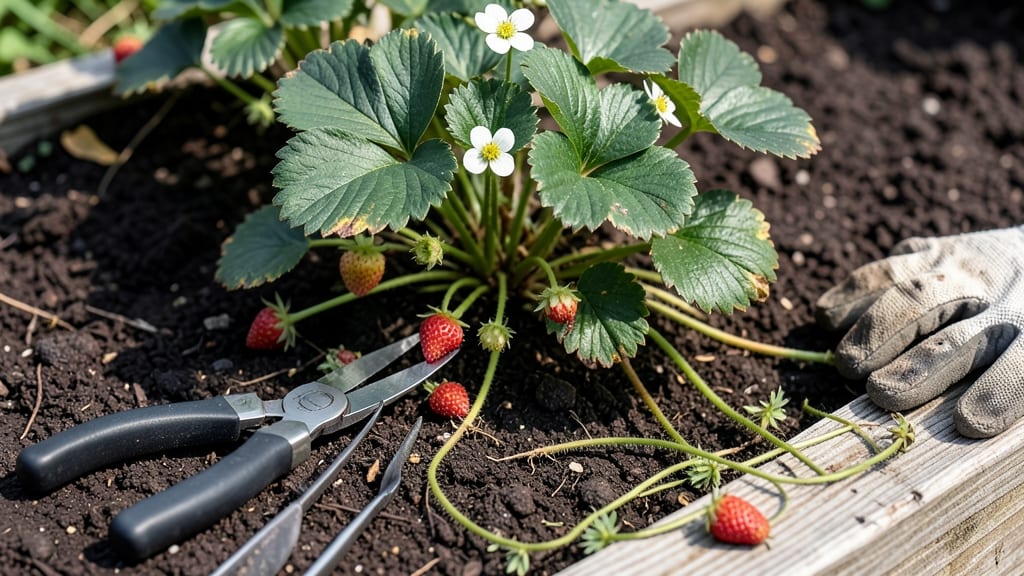
Pruning strawberry runners transforms a sprawling mess into a fruit-packed powerhouse—my June harvest doubled after mastering this simple technique. 🌱 The key is timing: remove runners in late spring when they're 3-4 inches long, or you'll end up with weak plants and fewer berries.
I used to ignore them, thinking more plants meant more fruit, but the opposite happens—your main plant gets drained trying to feed both itself and the runners.
You only need clean pruners and 10 minutes to make a difference. Cut runners at the base where they meet the main stem, not midway—they'll regrow if you leave even a tiny stub.
For June-bearing varieties, focus on removing runners entirely, while everbearing types can keep a few to expand the patch. The goal is to keep energy flowing to the mother plant, not the offshoots.
After pruning, your strawberries will reward you with bigger, sweeter berries and plants that stay bushier year after year. I noticed mine filled in gaps in the bed where bare soil used to show, and the fruit size increased noticeably.
The plants also recover faster from winter, thanks to less stress from supporting unnecessary growth.
Common mistakes include waiting too long (runners become woody) or pruning at the wrong time (early spring or fall stresses the plant). For container-grown strawberries, limit runners to 1-2 per plant to avoid overcrowding.
This method works for both in-ground beds and raised containers—just adjust the timing slightly for your climate zone.
📚 In This Guide
- What you need
- Instructions
- Tips and common mistakes
- Wrapping up and next steps
What you need
- ● Sharp pruning shears or scissors – Clean, sterilized, and sharp (avoid dull tools to prevent damage).
- ● Garden gloves – Durable, preferably with grip (protects hands from thorns and dirt).
- ● Disinfectant (rubbing alcohol or bleach solution) – 1 part bleach to 9 parts water (sterilizes tools between cuts).
- ○ Garden twine or plant ties (optional) – For securing runners to new spots if propagating.
- ● Small shovel or trowel – For replanting runners if dividing the patch.
- ○ Compost or mulch – To enrich soil after pruning (optional but recommended).
- ● Healthy strawberry plants – No signs of disease (e.g., brown spots, mold).
- ● Ideal timing – Early morning or late afternoon (avoid midday heat).
- ● Clear weather – No rain forecasted for 24 hours (prevents soil from becoming soggy).
How to prune strawberry runners for healthier plants
Here's the straightforward method I use to keep strawberries productive and prevent overcrowding.
✂️ Step 1: Identify and Remove Weak or Crowded Runners
Start by examining your strawberry plants for runners—the long, thin stems that grow outward from the crown. These runners produce new plants, but too many drain energy from fruit production. Focus on removing runners that are thin, leggy, or growing toward the center of the plant where they'll compete for sunlight.
Use clean, sharp pruning shears to cut runners at their base, just above where they emerge from the mother plant. This prevents disease from spreading through open wounds. I like to do this in the morning when dew is present—it makes the stems easier to see and cuts cleaner. Avoid yanking runners; a clean cut ensures the plant redirects energy to existing fruit rather than struggling with torn tissue.
✂️ Step 2: Prune Overcrowded Crowns and Old Leaves
Next, turn your attention to the crown—the central part of the plant where leaves and runners emerge. Strawberries thrive when their crowns are open and airy. Use your fingers to gently separate leaves and runners, then prune any that overlap or block sunlight from reaching the center. Aim to create a dome shape with 3-4 healthy leaves per crown.
Remove any yellow or brown leaves, as these indicate disease or old growth. Cut these back to the base of the plant, but leave the green, healthy foliage intact. This step is critical in early summer when plants are actively fruiting—it ensures they’re not wasting energy on dead tissue. I always prune when the weather is dry to prevent fungal spores from spreading through fresh cuts.
🌱 Step 3: Encourage New Growth with Strategic Runner Selection
If you want to propagate new plants, choose only the strongest, healthiest runners—those with thick stems and vibrant green leaves. Select no more than 2-3 runners per mature plant to avoid overburdening it. Pin these runners down into small pots filled with potting mix, securing them with a small rock or stake if needed.
Keep these new pots in a shady, protected spot while they root, which typically takes 2-3 weeks. Once rooted, you can transplant them to their permanent location. If you’re not propagating, simply remove all runners to force the mother plant to focus its energy on producing larger, sweeter berries. This is especially important for June-bearing varieties, which need all their strength for a single, massive harvest.
⏰ Step 4: Time Your Pruning for Maximum Impact
Prune runners in late spring or early summer, just after the first flush of berries has finished. This timing gives the plant enough energy to recover before the next fruiting cycle. Avoid pruning in fall or winter, as the plant needs all its resources to survive dormancy. I also recommend pruning on a dry, overcast day—this reduces stress on the plant and minimizes the risk of fungal infections.
After pruning, water deeply to help the plant recover. You’ll notice new growth within a week—that’s your signal everything is working. Keep an eye out for any signs of stress, like wilting or yellowing leaves, and adjust your care accordingly. With consistent pruning, your strawberries will reward you with bigger berries and fewer pests next season.
Tips & tricks for pruning strawberry runners like a pro
These garden-tested strategies will transform your strawberry patch into a high-yielding powerhouse—without the guesswork.
Tool Selection: Invest in a pair of bypass pruning shears with a sharp blade—dull tools crush stems instead of making clean cuts. I also keep a small pair of scissors handy for trimming runners that are too close to the mother plant. Sterilize your tools with rubbing alcohol between plants to prevent spreading disease. A clean cut heals faster and directs more energy to fruit production rather than wound repair.
Strategic Timing: The late spring/early summer window after the first harvest is critical—this gives plants 6-8 weeks to recover before winter dormancy. If you miss this window, wait until early fall, but avoid pruning when new growth appears in late summer. I've learned this the hard way: pruning too late can stimulate tender new growth that won't survive frost.
Propagation Pro Tip: When selecting runners for propagation, look for those with at least 3-4 leaves and a visible root system forming at the tip. The rooting process takes 2-3 weeks as mentioned, but you can speed it up by using a rooting hormone powder on the cut end. Keep the soil consistently moist during this period—neither soggy nor bone dry. I've found that using a clear plastic dome over the pots creates a mini greenhouse effect that encourages faster root development.
Crown Maintenance: The dome shape you create in Step 2 isn't just aesthetic—it's functional. This open structure allows maximum air circulation, which prevents fungal diseases like gray mold. After pruning, I gently fluff the soil around the crown to encourage new root growth. Avoid piling soil up against the crown itself, as this can cause rot over time. The goal is to create an environment where sunlight reaches all parts of the plant, not just the outer leaves.
Pro Tips for Prune Strawberry Runners
- These garden-tested strategies will transform your strawberry patch into a high-yielding powerhouse—without the guesswork.
- Tool Selection: Invest in a pair of bypass pruning shears with a sharp blade—dull tools crush stems instead of making clean cuts.
- Strategic Timing: The late spring/early summer window after the first harvest is critical—this gives plants 6-8 weeks to recover before winter dormancy.
Frequently asked questions
Got questions about pruning strawberry runners? You’re not alone! Here are some of the most common concerns—and their simple solutions—to help you master this easy pruning task.
When is the best time to prune strawberry runners?
The ideal window is late spring to early summer (after the last frost but before peak fruiting). This gives plants time to recover while still encouraging new growth. Avoid pruning during winter dormancy or when berries are ripening—you’ll stress the plant unnecessarily!
How do I know if a runner is healthy enough to keep?
Healthy runners are green, firm, and actively growing (10–15 inches long). Discard runners that are yellowed, wilted, or infested with pests. A quick tug test helps too: if roots pull easily from the soil, it’s ready for transplanting!
Can I prune runners if my strawberries are already fruiting?
Yes, but lightly! Focus on removing only the longest, weakest runners to avoid overstressing the plant. Prune in stages over 2–3 weeks to let the plant adjust. Avoid heavy pruning during peak harvest—save it for post-fruiting to prep for next season.
What if I don’t prune runners at all?
Your strawberry patch will still produce berries, but expect smaller plants, fewer fruits, and crowded growth. Unpruned runners compete for nutrients, leading to weaker berries and increased disease risk. Think of pruning as a quick “reset” for bushier, more productive plants!
What’s the best way to reuse pruned runners?
Transplant healthy runners to new pots or garden beds (6–8 inches apart) to propagate more plants! Bury the roots lightly and water well. For weak runners, try rooting them in water first (change weekly) before planting. Just avoid transplanting in extreme heat or cold!
Wrapping up and next steps
Pruning strawberry runners isn’t just a chore—it’s the secret to bushier plants and sweeter fruit! 🌱 By following these simple steps, you’ll encourage healthier growth, maximize your harvest, and keep your garden thriving.
Now that you’re armed with the know-how, grab those shears and get pruning—your strawberries (and future harvests) will thank you!
Ready to take it further? Try experimenting with different pruning schedules or share your tips with fellow gardeners. Happy growing!