
Pruning
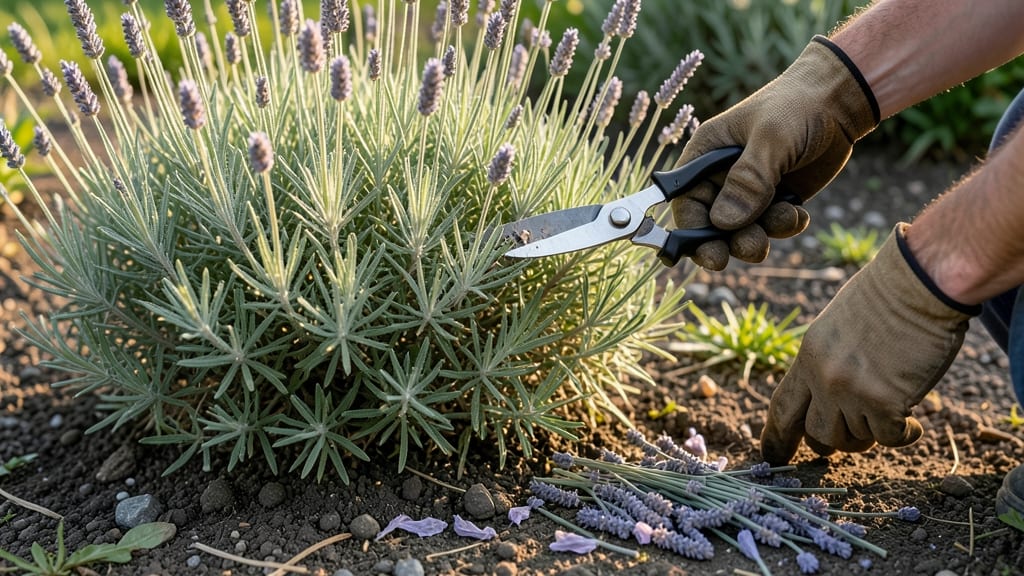
Pruning lavender in fall isn’t just about shaping—it’s about setting up next year’s fragrant explosion. ✂️ I’ve learned the hard way that skipping this step means leggy, woody stems and fewer blooms by summer.
The key is timing: wait until after flowering but before hard frost, usually between late October and November in most zones.
You’ll need just three tools: sharp bypass pruners, clean gloves, and a small broom for cleanup. The goal is to remove 1/3 of the oldest wood—those brown, woody stems at the center—while leaving fresh green growth intact. This encourages bushier, more vigorous growth and prevents winter dieback.
Start by stripping away dead flowers and spent stems, then trim back the oldest branches by 1/3 their length. Avoid cutting into the woody base, as lavender struggles to regrow from there. The result? A compact, fragrant bush that bursts with blooms earlier and more abundantly next season.
For cooler climates (Zones 5-7), hold off until early November to avoid frost damage. And here’s the secret: never prune in spring—lavender blooms on old wood, so cutting too late risks sacrificing next year’s flowers. A little late-season care now means a showstopper garden in June.
📚 In This Guide
- What you need
- Instructions
- Tips and common mistakes
- Wrapping up and next steps
What you need
- ● Pruning shears or secateurs – Sharp, clean, and bypass-style (avoid anvil shears to prevent crushing stems). Quantity: 1 pair.
- ● Garden gloves – Durable, cut-resistant (lavender can be prickly!). Quantity: 1 pair.
- ● Disinfectant (rubbing alcohol or bleach solution) – 70% isopropyl alcohol or 1 part bleach to 9 parts water (to sterilize tools between cuts).
- ○ Pruning saw (optional but helpful) – For thicker stems (½ inch or larger).
- ● Garden twine or plant ties – For securing stems if heavy pruning is done.
- ● Compost bin or bag – For collecting pruned stems.
- ● Handheld leaf blower or broom – To clear debris after pruning.
- ● Plant food or compost – Balanced, low-nitrogen fertilizer (e.g., 5-10-10) to nourish lavender post-pruning.
- ● Measuring tape or ruler – For precise pruning heights.
- ● Knee pads or stool – For comfort if pruning large bushes.
- ● Choose a dry, sunny day (lavender hates wet pruning!).
- ● Wait until after the first frost but before hard freezes (typically late fall).
- ● Ensure lavender is fully dormant (no new growth).
Step-by-step guide to pruning lavender in fall
Here's how I prepare my lavender for winter—keeping it healthy, compact, and ready to burst into bloom next spring.
✂️ Step 1: Time Your Pruning for Optimal Recovery
Wait until after your first hard frost but before the ground freezes completely—typically late October to early November in most climates. Pruning too early exposes tender new growth to cold damage, while waiting too long risks cutting back into next year's buds. Look for browned foliage or seed heads that have turned crispy; these are your visual cues that the plant has entered dormancy.
I always prune on a dry, sunny afternoon when the air is crisp but not freezing. This timing ensures the plant has time to callous over any cuts before winter sets in. If you're unsure, check your local frost dates—prune 2-3 weeks after the first frost for best results.
🌿 Step 2: Assess and Shape the Plant Structure
Examine your lavender for dead, diseased, or crossing branches. Use sharp, clean pruners to remove any stems that are brown, mushy, or showing signs of rot. These are easy to spot—they'll look shriveled or have blackened tips. Cut these back to the base of the plant immediately, as they won't recover and will only drain energy from the healthy growth.
Next, shape the plant by trimming back the current year's growth by about one-third. Focus on the outer stems first, working your way inward. You'll see the plant's natural, woody base emerge as you cut—this is your guide. Avoid cutting into the old wood; lavender blooms on new growth, and you want to preserve last year's framework.
✂️ Step 3: Refine for Next Year’s Growth
Now, it's time to encourage a bushier, more compact plant. Look for any leggy stems that are growing too long or too thin. These are the ones that stretch out and lose their dense, fragrant foliage. Trim these back by about half their length, cutting just above a set of healthy leaves or a side branch. You'll notice the plant starts to look fuller and more rounded as you work.
For older lavender plants, you can also lightly trim the center to improve airflow and reduce the risk of fungal issues. Just be gentle—lavender doesn’t like being sheared like a hedge. Think of this as a gentle sculpting process. Once you're done, the plant should look balanced, with no single stem dominating the others.
🪴 Step 4: Clean Up and Protect for Winter
After pruning, gather all the clippings and dispose of them in a sealed bag or burn them. Lavender clippings can harbor pests or diseases, and you don’t want them decomposing near your plant over winter. I like to use a small wheelbarrow to collect the debris—it makes cleanup quick and easy.
Finally, give your lavender a light mulch around the base, but avoid piling mulch directly against the stems. A 2-inch layer of straw or wood chips helps insulate the roots and retain moisture. Water the base thoroughly before applying the mulch to ensure the soil stays moist but not soggy. This step is especially important in colder climates where frost can penetrate deep into the soil.
⏰ Step 5: Monitor and Prepare for Spring
Keep an eye on your lavender through the winter. If you notice any new growth emerging before spring, gently protect it with a layer of burlap or frost cloth on particularly cold nights. This is rare but can happen in mild winters. In early spring, before new growth appears, give your lavender a light trim to remove any remaining dead stems and shape it once more.
Here's the thing—lavender is tough, but a little care in fall sets it up for a spectacular spring. You'll see the difference next year when your plants burst into bloom, denser and more fragrant than ever. And remember, the key is patience. Lavender grows slowly, so don’t rush the process. A little time now means fewer headaches later.
Tips & tricks for pruning lavender in fall
Took me years to figure out these little details that make all the difference between a healthy lavender bush and one that struggles to bounce back.
Timing is Everything: The 2-3 week window after your first hard frost is your sweet spot. I've learned this the hard way—pruning too early can shock the plant, while waiting too long risks cutting into next year's buds. Look for those crispy seed heads as your visual cue that the plant has fully entered dormancy. If you're still unsure, check your local frost dates and aim for that 2-3 week window—it's the difference between a plant that thrives and one that fights back.
Tool Preparation Matters: Your pruners should be as sharp as possible—dull blades crush stems instead of making clean cuts, which invites disease. I clean my pruners with rubbing alcohol between plants to prevent cross-contamination. For larger branches, I use loppers with a 6-8 inch blade, which gives me better leverage without damaging the plant's structure. Remember, lavender stems are woody and can be tough on regular scissors!
Pruning Technique for Health: When you're shaping the plant in Step 2, make your cuts at a 45-degree angle just above a leaf node or side branch. This angled cut helps water run off instead of pooling at the cut site. I also avoid cutting into the old wood—the woody base you see when you trim back the current growth. That old wood is your plant's framework for next year's blooms, and you want to preserve it. Think of it as sculpting rather than shearing.
Winter Protection Strategy: That 2-inch layer of mulch around the base is crucial, but don't let it touch the stems. I've seen too many gardeners accidentally smother their lavender with thick mulch piles. Instead, create a donut shape around the base, leaving the center exposed. For extra protection in harsh winters, I add a 2-3 inch layer of straw mulch on top of the wood chips—it acts like a cozy blanket for the roots while still allowing airflow to prevent rot.
Pro Tips for Prune Lavender In Fall
- Took me years to figure out these little details that make all the difference between a healthy lavender bush and one that struggles to bounce back.
- Timing is Everything: The 2-3 week window after your first hard frost is your sweet spot.
- Tool Preparation Matters: Your pruners should be as sharp as possible—dull blades crush stems instead of making clean cuts, which invites disease.
Frequently asked questions
Got questions about pruning lavender in the fall? You’re not alone! Here are answers to the most common concerns—so you can confidently shape your plants for next year’s stunning blooms.
When exactly is the best time to prune lavender in fall?
The ideal window is late September to early November, after the first frost but before hard freezes. This gives plants time to harden off without encouraging new growth that could be damaged by winter. If you miss fall, wait until early spring before buds form.
How much should I cut back lavender in fall?
For most varieties, trim back 1/3 of the current year’s growth—about 3–6 inches from the top. Avoid cutting into old wood (woody stems) or the base, as lavender struggles to regrow from there. Think of it as a light haircut, not a buzz cut!
What if I prune lavender too late in fall?
Pruning after the first hard frost can stress the plant, but it’s not a deal-breaker. If you must, reduce the cut by half and avoid heavy pruning. Focus on removing only dead or damaged stems. Next year, prioritize early spring pruning instead.
Can I prune lavender in fall if it’s in a pot?
Yes! Potted lavender follows the same rules, but check for root-bound conditions first. Gently loosen roots if crowded, then prune as usual. After trimming, water lightly (lavender hates soggy soil) and move pots to a sheltered spot for winter.
Will pruning lavender in fall attract pests?
Not if done correctly! Pruning opens the plant slightly, but healthy lavender rarely attracts pests. To prevent issues, use sterilized shears, remove all debris, and ensure your plant has well-draining soil. If you spot aphids, spray with water or neem oil.
Pro Tip:
Save your lavender clippings! Bundle and hang them upside down in a dry, dark place to make natural potpourri or sachets. Just avoid using heavily sprayed plants—opt for organic lavender for the best results.
Wrapping up and next steps
Pruning lavender in fall is your secret weapon for lush, fragrant blooms next season—and with the right timing and technique, you’ll keep your plants thriving for years! Remember, the key is light trimming (never more than ⅓ of the plant) and avoiding harsh cuts that stress the woody stems.
Now that you’re armed with tips, grab those shears, and give your lavender the care it deserves.
Ready to transform your garden? Start by marking your calendar for late fall pruning (just after the first frost) and enjoy the sweet rewards of vibrant, healthy lavender come spring! 🌿✨