
Pruning
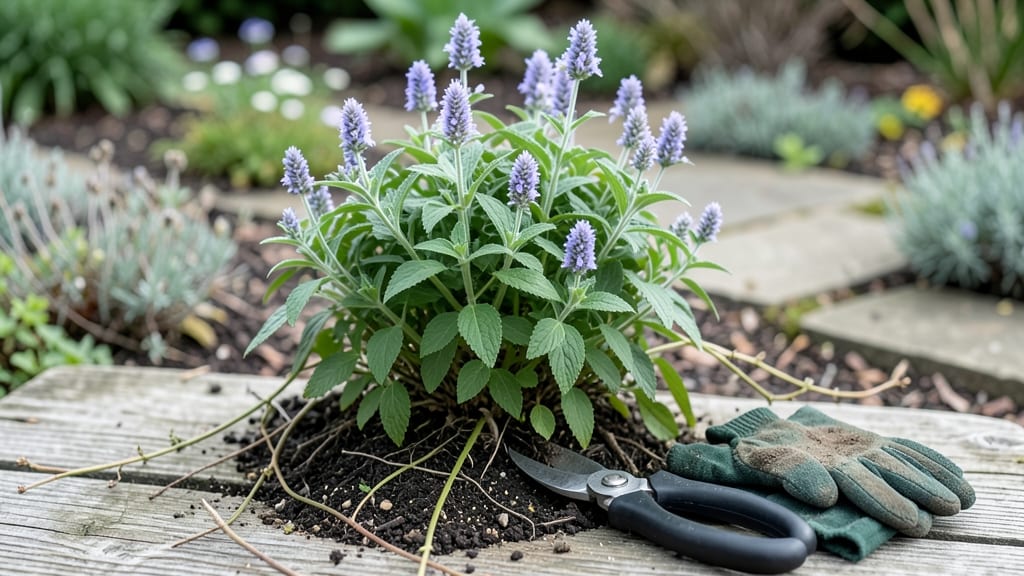
Summer pruning catmint isn't just cutting—it's the secret to nonstop lavender-blue blooms that last until frost. ✨ I learned the hard way that skipping this step means leggy plants and sparse flowers by August, but a few sharp snips in July transforms everything.
The key? Timing it right when the plant is still energetic but before the heat zaps its strength.
You only need clean pruners, a sunny afternoon, and 10 minutes of focused work. Start by snipping back any dead or woody stems at the base—this clears out last season’s clutter and lets fresh growth shine.
Then, cut back one-third of the oldest stems (the thickest ones) to encourage bushier, more compact growth. The result? A fuller plant that blooms harder and resists mildew better than unpruned varieties.
What you’ll end up with is a catmint bush that looks lush and intentional, not wild and overgrown. The fragrance becomes stronger, too—those tiny purple flowers pack a punch when the plant isn’t overburdened with deadheading.
Plus, you’ll extend the bloom season by weeks, giving you color right up to fall.
For hot climates, prune earlier in July to avoid stressing the plant during peak heat. In cooler regions, wait until mid-August—just don’t delay past Labor Day, or you’ll miss the second flush of blooms. The goal is to keep your catmint productive, not perfect.
📚 In This Guide
- What you need
- Instructions
- Tips and common mistakes
- Wrapping up and next steps
What you need
- ● Bypass pruners – Sharp, clean pruners (size: 5-7 inches) for precise cuts.
- ● Hand pruners or hedge shears – For smaller stems or shaping (if needed).
- ○ Garden gloves – A pair of cut-resistant gloves (optional but recommended for prickly stems).
- ● Disinfectant (70% isopropyl alcohol or bleach solution) – To sterilize tools and prevent disease.
- ● Garden twine or rubber bands – For tying up stems if you’re doing a structured prune.
- ● Garden waste bag or bucket – To collect pruned stems (compost-friendly!).
- ○ Pruning saw (optional) – Only if your catmint has thick, woody stems (rare for most varieties).
- ● Choose the right time – Prune on a dry, cloudy day (early morning or late afternoon) to avoid stressing the plant.
- ● Check the weather forecast – Avoid pruning if rain is expected within 24 hours.
- ● Wear protective clothing – Long sleeves and pants to shield against catmint’s mild prickles.
- ● Have a clean workspace – Lay down a tarp or old sheet to catch debris and make cleanup easier.
Step-by-step guide to pruning catmint in summer
Reviving your catmint with these simple steps keeps it blooming all season long—no deadheading headaches required.
✂️ Step 1: Identify and Remove Spent Flowers
Start by scanning your catmint for faded blooms—they’ll look dull and brown compared to the fresh lavender-blue flowers. I like to pinch off clusters with my fingers first; it’s faster than snipping and lets me feel the stems for any hidden pests. Grab just below the flower head where the stem starts to thicken.
Use clean, sharp pruners for any stubborn stems. You’ll know you’re doing it right when you see fresh green buds at the base of each cut—these are your plant’s promise of new blooms. Never cut into woody stems; you want to stay above the leaf nodes where growth happens. If you accidentally snip too deep, don’t stress—catmint is tough and will bounce back.
✂️ Step 2: Lightly Trim Leggy Growth
Next, look for stems that have stretched too tall or grown thin and leggy—these happen when your catmint gets too much sun or not enough water. I trim these back by about one-third, cutting just above a set of healthy leaves. This encourages bushier growth and prevents the plant from looking scraggly.
Focus on the outer stems first. You’ll notice new side shoots forming within 2-3 weeks—that’s your plant responding to the pruning. Avoid cutting into the center of the plant unless it’s completely overgrown; catmint flowers best when it has room to breathe. If you’re unsure, just trim the tips of the longest stems to shape it up.
☀️ Step 3: Boost Airflow and Sunlight Access
After pruning, step back and assess your catmint’s shape. You want to create an open, airy structure that lets sunlight reach the center. I often remove a few of the oldest stems completely—these are the woody ones that no longer produce flowers. Cut them right at the base with your pruners.
This isn’t just about looks—better airflow prevents fungal diseases like powdery mildew, which loves to cling to crowded catmint. Water at the base after pruning to help the plant recover, but avoid getting leaves wet. Within 10-14 days, you’ll see fresh growth pushing through, and new blooms will follow in about 4-6 weeks.
⏰ Step 4: Maintain Through the Season
Once you’ve given your catmint its summer haircut, keep an eye out for new spent blooms and trim them as they appear. I set a reminder to check my plants every 2-3 weeks—consistency is key. Avoid heavy pruning later in the season, though; catmint needs time to establish new growth before winter.
If your catmint starts looking tired by late summer, a light trim to encourage fresh foliage can help. Just avoid cutting back more than one-third of the plant at any time. With this approach, your catmint will reward you with fragrant blooms well into fall—sometimes even through the first frost, depending on your climate.
Tips & tricks for perfect catmint pruning
Here's what nobody tells you about keeping your catmint thriving all summer long.
Timing Secret: The 2-3 week window after your initial pruning is when your catmint shows its true resilience. This is when you'll see those fresh green buds pushing through—don't be tempted to trim again too soon. The plant needs this time to redirect its energy into new growth rather than just producing flowers. I've seen catmint plants that got over-pruned during this period struggle to rebound until the next season.
Tool Technique: Your pruners should be sharper than your focus on the task. Dull blades crush stems instead of cleanly cutting them, which can introduce disease. I keep a small pair of pruning shears specifically for catmint and sharpen them every few uses. For the delicate spent flowers, your fingers work perfectly—just pinch just below where the flower meets the stem. You'll develop a feel for it after the first few blooms.
Visual Cues: When assessing whether to trim a stem, look for these three signs: first, the presence of fresh green buds at the base (your plant's growth signal), second, the thickness of the stem (woody stems don't produce flowers anymore), and third, the overall shape (aim for that open, airy structure). I train my eye to spot these by comparing healthy stems to those that clearly need attention. The goal is to create a bushy, full plant that doesn't look like it's fighting for sunlight.
Pro Tips for Prune Catmint In Summer
- Here's what nobody tells you about keeping your catmint thriving all summer long.
- Timing Secret: The 2-3 week window after your initial pruning is when your catmint shows its true resilience.
- Tool Technique: Your pruners should be sharper than your focus on the task.
Frequently asked questions
Got questions about keeping your catmint thriving with summer pruning? Here are answers to the most common ones—so you can enjoy those fragrant blooms all season long!
When is the exact best time to prune catmint in summer?
Prune catmint after the first big summer flush of blooms (usually June–July), but before late July to avoid cutting back new growth. Aim for a light trim every 4–6 weeks to encourage bushier, longer-lasting flowers. Over-pruning too late can stunt fall blooms!
How much should I cut back—1/3, 1/2, or more?
For most catmint varieties, trim back 1/3 of the plant’s height (about 3–6 inches) to maintain shape and density. Avoid shearing too hard—this can leave leggy stems. Pro tip: Use sharp pruners for clean cuts and skip ragged snips!
What if I missed summer pruning? Can I still fix it?
Don’t stress! Lightly shape up any straggly stems in early fall (September) to tidy the plant before winter. Skip heavy pruning—catmint blooms on new wood, so late cuts may delay next year’s flowers. Just focus on cleanup!
Does pruning catmint in summer make it grow faster?
Pruning stimulates bushier growth, but catmint’s natural slow-and-steady habit won’t turn into a weed overnight. Think of it like a haircut—regular trims keep it fuller and healthier, not just bigger. Over-fertilizing after pruning can lead to floppy stems, so skip the extra nutrients!
Can I prune catmint too much? What are the signs?
Yes! Watch for bare stems, no new blooms, or leggy growth between cuts. If your plant looks stressed (yellowing leaves, sparse foliage), it’s a sign you’ve pruned too aggressively. Next time, go lighter and prune less often.
Bonus Tip: Deadheading vs. Pruning
Confused about the difference? Deadheading = pinching off spent blooms to encourage more flowers. Pruning = cutting back stems to shape the plant. Do both! Deadhead weekly, prune every 4–6 weeks for maximum impact.
Wrapping up and next steps
Pruning your catmint in summer is a simple yet powerful way to keep your garden thriving with nonstop fragrant blooms! By following these three steps—timing, technique, and aftercare—you’ll encourage bushier growth and vibrant flowers all season long. 🌿✨
Now that you’re armed with the know-how, grab those shears and get pruning! Your efforts will pay off with a lush, fragrant catmint that keeps blooming until frost. Next, why not share your progress? Snap a photo of your revitalized plant and tag us—we’d love to see your summer garden glow!