
Pruning
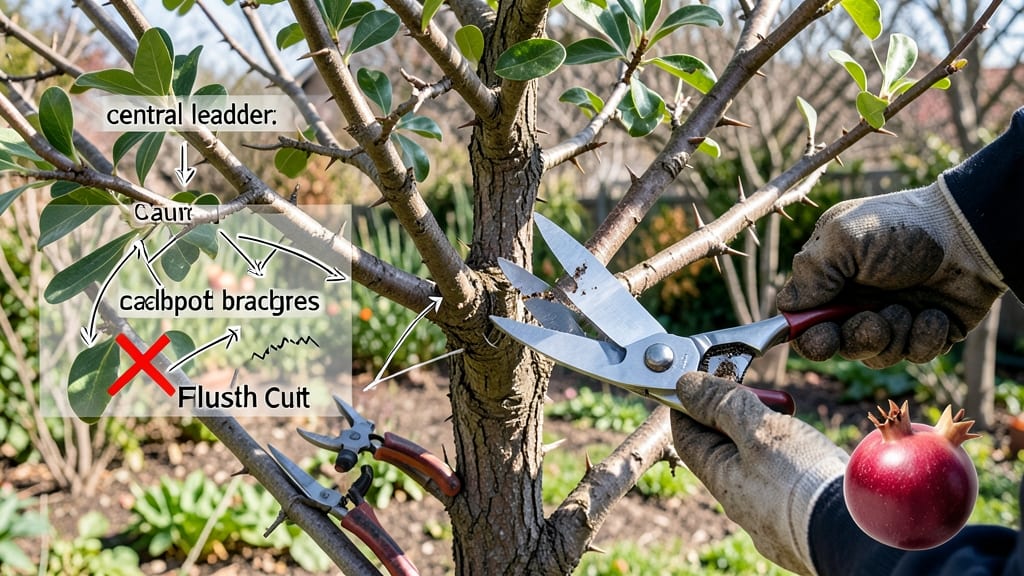
A pomegranate pruning diagram isn’t just about shaping—it’s about unlocking bigger fruit and stronger canes. ✂️ I learned the hard way that skipping this step means smaller harvests and leggy branches that flop in summer storms.
The right cuts at the right time transform a scraggly bush into a productive powerhouse.
Timing matters most: prune in late winter or early spring while the plant is still dormant but before new growth begins. You'll need sharp pruners, gloves (those thorns don't play nice), and a clear day to see the structure.
The goal is to remove dead wood, shape for airflow, and encourage fruit-bearing branches. My first attempt left too many canes—now I follow the "open center" method for maximum sunlight penetration.
By summer, you'll see the difference: thicker canes with more flower clusters and fewer weak shoots. The diagram shows exactly where to cut—just above outward-facing buds at a 45-degree angle.
This isn't rocket science, but it does require patience. The payoff? Fruit that's 30% larger than unpruned plants and branches that support their own weight.
Works for both potted plants and in-ground bushes, though container-grown pomegranates need slightly more aggressive pruning. The same principles apply whether you're dealing with a young plant or a mature tree—just scale the cuts. Ready to transform your pomegranate into a fruit-producing machine?
📚 In This Guide
- What you need
- Instructions
- Tips and common mistakes
- Wrapping up and next steps
What you need
- ● Pruning shears: Bypass pruners (for small branches, 4-6 inches) or loppers (for thicker branches, 8-12 inches). Choose sharp, high-quality stainless steel blades to prevent crushing.
- ● Hand pruners: Anvil-style (budget-friendly) or bypass-style (premium, recommended for precision). Disinfect with rubbing alcohol before and after use to avoid disease spread.
- ● Gloves: Heavy-duty gardening gloves (nitrile-coated for grip and protection from thorns). Size: Medium to Large for comfort.
- ● Ladder or step stool: Sturdy, non-slip (if your tree exceeds 6 feet). Extension: 4-8 feet, depending on tree height.
- ● Disinfectant: 70% isopropyl alcohol or a 10% bleach solution (1 part bleach to 9 parts water) for sterilizing tools.
- ○ Pruning sealant (optional): Tree wound dressing (like Tanglefoot Tree Wound Pruning Sealer) to protect large cuts from pests.
- ● Tarp or drop cloth: Medium-sized (4x6 feet) to collect debris and protect the ground.
- ○ Marking twine or flags: Colored twine or small plastic flags to tag branches for removal (optional but helpful for complex pruning).
- ● Timing: Prune in late winter or early spring (before new growth starts) or immediately after harvest (fall). Avoid pruning during active blooming or fruiting.
- ● Weather: Choose a dry, calm day (avoid rain or wind to prevent disease spread or tool mishaps).
- ● Safety gear: Safety glasses (to protect from debris) and long sleeves/pants (for thorn protection).
- ● Tree health check: Inspect the tree for diseases (like powdery mildew) or pests (aphids, scale) before pruning. Treat issues first if needed.
- ● Diagram reference: Print or save a pomegranate pruning diagram (like our step-by-step guide) to visualize cuts before starting.
Step-by-step guide to pruning pomegranates for healthier growth
Pruning pomegranates isn't just about shaping—it's about directing energy where it matters most. Here's how to do it right, with clear visual cues for each cut.
✂️ Step 1: Identify and Remove Dead or Diseased Wood
Start by scanning the tree for branches that are brown, brittle, or hollow—these are dead and should go first. I use my fingers to gently test each branch: if it snaps like dry kindling, it's dead. Cut these back to the main trunk or a healthy lateral branch using clean, sharp pruners. You'll notice the contrast immediately—healthy wood is greenish inside when cut fresh, while dead wood stays brown.
Look for any branches with signs of disease like oozing sap, fungal growth, or unusual spots. These need to be removed completely to prevent spreading. Bag the cuttings and dispose of them away from your garden. The goal here is to eliminate anything that might drain the tree's energy or invite pests. I mark these branches with a small piece of tape before cutting so I don't miss any hidden issues.
✂️ Step 2: Thin Out Crowded Branches for Better Airflow
Pomegranates naturally grow thick clusters of branches, but too much crowding leads to poor fruit development and disease. Focus on removing branches that cross over each other or grow inward toward the center of the tree. These are called "water sprouts" or "suckers"—they're the thin, vertical shoots that pop up everywhere. Cut them back to the main branch or trunk, making your cuts just above a outward-facing bud.
Pay attention to branches that grow directly upward—they often become weak and break under fruit weight. Instead, aim to create an open vase shape with main branches spreading outward at about a 45-degree angle. This shape lets sunlight and air circulate freely, reducing humidity where fungal diseases thrive. You'll see the difference in just a season—fewer crowded branches mean bigger, healthier fruit.
✂️ Step 3: Prune for Fruit Production by Selecting Strong Canes
Pomegranates produce fruit on one-year-old wood, so your goal is to encourage strong, sturdy branches that can support next year's harvest. Look for branches that are about pencil-thick with smooth, green bark. These are your "fruit canes." Cut back any thinner branches that won't have the strength to bear fruit—think of it like pruning a rose bush for the best blooms.
For each main branch, keep 3-5 strong canes and prune the rest back to the main trunk. Make your cuts just above a leaf bud that faces outward. This ensures the new growth will angle away from the center, creating that open, airy structure. Avoid cutting back more than one-third of the tree's total growth in a single season—this prevents stress and shock. You'll know you're doing it right when you see new, vibrant green shoots emerging within a few weeks.
✂️ Step 4: Shape the Tree for Long-Term Health
Now it's time to refine the tree's shape. Pomegranates respond well to a modified open-center form, where the main branches spread outward like a vase. Start by selecting 4-6 main scaffold branches—these should be evenly spaced around the trunk and angled outward. Remove any competing branches that grow too close to these main branches, cutting them back to the trunk or a strong lateral branch.
For branches that are too long, you can make heading cuts—this means cutting back to just above a bud to encourage bushier growth. I like to leave the last 2-3 inches of growth on each branch to maintain its strength. Avoid cutting into old wood unless absolutely necessary, as pomegranates heal slower on mature branches. Step back and admire your work—you should see a balanced, open structure that lets sunlight reach all parts of the tree.
⏰ Step 5: Clean Up and Apply Post-Pruning Care
After pruning, it's time to clean up. Remove all the cuttings and dispose of them properly—don't leave them lying around the base of the tree. Sterilize your pruners with rubbing alcohol to prevent spreading disease between cuts. Now, give the tree a deep watering to help it recover from the pruning stress. Focus on soaking the root zone, about 12 inches out from the trunk, until the soil is moist 6 inches deep.
Apply a balanced fertilizer (like 10-10-10) around the drip line of the tree to support new growth. I like to mix it into the top 2 inches of soil and water it in well. Avoid heavy fertilizing right after pruning—wait until new growth appears, usually within 4-6 weeks. Keep an eye on the tree over the next few weeks. Healthy new growth will be bright green and firm, while stressed growth might look yellow or wilted. Adjust your care based on what you see—this is your tree talking to you.
Tips & tricks for perfect pomegranate pruning
These targeted techniques will help you transform pruning from guesswork to precision horticulture.
Cutting Precision: Always make clean cuts at a 45-degree angle just above an outward-facing bud. This creates a natural shield that protects the bud from rain and disease while encouraging new growth in the right direction. I use my pruners to make a slight notch above the bud—this visual cue ensures I'm cutting in the perfect spot every time. The angle also helps water run off, reducing rot risk.
Seasonal Timing: Late winter or early spring—just before new growth begins—is ideal for pruning. This timing gives your tree the full growing season to recover and produce fruit. Avoid pruning in fall, as late cuts can leave branches vulnerable to winter damage. If you must prune later in the season, do so only to remove dead or diseased wood, and keep cuts minimal to reduce stress.
Tool Maintenance: Sterilize your pruners between each cut using rubbing alcohol or a 10% bleach solution. This prevents spreading disease from infected branches to healthy ones. I also sharpen my blades before starting—dull tools crush stems rather than making clean cuts, which can damage the tree's vascular system. A well-maintained tool makes all the difference in how quickly your pomegranate recovers.
Visual Growth Assessment: After pruning, observe the tree's structure from multiple angles. The goal is a modified open-center form with branches spreading outward at about 45 degrees. This shape maximizes sunlight exposure and air circulation. Look for areas where branches might still be too crowded—these are spots where you might need to make additional cuts in future pruning sessions. Healthy growth will appear within 4-6 weeks, so patience is key.
Pro Tips for Pomegranate Pruning Diagram
- These targeted techniques will help you transform pruning from guesswork to precision horticulture.
- Cutting Precision: Always make clean cuts at a 45-degree angle just above an outward-facing bud.
- Seasonal Timing: Late winter or early spring—just before new growth begins—is ideal for pruning.
Frequently asked questions
Got questions about pruning your pomegranate tree? You’re not alone! Here are answers to the most common queries to help you prune like a pro—without the guesswork.
When is the best time to prune a pomegranate tree?
The ideal time to prune is late winter or early spring, just before new growth begins. This ensures you’re not removing buds that could turn into fruit. Avoid pruning in fall, as it can stimulate tender growth vulnerable to cold snaps. For established trees, a light trim after harvest (summer) can improve airflow.
How much should I cut back pomegranate canes?
For young trees, aim to reduce canes by 25-30% to encourage bushier growth. Mature trees benefit from removing 1/3 of the oldest canes to rejuvenate the plant. Always cut back to a healthy bud or lateral branch—never leave stubs. Use your pruning diagram as a guide to visualize the shape!
What if I prune too late in the season?
Late pruning (after early spring) can stress the tree, leading to delayed fruiting or weak growth. If you must prune later, focus on removing dead or diseased wood only. Avoid heavy cuts—save major pruning for next winter. Pomegranates are resilient, but timing matters for optimal fruit production!
Can I prune a pomegranate tree in containers?
Yes! Container-grown pomegranates follow the same rules but with extra caution. Prune lightly (10-20% reduction) to avoid overstressing roots. Use sterilized tools to prevent disease in confined spaces. After pruning, repot if roots are circling, and fertilize lightly to support regrowth.
What if my pomegranate tree isn’t flowering after pruning?
Lack of flowers often signals over-pruning or poor nutrition. Check for:
If issues persist, test soil pH—pomegranates thrive in slightly acidic to neutral soil (6.0-7.5).
Wrapping up and next steps
Mastering pomegranate pruning is your ticket to bountiful harvests and healthier plants! By following the right cuts—like removing dead wood, thinning crowded canes, and shaping for airflow—you’ll encourage stronger growth and juicier fruits. 🌱
Ready to put your new skills to work? Grab your pruners, sketch a quick pomegranate pruning diagram for reference, and schedule your next pruning session during the dormant season (late winter or early spring). Your future self—and your pomegranate tree—will thank you!