
Pruning
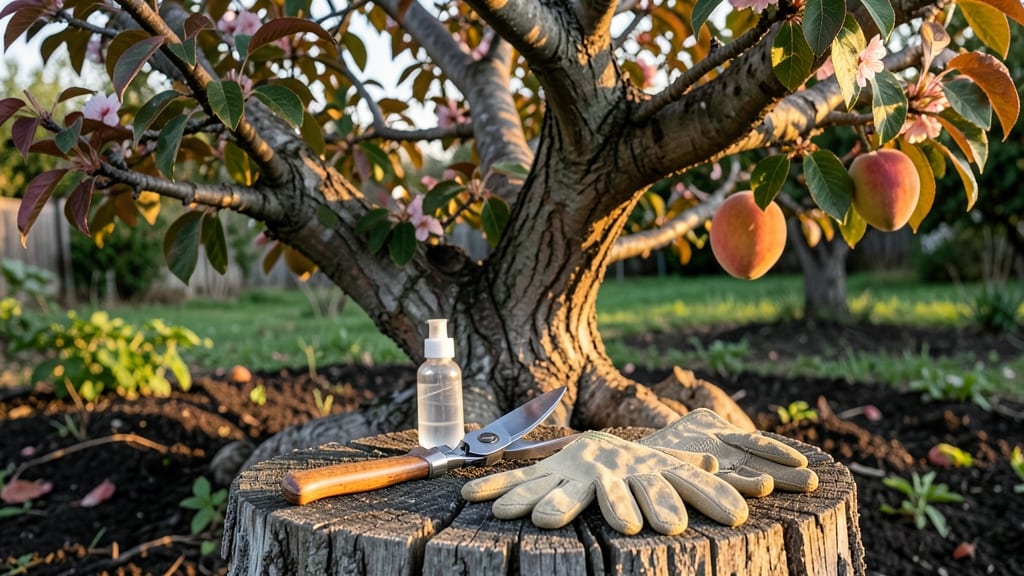
Pruning peach trees in Texas during dormancy transforms weak canes into fruit-bearing powerhouses. ✂️ I’ve spent years perfecting this process through Texas winters—where timing and technique beat back pests and frost damage.
The key? Prune when the tree’s sap slows but before spring growth starts, usually in late February to early March for most of the state.
You’ll need sharp bypass pruners, a saw for thicker branches, and rubbing alcohol to sterilize tools between cuts. Texas peaches thrive when you remove dead, crossing, or crowded branches first, then shape the tree to let sunlight reach the center.
This isn’t just about aesthetics—it’s about stronger canes and bigger fruit next season.
After pruning, seal larger cuts with pruning sealant to prevent disease, especially in humid East Texas. The first flush of new growth appears in 2-3 weeks, signaling your tree is healing.
For Central and West Texas, watch for early spring warmth—prune too late, and you’ll encourage late blooms that frost can ruin.
This method works for both backyard trees and commercial orchards, adapting to Texas’ varied climates. The payoff? Trees that produce earlier, sweeter fruit with fewer pest issues. Ready to sharpen those pruners?
📚 In This Guide
- What you need
- Instructions
- Tips and common mistakes
- Wrapping up and next steps
What you need
- ● Pruning shears: Bypass pruners (sharp, 6–8" blades) – 1 pair (for small branches). Opt for ratcheting or bypass types for cleaner cuts.
- ● Loppers: Bypass loppers (18–24" handles) – 1 pair (for branches ½"–2" thick). Look for ergonomic grips to avoid hand fatigue.
- ● Pruning saw: Curved-tooth pruning saw – 1 (for branches >2" thick). A foldable design saves space.
- ● Disinfectant: 70% isopropyl alcohol or bleach solution (1 part bleach : 9 parts water) – small spray bottle (to sterilize tools between cuts and prevent disease).
- ● Gloves: Heavy-duty gardening gloves (cut-resistant) – 1 pair (protects from thorns and blisters).
- ● Safety gear: Safety glasses – 1 pair (debris can fly!).
- ● Long sleeves/pants – 1 set (thorn protection).
- ● Extension pole: Telescoping pole (for hard-to-reach branches) – 1 (attachable to loppers/saws).
- ○ Tree wound paint: Pruning sealant (optional for large cuts >1" diameter) – small jar (controversial—skip if your tree is healthy!).
- ● Marking twine: Colored twine – small spool (to flag branches for removal).
- ● Wheelbarrow/bucket: – 1 (for hauling debris).
- ● Notebook/pencil: – 1 (to sketch your tree’s structure post-prune).
- ● Timing: Prune during dormant season (late winter/early spring, January–February in Texas) before buds swell.
- ● Weather: Choose a dry, calm day (avoid rain or wind to prevent disease spread).
- ● Tree health: Inspect for pests/disease (e.g., peach leaf curl) before pruning. Treat if needed.
- ● Safety check: Ensure no power lines are near your tree (use a ladder safely or hire help if needed).
Step-by-Step instructions for pruning peach trees in Texas dormant season
Here's how to transform your Texas peach tree into a fruit-bearing powerhouse through precise dormant-season pruning.
✂️ Step 1: Remove Dead, Diseased, and Crossing Branches First
Start by eliminating any branches that are completely dead, showing signs of disease (like fungal spots or oozing cankers), or rubbing against each other. These are your tree's weak points that will drain energy if left unchecked. Use sharp, clean pruners to make cuts just outside the branch collar—the swollen area where the branch meets the trunk.
I always prune these first because they're the easiest to spot and remove. A good rule of thumb is to cut back to a healthy bud or lateral branch. If you're unsure whether a branch is dead, scratch the bark—live wood is greenish underneath while dead wood stays brown. Texas heat can mask some issues, so examine closely under bright light.
🌿 Step 2: Thin Out Overcrowded Branches for Better Airflow
Peach trees need good airflow to prevent fungal diseases that thrive in Texas humidity. Remove about 20-25% of the tree's branches, focusing on those growing inward or downward. These branches compete for sunlight and nutrients while creating shady, damp conditions perfect for brown rot. Make your cuts at a 45-degree angle just above an outward-facing bud.
Here's the thing—don't remove more than a quarter of the tree's canopy at once. You'll see the skeleton of the tree become more visible as you work, with main branches spreading outward like spokes on a wheel. This open structure lets sunlight penetrate to the center where fruit develops. I like to step back every few cuts to visualize the tree's shape from all angles.
☀️ Step 3: Shape the Tree for Maximum Sun Exposure
Texas peaches need full sun to ripen properly, so your goal is to create an open, vase-like shape. Remove any branches growing straight up (called "water sprouts") or those that create dense clusters. Cut back these vertical shoots to a lateral branch or bud that grows at a 45-degree angle or less from the trunk.
For mature trees, limit the central leader (main upward branch) to about 3-4 feet tall. This encourages fruiting on lower branches where you can reach them easily. I always prune on a dry day when the tree is completely dormant—typically between late January and early March in Texas. The tree's energy is focused on root growth during this time, so it recovers quickly from pruning.
⏰ Step 4: Clean Up and Sanitize Your Work Area
After pruning, rake up all fallen leaves and debris from under the tree. These often harbor fungal spores that can reinfect your tree. Burn or bag the debris rather than composting it—Texas's wet springs create perfect conditions for fungal spread. Wipe down your pruners with rubbing alcohol between cuts to prevent spreading disease from one branch to another.
Finally, apply a thin layer of mulch around the base of the tree (keeping it 2-3 inches away from the trunk) to retain moisture and regulate soil temperature. This is especially important in Texas where summer heat can stress newly pruned trees. Water deeply but infrequently after pruning to encourage deep root growth rather than shallow, surface roots.
Tips & tricks for perfect peach tree pruning in Texas
These pro-level insights will help you transform your dormant-season pruning into a strategic advantage for next year's harvest.
Branch Collar Precision: When making cuts in Step 1, focus on the branch collar—the swollen ridge where the branch meets the trunk. Cutting just outside this area (about 1/8 inch) prevents unsightly stubs and promotes faster healing. I've seen too many pruning mistakes where people cut too close to the trunk, creating wounds that invite disease. Use a sharp pruner and make clean cuts at a slight angle to avoid tearing the bark.
Visualizing the Open Center: In Step 2, when thinning branches, imagine sunlight streaming through the center of your tree like rays. The goal is to create an open vase shape where air circulates freely. I recommend working in sections—start at the outer branches and move inward. This makes it easier to visualize the tree's final structure. Remember, you're sculpting a framework that will support fruit production for years to come.
Water Sprout Strategy: Those fast-growing vertical shoots in Step 3 (water sprouts) might seem harmless, but they're energy vampires. Cut them back to a lateral branch growing at a 45-degree angle or less. This redirects the tree's energy toward fruit production rather than vertical growth. Pro tip: Look for buds that face outward—they'll become your new fruiting branches. I've seen trees double their fruit yield after properly managing water sprouts.
Texas-Specific Timing: The late January to early March window in Step 3 is critical for Texas peach trees. This dormant period allows the tree to recover quickly while avoiding spring frost damage. If you're in South Texas, you might extend this slightly later, but never prune when buds are swelling. The tree's sap flow is minimal during dormancy, so it handles pruning stress much better. Mark your calendar now—don't wait until you see buds forming!
Pro Tips for Peach Tree Pruning Texas
- These pro-level insights will help you transform your dormant-season pruning into a strategic advantage for next year's harvest.
- Branch Collar Precision: When making cuts in Step 1, focus on the branch collar—the swollen ridge where the branch meets the trunk.
- Visualizing the Open Center: In Step 2, when thinning branches, imagine sunlight streaming through the center of your tree like rays.
Frequently asked questions
Got questions about peach tree pruning in Texas?
You’re not alone! Here are answers to the most common concerns—from timing to tools—to help you prune like a pro and keep your tree thriving.
When is the best time to prune a peach tree in Texas?
Prune your peach tree during dormancy—typically late winter or early spring (January–February in Texas) before buds swell. Avoid pruning in fall, as it can invite disease. For light shaping, you can prune lightly after harvest, but never remove more than 25% of the canopy at once to avoid stress.
Do I need special tools for peach tree pruning?
Basic tools like bypass pruners, loppers, and a pruning saw work well, but sanitize them with rubbing alcohol between cuts to prevent bacterial spread. For larger branches, a pole saw or extension pruners can help. Sharp tools = cleaner cuts = faster healing!
What if my peach tree has dead or diseased branches?
Remove any dead, diseased, or crossing branches first—cut back to the branch collar (the swollen area where branches meet the trunk). If you spot fungal issues (like brown rot), prune in dry weather and dispose of infected wood off-site. Never compost diseased branches!
Will pruning reduce my peach harvest next year?
Not if done right! Proper pruning increases fruit quality and yield by improving airflow and sunlight. Focus on opening the canopy and removing water sprouts (shoots growing straight up). Over-pruning can reduce harvest, but following the 1/3 rule (never remove >1/3 of foliage at once) keeps your tree productive.
What if I miss the dormant season window?
Don’t stress! Light pruning (removing only dead or damaged wood) can be done anytime. However, avoid heavy pruning in summer or fall, as it stresses the tree and invites pests. If you wait, prioritize structural pruning in late winter—your tree will thank you with better fruit next season!
Wrapping up and next steps
Pruning your peach tree in Texas during the dormant season is your secret weapon for healthier canes, better fruit production, and a thriving orchard! 🌱 By mastering the right techniques—like removing dead wood, thinning crowded branches, and shaping for airflow—you’ll set your tree up for a bountiful harvest next season.
Remember, consistency and patience are key, so grab those pruners and get to work with confidence!
Next step? Mark your calendar for late winter or early spring, gather your tools, and give your peach tree the care it deserves. Your future fruit will thank you! 🍑✨