
Pruning
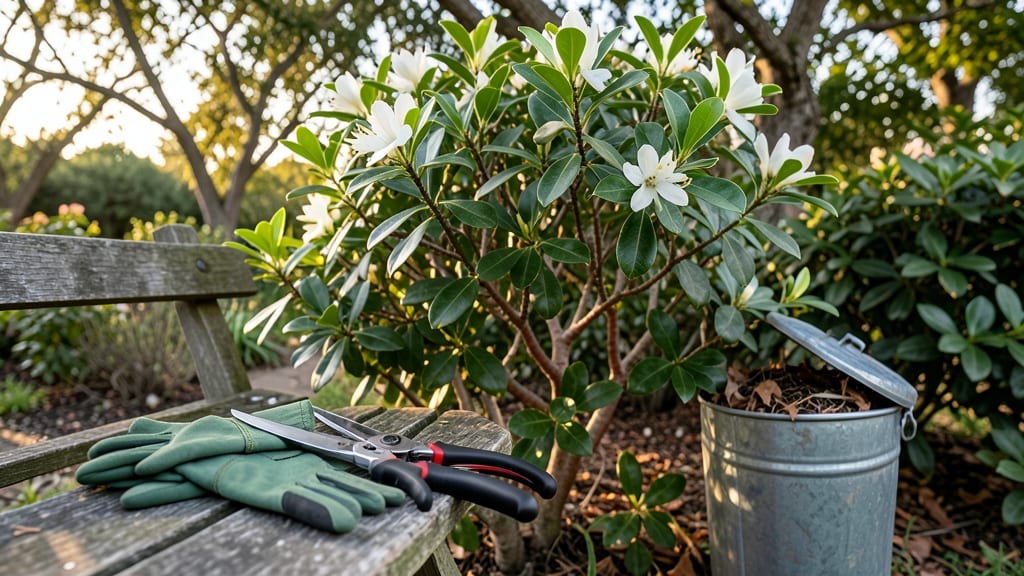
Pruning mock orange bushes in late winter transforms your fragrant hedge from a tangled mess into a showstopping spring display. ✂️ I’ve learned the hard way that waiting until summer means sacrificing blooms—this dormant-season approach guarantees lush growth and heavy fragrance by June.
The key is cutting back one-third of the oldest stems while shaping the rest to encourage new shoots.
You’ll need sharp pruners, a disinfectant spray (to prevent disease), and a clear day to assess the bush’s structure. Mock orange responds well to pruning because it blooms on new wood, so aggressive cuts now won’t rob you of flowers.
Start by removing dead or crossing branches first—they’re the easiest to spot and the most critical to eliminate.
After pruning, your bush will reward you with vibrant green growth by early spring and fragrant white blossoms by late spring. The secret? Step back often to check your shape—mock orange grows quickly, so regular light pruning keeps it compact.
Avoid heavy cuts after mid-summer, or you’ll risk losing next year’s blooms entirely.
This method works for both small shrubs and large hedges, and it’s perfect for rejuvenating overgrown bushes. Once you master the timing and technique, your mock orange will become the most fragrant, well-behaved plant in the yard—no more struggling with tangled branches or weak blooms.
📚 In This Guide
- What you need
- Instructions
- Tips and common mistakes
- Wrapping up and next steps
What you need
- ● Pruning shears: Bypass pruners with sharp, bypass blades (4-6" blade length) for clean cuts. Dull blades crush stems—avoid this!
- ● Loppers: 1 pair (18-24" blade length) for thicker branches (½"–1½" diameter). Look for ratchet or bypass designs for leverage.
- ● Hand saw: 1 pruning saw (8-10" blade) for stubborn, larger branches (1½"+ diameter). Curved or concave blades work best.
- ○ Disinfectant: 70% isopropyl alcohol or a pruning sealant (optional but recommended to prevent disease spread).
- ● Gloves: 1 pair gardening gloves (nitrile or leather) to protect hands from thorns and sap.
- ● Cleaning cloth or paper towels: For wiping tools between cuts (prevents bacterial transfer).
- ○ Pruning paint/sealant: 1 small bottle (e.g., Tanglefoot Tree Wound Pruning Seal) for sealing large cuts (optional but helpful for woody stems).
- ● Extension pole: Attachable to loppers/saws for high branches (12–16 ft).
- ● Marking twine or flags: To tag branches for removal (if pruning in stages).
- ● Wheelbarrow or bucket: For collecting debris (especially if mulching later).
- ● Safety glasses: To shield eyes from flying debris.
- ● Notebook & pen: To jot down notes on branch locations or pruning patterns.
- ● Timing: Prune during late winter or early spring (dormant season), before new growth emerges. Avoid pruning in fall or summer.
- ● Weather: Choose a dry, overcast day to minimize stress on the plant and reduce disease risk.
- ● Safety first: Wear closed-toe shoes and avoid pruning near power lines.
- ● Plant health check: Inspect the bush for pests or disease before pruning. Treat issues first if spotted.
Step-by-step guide for pruning mock orange bushes in dormant season
Here's the precise method I've used for years to rejuvenate mock orange bushes—keeping them fragrant, full, and healthy through winter.
✂️ Step 1: Assess the Bush Structure Before Pruning
Start by examining your mock orange bush in late winter or early spring, before new growth begins. Look for dead, diseased, or crossing branches—these are your first targets. I like to use a sharp pair of pruning shears to make clean cuts, and I always sanitize them with rubbing alcohol between cuts to prevent spreading disease.
Focus on removing branches that grow inward or rub against each other, as these create wounds and reduce airflow. You'll also spot overcrowded areas where multiple branches compete for sunlight. The goal here is to open up the center of the bush so light and air can circulate freely—this prevents fungal issues and encourages stronger blooms.
✂️ Step 2: Remove Dead, Damaged, or Weak Growth
Cut back any dead or dying branches all the way to the base of the plant. These are easy to spot—they're brown, brittle, and often snap off when you gently bend them. For weak or spindly growth, prune back to a strong lateral branch or bud, cutting at a 45-degree angle just above a outward-facing bud. This encourages new growth in the right direction.
I always make my cuts just outside the bud collar (the swollen area where leaves or branches emerge) to promote healthy regrowth. Avoid leaving stubs—these can rot and attract pests. If you're unsure whether a branch is dead, scratch the bark with your fingernail. If it's green underneath, it's still alive and should stay.
✂️ Step 3: Thin Out Overcrowded Branches for Better Airflow
Mock orange bushes naturally grow dense, but too much thickness can lead to fungal diseases and weak blooms. Selectively remove 10-20% of the oldest, thickest branches to improve airflow and sunlight penetration. Start with branches that are larger than your thumb in diameter—these are often the culprits blocking light from reaching the center.
When thinning, prioritize branches that are growing inward or downward. You'll know you're doing it right when you can see light filtering through the center of the bush. This step is crucial for maintaining the plant's health and ensuring those signature fragrant white blossoms return in full force next season.
✂️ Step 4: Shape the Bush for Optimal Growth and Blooms
Now it's time to refine the shape of your mock orange bush. Mock orange responds well to light shaping pruning, so avoid drastic cuts—focus on refining the outline rather than reshaping it completely. Prune back any branches that are growing too long or leggy, cutting just above a healthy outward-facing bud to encourage bushier growth.
I like to step back every few minutes to assess the bush's balance. The goal is to create a rounded, open canopy that allows sunlight to reach all parts of the plant. This not only improves bloom production but also makes it easier to enjoy the intense, sweet fragrance of the flowers later in the season. Avoid heavy pruning—mock orange blooms on older wood, so don't cut back more than one-third of the plant in a single season.
⏰ Step 5: Clean Up and Monitor for New Growth
After pruning, gather all the clippings and dispose of them properly—either in a sealed bag or by burning (if local regulations allow). This prevents pests and diseases from lingering in your garden. I also like to sanitize my tools again with rubbing alcohol to ensure they're clean for the next use.
Once the pruning is done, keep an eye on the bush as it begins to break dormancy. You'll see new green buds emerge within a few weeks—this is your sign that the pruning was successful. Water the base of the plant deeply to help it recover, and avoid fertilizing until you see new growth (usually in early spring). This ensures the plant focuses its energy on establishing strong roots before producing leaves and flowers.
Tips & tricks for pruning mock orange bushes
Transforming your mock orange bush from overgrown to revitalized takes precision—not guesswork. Here’s how to elevate your dormant-season pruning game.
Timing is Everything: Late winter or early spring is the sweet spot for pruning mock orange bushes, right before new growth emerges. This timing ensures you’re not cutting back fresh buds that could have become next year’s fragrant blooms. I’ve seen gardeners accidentally prune too early in winter, leaving their bushes vulnerable to cold damage, or too late in spring, cutting back growth that was already underway. Aim for when the bush is still dormant but the weather is warming up—usually between late February and early March in most climates.
Tool Precision Matters: Sharp, clean pruning shears aren’t just a suggestion—they’re non-negotiable. Dull blades crush stems instead of making clean cuts, which can damage the plant and invite disease. I invest in high-quality bypass pruners and always sanitize them with rubbing alcohol between cuts, especially when dealing with diseased branches. For thicker branches (larger than your thumb), use loppers or a pruning saw. The cleaner the cut, the faster the bush recovers and the healthier the new growth.
Visualize the Canopy: Before making a single cut, step back and assess the bush’s overall structure. The goal is to create an open, rounded shape that allows sunlight to penetrate the center. I like to imagine the bush as a dome—every cut should contribute to that vision. Focus on removing branches that grow inward or downward, as these block light and air circulation. If you’re unsure whether to cut a branch, ask yourself: Does this branch add to the bush’s beauty and health, or is it just taking up space?
Post-Pruning Care: Once you’ve finished shaping the bush, don’t just walk away. Dispose of clippings properly—either in a sealed bag or by burning (if local regulations allow)—to prevent pests and diseases from spreading. Then, give the bush a deep watering to help it recover. Avoid fertilizing until you see new growth, usually in early spring. This ensures the plant directs its energy toward root and branch development rather than producing leaves or flowers too soon.
Pro Tips for Mock Orange Bush Pruning
- Transforming your mock orange bush from overgrown to revitalized takes precision—not guesswork.
- Timing is Everything: Late winter or early spring is the sweet spot for pruning mock orange bushes, right before new growth emerges.
- Tool Precision Matters: Sharp, clean pruning shears aren’t just a suggestion—they’re non-negotiable.
Frequently asked questions
Got questions about pruning your mock orange bush like a pro? You’re not alone—many gardeners wonder about timing, techniques, and how to keep their fragrant shrubs thriving. Here are the answers to the most common queries to help you prune with confidence!
When is the best time to prune a mock orange bush?
The ideal time is late winter or early spring, just before new growth begins. This dormant-season pruning (February–March in most climates) promotes healthier blooms and reduces disease risk. Avoid pruning in fall—it can stimulate tender new growth that won’t survive winter.
How much can I trim my mock orange bush back?
Mock orange bushes tolerate moderate pruning—you can safely remove up to one-third of the plant’s height per year. For shaping, focus on thinning out crowded branches and cutting back leggy stems to encourage bushier growth. Never remove more than 25% in a single season unless rejuvenating an overgrown shrub.
What if my mock orange bush isn’t blooming after pruning?
Lack of blooms often stems from pruning at the wrong time (e.g., after flowering) or over-trimming. Mock orange blooms on old wood, so avoid heavy cuts in late summer or fall. If blooms are sparse, try light pruning in early spring and fertilize with a balanced, phosphorus-rich formula to encourage flowering.
Can I prune a mock orange bush in summer?
Summer pruning is possible, but it’s not ideal—it can stress the plant and reduce next year’s blooms. If you must prune in summer (e.g., to control size), do it after flowering and keep cuts minimal. Water thoroughly post-pruning to help the bush recover. For best results, stick to dormant-season pruning!
What should I do if my mock orange bush looks sad after pruning?
Don’t panic! A slightly ragged appearance is normal post-pruning. Focus on proper aftercare:
- Water deeply to help recovery.
- Avoid heavy fertilizing until new growth appears.
- Monitor for pests (like aphids) and treat if needed.
Wrapping up and next steps
Pruning your mock orange bush during dormancy isn’t just about tidying up—it’s your secret to a bloom-packed, fragrant future! 🌿 With the right tools, timing, and technique, you’ll encourage lush growth and those iconic citrusy blooms.
Now that you’re armed with the know-how, there’s no better time to roll up your sleeves and give your bush the care it deserves.
Ready to see transformation? Grab your pruners and schedule that pruning session—your mock orange’s revival starts with you! 🌸