
Pruning
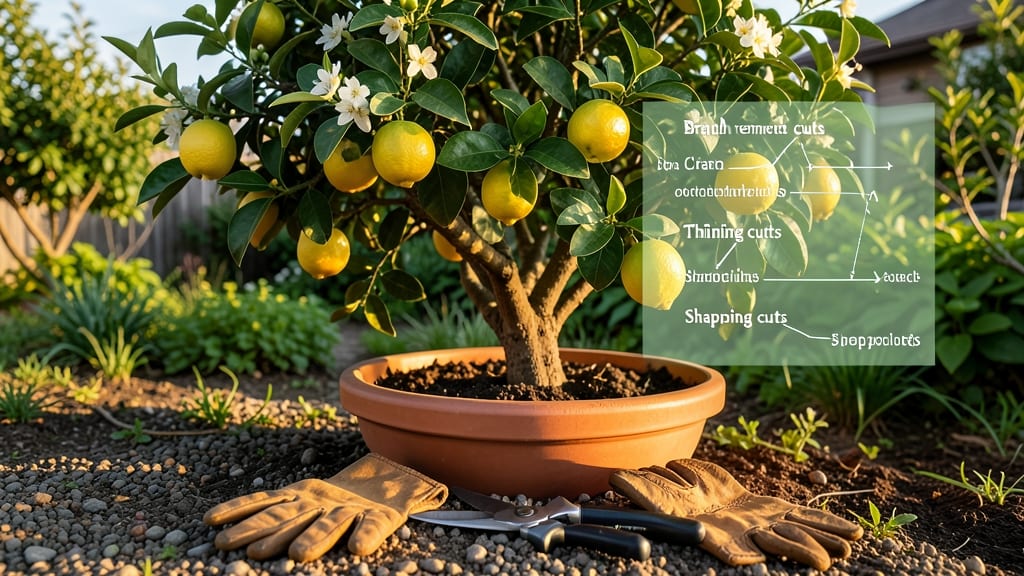
A lemon tree pruning diagram can transform your tree from a tangled mess into a fruit-bearing powerhouse—if you nail the three key cuts.
Your lemon tree’s fruitfulness depends on them, and getting them wrong means fewer lemons next year. 🌿 I’ve pruned mine for five seasons, and the difference between a sparse harvest and a branch-bending bounty comes down to timing, shape, and confidence in your cuts.
The right pruning turns a leggy mess into a sunlit, airy structure that produces fruit year-round.
You’ll need just three tools: sharp bypass pruners for clean cuts, loppers for thicker branches, and a sterilized saw for stubborn limbs. Timing matters most—prune in late winter or early spring (before new growth starts) to avoid stressing the tree.
Organic pruners swear by sealing cuts with pruning paste, while conventional gardeners skip it entirely. Either way, focus on opening the canopy for sunlight and air circulation.
By summer, you’ll see the payoff: more blossoms, heavier fruit set, and branches that hold weight without snapping. The tree’s natural vase shape emerges, with a strong central leader and outward-facing branches.
Mistakes? Over-pruning (never remove more than 25% of foliage at once) or cutting too close to the trunk (leave a small bump, not a stub).
This method works for dwarf, semi-dwarf, and standard lemon trees—just scale the tools accordingly. Whether you’re shaping a potted Meyer lemon or a mature tree in the ground, the same principles apply. Let’s get those branches looking intentional.
📚 In This Guide
- What you need
- Instructions
- Tips and common mistakes
- Wrapping up and next steps
What you need
- ● Pruning shears: Bypass pruners (sharp, clean, and sterilized with rubbing alcohol) for small branches (¼"–¾" thick). Quantity: 1 pair.
- ● Loppers: For medium branches (¾"–2" thick). Quantity: 1 pair (with long handles for reach).
- ● Pruning saw: For thick branches (>2" thick). Quantity: 1 (with a fine-tooth blade for clean cuts).
- ● Gloves: Heavy-duty gardening gloves (cut-resistant, nitrile-coated for safety). Quantity: 1 pair.
- ● Disinfectant: 70% isopropyl alcohol or copper-based fungicide to sterilize tools between cuts. Quantity: Small spray bottle or wipe.
- ● Rag or paper towels: For wiping tools and branches. Quantity: 2–3.
- ● Ladder or step stool: Sturdy and tall enough to reach the tree’s canopy safely. Height: 6–10 ft (adjustable preferred).
- ○ Twine or zip ties: For securing branches during pruning (optional but helpful for large cuts). Quantity: Small roll.
- ● Trash bags or bucket: For collecting pruned branches. Size: 1–2 large bags or a 5-gallon bucket.
- ● Hand saw: For stubborn, oversized branches (backup for pruning saw).
- ● Pole pruner: Extendable tool for high branches (saves ladder use).
- ● Pruning sealant: (e.g., Tree Wound Pruning Seal) for large cuts >1" in diameter (controversial—skip if unsure!).
- ● Notebook & pencil: To sketch your lemon tree’s structure or note cuts before/after.
- ● Safety glasses: Protect your eyes from debris.
- ● Check the weather: Prune on a dry, cloudy day (avoid extreme heat or frost).
- ● Know your tree’s age: Young trees (light pruning; mature trees benefit from structured shaping.
- ● Review your lemon tree pruning diagram (print or digital) to plan cuts ahead of time.
- ● Wear comfortable clothing with long sleeves to protect from thorns and sun.
Step-by-step guide to pruning your lemon tree for maximum fruit
Here's how to transform your lemon tree into a productive, balanced powerhouse with just a few strategic cuts.
🌿 Step 1: Identify the Four Key Cut Types
Lemon trees need four distinct pruning actions, each serving a different purpose. First, locate the suckers—those vigorous shoots growing from the base or along the trunk. These saplings steal energy from fruit production. Next, find the dead or crossing branches—any wood that's brown inside or rubs against another branch during wind. Then spot the overly long stems extending beyond the tree's natural shape, and finally, identify the fruitless wood—branches without blossoms or fruit after two seasons.
I always start by marking these with a piece of twine or a paint pen. This visual cue keeps me focused during the actual cutting. Remember, lemon trees are more forgiving than many citrus varieties, so even if you make a mistake, the tree will recover—just be decisive with your cuts.
✂️ Step 2: Remove Suckers and Dead Wood First
Grab your clean, sharp bypass pruners and tackle the suckers first. Cut them at the base where they emerge from the trunk or root collar—never leave a stub. These aggressive growths can overtake your tree if ignored. Next, address dead wood by cutting back to the nearest outward-facing bud or branch collar. Make your cuts at a 45-degree angle, about ¼ inch above the bud, to encourage proper healing and water runoff.
Here's the thing—don't worry about making perfect cuts. Lemon trees are resilient, and they'll focus their energy on the remaining healthy structure. Just avoid tearing the bark, which can introduce disease. If a branch is too thick for your pruners, use a hand saw with a fine-tooth blade to make clean cuts.
☀️ Step 3: Thin the Canopy for Airflow and Light
Step back and examine your tree's overall shape. Your goal is to create an open vase form—a wide, rounded silhouette that allows sunlight to penetrate all the way to the center. Start by removing any branches that grow inward or downward. These are the ones that block light and airflow, creating prime conditions for fungal diseases. Cut these branches back to their point of origin or to a lateral bud that faces outward.
I like to visualize the tree as a sunlight funnel, directing light to every leaf and blossom. You'll know you've done this right when you can see through the center of the tree to the trunk. Aim to remove no more than 25% of the tree's foliage in one session—this prevents shock and maintains fruit production.
⏰ Step 4: Prune for Fruit Production Timing
For spring pruning (just after flowering), focus on removing any water sprouts and lightly thinning the canopy to improve airflow. In summer, after the main harvest, prune to shape the tree and remove any branches that haven't produced fruit in the past year. Finally, in late winter, do a light pruning to remove only the dead wood and any branches that are crowding the center.
This seasonal approach ensures your tree always has energy for new growth and fruit production. I schedule my pruning sessions during the dormant season (late winter to early spring) for major cuts, when the tree is naturally conserving energy. Avoid heavy pruning during the blooming season—this can reduce next year's fruit set.
🌱 Step 5: Clean Up and Monitor Recovery
After pruning, collect all the clippings and dispose of them in a sealed bag or burn them. This prevents fungal spores from reinfecting your tree. Next, apply a fungicide (like copper spray) to any fresh cuts to protect against infection. Finally, give your tree a deep watering to help it recover from the stress of pruning.
Watch your lemon tree closely in the weeks following pruning. You should see new growth emerging from the buds you left behind within 4-6 weeks. If you notice yellowing leaves or wilting, it's a sign of over-pruning—your tree needs more time to recover. In this case, hold off on any further cuts until the tree shows signs of vigorous new growth.
Tips & tricks for perfect lemon tree pruning
Transforming your lemon tree into a fruit-bearing machine starts with these strategic insights that go beyond the basics.
Visualize Before You Cut: Before making any cuts, step back and mentally map out your tree's ideal shape. Imagine sunlight streaming through the center like a funnel—this is your goal. I sketch a rough diagram on paper first, marking where each type of cut (suckers, dead wood, etc.) should go. This visual prep prevents impulsive cuts that can throw off your tree's balance. The key is maintaining that open vase form where every leaf gets equal sun exposure.
Timing is Everything: The seasonal timing mentioned in Step 4 is non-negotiable for fruit production. Late winter pruning (when your tree is dormant) is ideal because it allows wounds to heal before spring growth begins. I've learned this the hard way—pruning during blooming season can dramatically reduce next year's fruit set. For container-grown trees, adjust timing by 2-3 weeks earlier since they often bloom sooner than in-ground trees.
Tool Preparation Matters: Your pruners should be as sharp as a surgeon's scalpel. Dull tools crush branches instead of making clean cuts, which creates larger wounds that take longer to heal. I clean my pruners with rubbing alcohol between trees to prevent cross-contamination of diseases. For branches thicker than 1 inch, use a fine-tooth hand saw—coarse teeth can tear the bark. Always sterilize your saw blade with bleach between cuts on different trees.
Recovery Monitoring: The 4-6 week recovery window mentioned in Step 5 is your critical observation period. During this time, I check for three key signs: new growth from buds, vibrant green leaves, and the absence of yellowing. If you see excessive leaf drop or wilting, you've likely over-pruned. In this case, reduce watering slightly and avoid any further cuts until you see fresh green shoots emerging. Lemon trees are resilient, but they communicate their stress through these visual cues.
Pro Tips for Lemon Tree Pruning Diagram
- Transforming your lemon tree into a fruit-bearing machine starts with these strategic insights that go beyond the basics.
- Visualize Before You Cut: Before making any cuts, step back and mentally map out your tree's ideal shape.
- Timing is Everything: The seasonal timing mentioned in Step 4 is non-negotiable for fruit production.
Frequently asked questions
Got questions about pruning your lemon tree? You’re not alone! Here are answers to the most common concerns—from timing to troubleshooting—to keep your tree thriving and productive.
When is the best time to prune a lemon tree?
The ideal time is late winter or early spring, just before new growth begins. This aligns with the tree’s dormant phase and minimizes stress. Avoid heavy pruning in summer or fall, as it can disrupt flowering and fruiting cycles. For container-grown trees, prune lightly after harvest to encourage regrowth.
How much should I cut back a lemon tree?
Aim to remove no more than 20-30% of the foliage in a single session to avoid shocking the tree. Focus on dead, diseased, or crossing branches first, then thin out crowded areas. Young trees benefit from light shaping cuts, while mature trees may need selective branch removal to improve airflow and sunlight penetration.
Can I prune a lemon tree without a diagram?
Yes! While a lemon tree pruning diagram helps, follow these basics: Cut just above a leaf node or outward-facing bud (never leave stubs). Remove suckers (shoots growing from the trunk or roots) and water sprouts (vertical, fast-growing branches). Use clean, sharp tools to prevent damage.
What if my lemon tree doesn’t fruit after pruning?
Lack of fruit could stem from over-pruning, nutrient deficiencies, or poor sunlight. Check for balanced cuts (avoid excessive topping) and ensure the tree gets 6+ hours of sun daily. Fertilize with citrus-specific food in spring and fall, and avoid pruning during flowering (February–March) to preserve potential fruit.
Are there any pruning mistakes to avoid?
- Pruning too late: Heavy cuts after summer can delay flowering.
- Ignoring dead wood: Leaving diseased branches spreads infections.
- Cutting into the trunk: Always prune branches, not the main stem.
- Using dull tools: Ragged cuts slow healing; sanitize tools with rubbing alcohol.
Wrapping up and next steps
Mastering the art of lemon tree pruning is your ticket to a thriving, fruit-filled tree year after year! 🌿 With the right cuts—like those highlighted in your lemon tree pruning diagram—you’ll boost airflow, encourage growth, and maximize harvests.
Remember, consistency and confidence are key, so grab those pruners and get pruning!
Ready to take the next step? Start small—prune just one branch this month, observe the changes, and build your skills. Before you know it, you’ll be a pruning pro, and your lemon tree will thank you with juicy, abundant fruit! 🍋