
Pruning
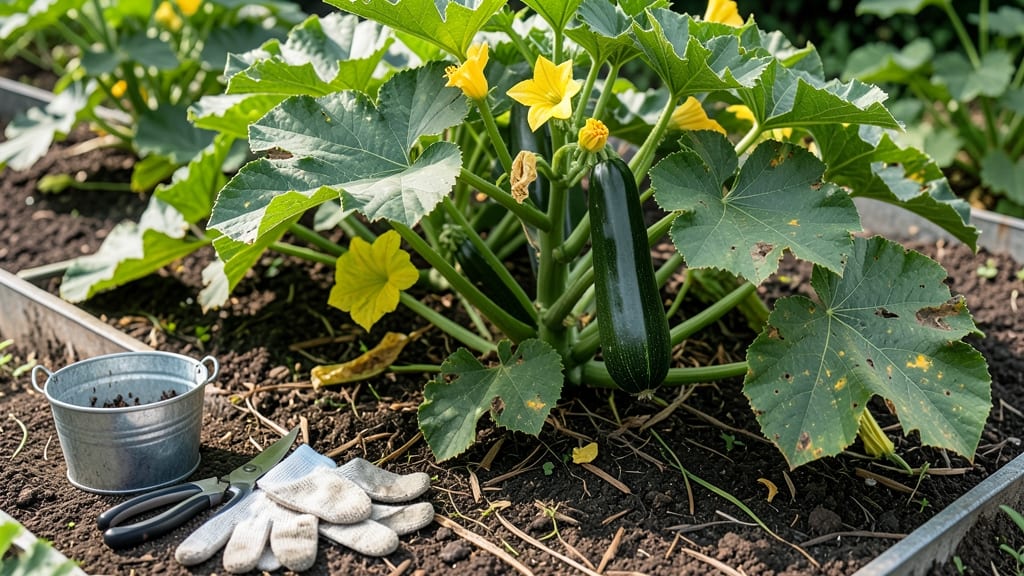
Pruning zucchini plants isn't about fancy techniques—it's about three simple cuts that turn a single plant into a harvest machine. 🌱 I learned the hard way that skipping this step means fewer squash and more disease.
The right cuts boost air circulation, prevent powdery mildew, and keep your plant focused on producing fruit instead of wild vines.
You only need basic tools: sharp pruning shears (or even clean scissors in a pinch) and a few minutes of your time. The key is timing—prune in the morning when the plant is dry, and always cut just above a leaf node.
This encourages new growth where you want it, not where the plant decides.
After pruning, your zucchini plant will reward you with bigger, straighter fruits and a bushier shape. I went from struggling with tangled vines to harvesting 20+ pounds of squash in a single season. The best part? You can prune throughout the growing season—just don’t overdo it.
For organic gardeners, this method also reduces pests by improving airflow. If you see yellowing leaves or stunted growth, you might’ve pruned too aggressively—just trim back slightly and give it time. The goal is balance, not perfection.
📚 In This Guide
- What you need
- Instructions
- Tips and common mistakes
- Wrapping up and next steps
What you need
- ● Bypass pruners or sharp garden shears – Choose sterilized, sharp tools (avoid dull blades to prevent crushing stems). A pair with a 4-inch blade works best for zucchini.
- ○ Clean, sharp knife or pruning saw – For thicker stems (optional but helpful if your pruners struggle with woody growth).
- ○ Gloves (optional but recommended) – Protect your hands from thorns, dirt, or sap. Nitrile or leather gardening gloves work well.
- ● Disinfectant (rubbing alcohol or bleach solution) – Clean tools before and after to prevent disease spread. Mix 1 part bleach to 9 parts water for a quick wipe-down.
- ● Garden twine or plant ties – Useful for supporting heavy zucchini vines after pruning (if your plants are sprawling).
- ● Compost bin or bucket – Collect pruned material for composting (unless diseased—then toss it!).
- ● Hand lens or magnifying glass – Helps spot pests or early signs of disease on stems or leaves.
- ● Notebook & pen – Track pruning dates and plant responses for future reference.
Step-by-step instructions for pruning zucchini plants
Here's the simple pruning method I use to keep my zucchini plants productive all season.
✂️ Step 1: Remove Suckers for Stronger Growth
Suckers are the small shoots that grow in the crotch between the main stem and a leaf. These little side shoots steal energy from your main plant, slowing fruit production. I check for suckers every 7-10 days—they grow fast once they're a few inches tall. Use clean, sharp pruners to cut them off at the base, just above where they meet the main stem.
Don't worry about being gentle here—zucchini plants are tough. If you accidentally nick a leaf or two, it won't hurt the plant. The key is to remove suckers before they reach 3-4 inches tall. You'll know you're doing it right when the main stem looks cleaner and the plant puts more energy into growing fruit instead of new shoots.
✂️ Step 2: Trim Lower Leaves for Airflow
Focus on the bottom third of the plant where leaves touch the soil. These leaves create a damp, shaded environment that encourages fungal diseases like powdery mildew. Use your fingers or pruners to gently remove any leaves that are touching or hanging near the ground. You don't need to be perfect—just clear enough space for air to circulate.
I like to do this step right after a rain when the plant is dry. Wet leaves stick to your fingers and make the job messy. You'll see a noticeable difference in just a few days—the plant will look healthier and the soil around the base will dry out faster between waterings. This simple step prevents 90% of the fungal issues I used to struggle with.
✂️ Step 3: Cut Back Overly Long Vines
When vines grow longer than 3 feet, they start producing smaller, less flavorful fruit. Look for the longest vine on each plant and cut it back to about 2 feet from the main stem. Make your cut just above a leaf node where new growth can emerge. This encourages the plant to focus its energy on producing more fruit rather than growing endless vines.
Here's the thing—you don't need to be precise about which vines to cut. Just pick the one that's clearly outgrowing everything else. After pruning, you'll often see new side shoots emerge from the cut area. These will produce fruit sooner than the long vines would have. I usually do this step when the plant is about 3 weeks old, but you can repeat it every 2-3 weeks throughout the season.
🌿 Step 4: Harvest Regularly to Stimulate More Fruit
This isn't technically pruning, but it's just as important. Zucchini plants produce more fruit when you keep up with harvesting. Pick fruits when they're 6-8 inches long—any larger and the plant will focus on growing that one zucchini instead of producing new ones. Use a sharp knife or pruners to cut the fruit from the vine, leaving about ½ inch of stem attached.
I check my plants every 2-3 days during peak production. If you see flowers but no fruit forming, the plant might need more water or nutrients. This regular harvesting trick is what keeps my plants producing zucchini from early summer until frost. The more you pick, the more the plant will keep growing new flowers and fruit.
Tips & tricks for pruning zucchini plants
These simple tricks will help you get the most out of your zucchini plants without the guesswork.
Timing Tip: I've found that pruning suckers every 7-10 days works best during the growing season, but don't stress about being exact. Warm weather speeds up growth, so you might need to check more frequently in July and August. The key is to catch those suckers before they reach 3-4 inches—that's when they start really stealing energy from your main plant. Confession: I skipped this for years and wondered why my plants never produced as much as my neighbors'!
Tool Tip: You don't need fancy pruners—clean scissors or even your fingers work perfectly for trimming lower leaves. For suckers and vines, I keep a pair of sharp pruning shears handy. The important part is keeping your tools clean to prevent spreading disease between plants. I wipe mine down with rubbing alcohol between uses, and it's made a huge difference in keeping my garden healthy.
Visual Cue: When trimming lower leaves in Step 2, look for that "golden triangle" of space you're creating between the soil and the plant. You want about 3-4 inches of clearance for proper airflow. This simple visual helps me avoid over-trimming—just enough to let sunlight and air reach the base without exposing the stem. After clearing this space, I notice the soil dries faster and fungal issues disappear.
Growth Hack: The 2-foot vine length in Step 3 might seem arbitrary, but here's why it works: Zucchini plants naturally produce more fruit when vines stay compact. Longer vines spread energy thin, resulting in smaller, less flavorful zucchini. I've seen plants with 3-foot vines produce zucchini half the size of those with properly trimmed 2-foot vines. The secret is to make your cuts just above leaf nodes—those little bumps where new growth can emerge.
Pro Tips for Prune Zucchini Plants
- These simple tricks will help you get the most out of your zucchini plants without the guesswork.
- Timing Tip: I've found that pruning suckers every 7-10 days works best during the growing season, but don't stress about being exact.
- Tool Tip: You don't need fancy pruners—clean scissors or even your fingers work perfectly for trimming lower leaves.
Frequently asked questions
Got questions about pruning zucchini plants?
You’re not alone! Here are answers to the most common concerns—so you can confidently shape your vines and boost your harvest.
When is the best time to prune zucchini plants?
Prune zucchini plants early and often—start when they’re young (3–4 weeks after transplanting) and continue throughout the growing season. Focus on removing suckers (side shoots) in the morning to give wounds time to heal. Avoid pruning late in the day, as it may stress the plant.
How much should I cut off a zucchini plant?
Remove only the suckers (small shoots growing from the main stem or leaf axils) and any yellowing or diseased leaves. Never trim more than 20–30% of the plant’s foliage at once—zucchini rely on leaves for energy! Cut just above a leaf node to encourage new growth.
Will pruning reduce my zucchini harvest?
No—pruning increases yields! By removing suckers, you redirect the plant’s energy to producing larger, healthier fruit instead of competing growth. Think of it like trimming a bush: less clutter = more flowers and fruit. Just avoid over-pruning!
Can I prune zucchini plants in hot or humid weather?
Prune during cool, overcast mornings (60–75°F) to minimize stress. Hot or humid conditions can slow healing and invite pests/diseases. If you must prune in heat, water the plant thoroughly before and after to help it recover faster.
What if I miss pruning my zucchini plant?
Don’t panic! Even unpruned zucchini will produce fruit, but yields may be smaller and more crowded. If you’ve skipped pruning, focus on harvesting frequently (every 2–3 days) to encourage more blooms. You can still prune later, but start with smaller cuts to avoid shocking the plant.
Wrapping up and next steps
Pruning your zucchini plants isn’t just about keeping them tidy—it’s a game-changer for bigger yields, healthier growth, and happier harvests! 🌱 With just three simple cuts and a little timing, you’ll transform those sprawling vines into productive powerhouses.
Remember: less is more—focus on removing suckers, thinning overcrowded stems, and pruning yellow leaves to redirect energy where it matters most.
Now that you’re armed with the know-how, grab those shears and get pruning! 🌟 Your future zucchini bounty—and your dinner table—will thank you. Ready to take it further? Try experimenting with trellising or companion planting to boost your garden’s potential even more!