
Pruning
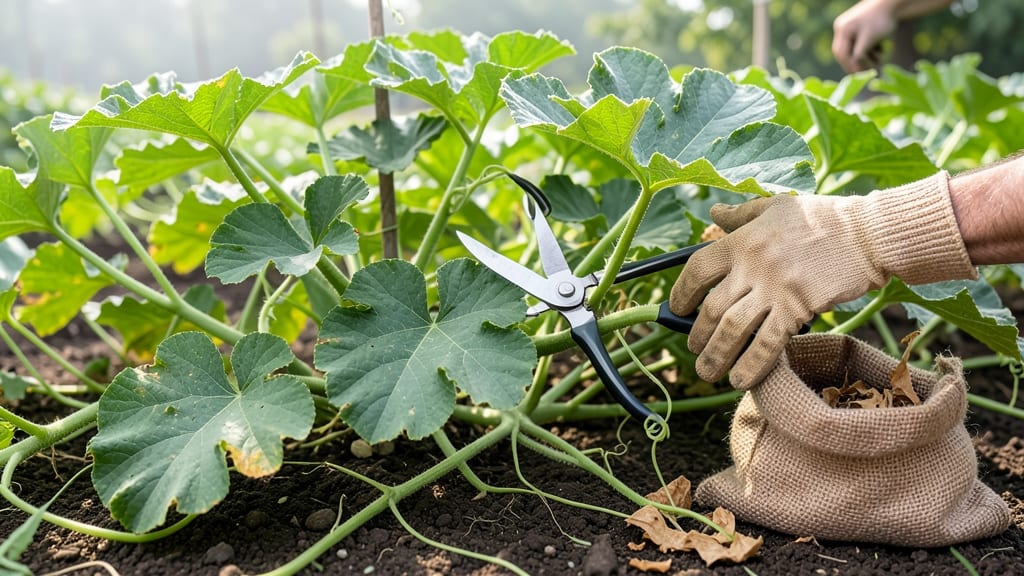
Pruning watermelon plants isn't about cutting back—it's about directing energy where it matters most. ✨ The right pruning turns sprawling vines into productive powerhouses, with larger fruit and fewer wasted resources.
I learned this the hard way after my first watermelon patch produced tiny, bitter melons because the plant was trying to grow too many runners instead of fruit.
You'll need sharp pruning shears, a sunny day, and about 20 minutes of focused work. The goal is simple: remove excess vines and leaves that drain energy from the main stem and fruit.
Start by cutting any side shoots that grow from the main vine—these are the ones that steal nutrients from your melons. Keep only the strongest, healthiest vines that can support fruit growth.
What you end up with is a plant that puts all its effort into growing fewer, larger, sweeter melons instead of spreading everywhere. The vines stay manageable, the fruit ripens faster, and you avoid the frustration of tiny, underdeveloped melons.
This method works for both bush and vining watermelons, and once you see the difference, you'll never go back.
Fair warning: pruning watermelons takes patience—you'll need to check your plants weekly and adjust as they grow. But the payoff is worth it: melons that weigh 20% more and ripen in half the time. Here's how to do it right the first time.
📚 In This Guide
- What you need
- Instructions
- Tips and common mistakes
- Wrapping up and next steps
What you need
- ● Sharp pruning shears or bypass pruners: A high-quality pair (like Felco or Fiskars) with bypass blades (avoid anvil pruners—they crush stems). Quantity: 1 pair.
- ● Garden gloves: Durable, cut-resistant (e.g., Mechanix or Wolverine) to protect your hands. Quantity: 1 pair.
- ● Disinfectant (70% isopropyl alcohol or bleach solution): 1:9 bleach-to-water ratio to sterilize tools between cuts and prevent disease spread.
- ○ Rake or hoe: For clearing debris around the base of plants. Quantity: 1 (optional but helpful).
- ● Hand pruners (smaller than shears): For delicate trimming of smaller vines or tendrils. Quantity: 1 pair.
- ● Permanent marker: To label pruned sections if tracking growth patterns. Quantity: 1.
- ● Mulch (straw or shredded leaves): To cover the soil post-pruning and retain moisture. Quantity: Enough to cover a 2–3 inch layer around the plant base.
- ● Plant tie or soft twine: To support vines if pruning affects stability. Quantity: 1–2 rolls.
Step-by-step guide to pruning watermelon plants
Here's how I prune watermelons to maximize fruit size and vine health—no guesswork involved.
✂️ Step 1: Identify and Remove Weak Growth Early
Start pruning when vines reach 12-18 inches tall, focusing on the main stem and side branches. Use clean, sharp pruning shears to cut back any thin, leggy growth or weak lateral vines that aren’t producing flowers. These compete with your main fruit-bearing vines for energy.
Look for pale green or yellowing leaves—these are early signs of weak growth. Snip them off at the base, just above a leaf node where new growth can emerge. I always prune in the morning when the plant is hydrated, which reduces stress on the vine.
🌿 Step 2: Thin Side Vines to 2-3 Strong Branches
Watermelon plants produce multiple side vines from the main stem. Leave only the strongest 2-3 vines per plant—these will support the heaviest fruit. Cut the rest back to a leaf node where a healthy side shoot is already forming.
Here’s the trick: Don’t remove all side vines at once. Space out pruning over 2-3 weeks to avoid shocking the plant. You’ll know you’ve done it right when the remaining vines have thick stems and dark green leaves—signs of robust growth.
✂️ Step 3: Prune Excess Leaves Near Fruit
Once watermelons start forming, reduce leaf density around the fruit by 20-30% to improve airflow and sunlight exposure. Use your fingers to gently twist off small leaves or prune larger ones with shears. Focus on leaves directly touching the melon—these can cause rot.
Leave 6-8 healthy leaves per vine to keep photosynthesis strong. If you see yellowing or spotted leaves, remove them immediately—they’re either diseased or nutrient-starved. Prune on a dry, sunny day to prevent fungal issues from wet conditions.
🌱 Step 4: Encourage Pollination with Strategic Pruning
Prune male flowers (the ones with long stems) if they’re overwhelming the plant—keep only 2-3 per vine. Female flowers (with tiny melons at the base) should be preserved. This redirects energy to fruit development instead of excessive flowering.
After pruning, give the plant a light watering to help it recover. Watch for new flower buds forming within 5-7 days—this confirms your pruning is working. If buds don’t appear, you may have pruned too aggressively.
⏰ Step 5: Maintain Through Fruit Development
Continue light pruning every 10-14 days to remove suckers (new shoots at leaf nodes) and dead leaves. As fruit grows, support vines with a trellis or stakes to prevent breakage. Prune any vines growing toward the ground—these drain energy from your main crop.
The goal is balanced growth: strong vines, 6-8 healthy leaves per fruit, and minimal competition. By late summer, your plants will be directing all their energy into fewer, larger melons—not dozens of small, underdeveloped ones.
Tips & tricks for pruning watermelon plants like a pro
These game-changing insights will help you transform your watermelon harvest from mediocre to spectacular—without the guesswork.
Timing Secret: The morning after a light rain is the absolute best time to prune. The plant's natural hydration makes it more resilient to stress, and the dew has dried, reducing the risk of fungal infections. If you must prune later in the day, wait until at least 2 hours before sunset to allow the cuts to dry completely.
Tool Technique: Never use dull shears—clean, sharp pruning shears make all the difference. I sterilize mine with rubbing alcohol between plants to prevent disease spread. For thick stems, make your cut just above a leaf node at a 45-degree angle to encourage faster healing and new growth. This small detail prevents water pooling at the cut site, which can lead to rot.
Visual Cues for Success: After thinning to 2-3 strong vines in Step 2, look for these telltale signs of healthy growth: stems should be thicker than a pencil, leaves should be deep green with prominent veins, and new shoots should appear within 7-10 days. If you see slow growth or yellowing after pruning, you've either removed too much foliage or pruned too aggressively—both drain the plant's energy reserves.
Seasonal Strategy: Early spring pruning focuses on removing weak growth, while late summer pruning shifts to maintaining airflow. I mark my calendar for two key pruning windows: the first when vines hit 12-18 inches, and again when fruit begins forming. This two-phase approach ensures your plants have energy for both vine development and fruit production without overloading either system.
Pro Tips for Prune Watermelon Plants
- These game-changing insights will help you transform your watermelon harvest from mediocre to spectacular—without the guesswork.
- Timing Secret: The morning after a light rain is the absolute best time to prune.
- Tool Technique: Never use dull shears—clean, sharp pruning shears make all the difference.
Frequently asked questions
Got questions about pruning watermelon vines? You’re not alone—this step can feel tricky! Below, we’ve answered the most common questions to help you prune with confidence and maximize your harvest.
When is the best time to prune watermelon plants?
Prune watermelon vines early in the season (when they’re 12–18 inches tall) to encourage stronger growth. Avoid pruning after flowering or fruiting, as this can stress the plant and reduce yields. Focus on shaping the vine before it gets too woody.
How much should I prune watermelon vines?
Remove about one-third of the vine’s side shoots (runners) to redirect energy to fruit production. Keep 2–3 main vines and prune back any weak or crowded growth. Over-pruning can limit fruit size, so balance is key!
Can I prune watermelon plants too late in the season?
Yes, but it’s risky. Pruning after flowering can delay fruit ripening or reduce quality. If you must prune late, do so only to remove diseased or dead growth. Otherwise, let the plant focus on maturing existing fruit.
What if my watermelon plant has no runners after pruning?
If your plant stops producing runners, it may be stressed or lacking nutrients. Check for overwatering, poor soil, or pests. Adjust care and consider a light fertilizer (low in nitrogen) to encourage new growth. Patience helps—runners may return in 1–2 weeks.
Do I need to sterilize my pruners between cuts?
Sterilizing pruners with rubbing alcohol or a 10% bleach solution prevents spreading diseases like powdery mildew. Clean them before and after each use, especially if switching between plants. A few seconds of disinfection goes a long way!
Wrapping up and next steps
Pruning your watermelon plants isn’t just about keeping them tidy—it’s a game-changer for healthier vines, bigger fruits, and a more manageable harvest! 🌱 By following these steps, you’ll redirect energy where it matters most, reduce disease risks, and even speed up fruit ripening.
Whether you’re a seasoned gardener or just starting out, a little strategic pruning can make a huge difference in your yield.
Now that you’re armed with the know-how, grab those shears and get pruning! Next up: Keep an eye on your plants’ progress, adjust as needed, and don’t forget to celebrate those juicy, homegrown watermelons come harvest time. Happy gardening! 🍉✨