
How To
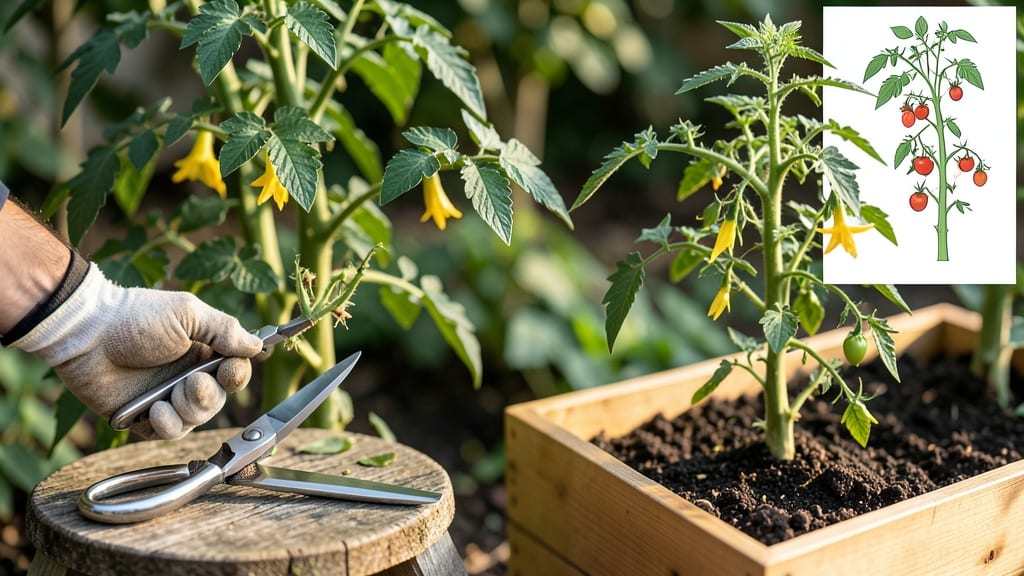
Pruning tomatoes for more fruit isn't just gardening folklore—it’s a science-backed way to redirect energy from leaves to fruit. 🌱 I’ve watched my indeterminate tomatoes go from scraggly to bursting with 20-pound harvests just by following these three simple cuts.
The key? Timing, technique, and knowing when to stop. Start when plants hit 3-4 feet tall and remove suckers (those little shoots in the leaf axils) with your fingers or pruners.
Indeterminate varieties (like Beefsteak or Cherry) need weekly pruning to keep them productive, while determinate types (like Bush Early Girl) barely need touching. One wrong cut can stunt growth—so focus on removing only the suckers, not the main stem.
📚 In This Guide
- What you need
- Instructions
- Tips and common mistakes
- Wrapping up and next steps
What you need
- ● Pruning shears or scissors – Sharp, clean, and sterilized (bypass pruners work best; avoid dull tools that crush stems). Quantity: 1 pair.
- ● Gloves – Garden or work gloves to protect your hands from thorns and dirt. Quantity: 1 pair.
- ○ Disinfectant (optional but recommended) – Rubbing alcohol (70%+), hydrogen peroxide, or a commercial pruning spray to sterilize tools between cuts and prevent disease. Quantity: Small bottle or spray.
- ● Garden twine or plant ties – For supporting pruned plants (3–4 mm wide, biodegradable if preferred). Quantity: 1–2 rolls.
- ● Stakes or trellis system – Metal, wooden, or bamboo stakes (5–6 ft tall) or a sturdy trellis to support indeterminate tomato varieties. Quantity: 1–2 per plant.
- ○ Sharp pencil or marker – For labeling pruned plants (optional but helpful for tracking progress). Quantity: 1.
- ● Tomato plant type – Know whether your tomatoes are determinate (bush-type, limited growth) or indeterminate (vining, continuous growth). Pruning needs vary!
- ● Weather check – Prune on a dry, cloudy day (avoid extreme heat or rain). Ideal temps: 50–75°F (10–24°C).
- ● Plant health – Wait until plants are at least 12–18 inches tall and have 3–5 sets of true leaves before pruning.
- ● Time of day – Prune in the morning or late afternoon to reduce stress on the plant.
- ● Garden hose with spray nozzle – For rinsing tools or refreshing plants post-pruning.
- ○ Plant growth regulator (e.g., seaweed extract) – Optional boost for recovery (follow label instructions).
- ● Compost or mulch – To replenish nutrients after pruning.
- ● Camera or notebook – To document progress and learn from past pruning sessions!
Step-by-step guide to pruning tomatoes for maximum fruit production
Here's the method I've used for years to turn skinny tomato plants into fruit-loaded powerhouses.
🌿 Step 1: Identify the Main Stem and First Fruit Clusters
Start by examining your tomato plant for the main stem—this is the thick, central vine that grows upward from the base. Look for the first fruit clusters that form where the stem meets a leaf (called a node). These early clusters are critical because they set the plant's growth pattern.
Use your fingers to gently trace the stem upward from the base. You'll notice leaf axils—the small angles where leaves attach to the stem. The first 3-4 fruit clusters below the first flower bloom are your plant's energy priority. These clusters will produce the largest, healthiest tomatoes, so never prune them. Mark these clusters with a small piece of twine or a popsicle stick if you're unsure which ones to keep.
✂️ Step 2: Remove Suckers for Directed Growth
Suckers are the small, fast-growing shoots that sprout in the V-shaped junction between the main stem and a branch or leaf stem. These energy vampires compete with your fruit clusters for nutrients. Use clean, sharp pruning shears to snip suckers when they're 2-3 inches long—smaller ones are easier to remove and cause less stress.
Focus on suckers that appear below the first fruit cluster. If a sucker grows above your marked clusters, leave it—it may become a productive branch later. I always prune suckers on the underside of the plant first, as these tend to be the most aggressive. This ensures your plant directs energy upward where it's most needed.
☀️ Step 3: Prune Lower Leaves to Improve Airflow and Sunlight
Once your plant reaches 3-4 feet tall, start removing the lowest set of leaves—those below the first fruit cluster. Use your fingers to gently twist leaves off (they'll snap cleanly) rather than cutting, which prevents tearing. Remove leaves within 12 inches of the soil first, then work upward, keeping 2-3 leaves per foot of stem above the lowest fruit cluster.
This isn't just about aesthetics—removing lower leaves prevents soil-borne diseases from splashing onto fruit and improves airflow, which reduces humidity around the plant. You'll notice your tomatoes develop brighter color and fewer cracks when exposed to more direct sunlight. Stop pruning leaves once your plant hits 5-6 feet tall—any higher, and you risk weakening the stem.
🍅 Step 4: Train Vines and Prune for Balance
At this stage, your tomato plant should have 2-3 main stems (the original main stem plus any strong suckers you left). Use soft plant ties or twine to weave these stems through a cage or trellis, spacing them evenly. This creates a bushier structure that supports more fruit clusters.
Prune any weak or crossing branches—these compete for sunlight and nutrients. Look for stems that grow thinner than a pencil or cross over others; these should be removed at the base. Leave only 3-4 strong branches per plant, pruning back any additional growth to maintain this number. This focused approach ensures your plant puts energy into fewer, larger fruit clusters rather than spreading thin.
⏰ Step 5: Adjust Pruning as Fruit Develops
Once your tomatoes start forming, shift your focus to fruit development. Stop pruning new suckers after the first week of July in most climates—this gives the plant time to harden off for late-season fruit. Instead, focus on removing diseased or damaged leaves immediately to prevent spread.
Watch for overloaded branches—when a stem bears more than 2-3 clusters, prune the smallest cluster to prevent the plant from struggling to ripen all the fruit. You'll know you're doing it right when your plant looks full but not crowded, with bright green leaves and firm stems. Harvest regularly to encourage more flowering—ripe tomatoes signal the plant to produce new blooms.
Tips & tricks for pruning tomatoes for maximum fruit production
Took me years to figure out these tricks that'll transform your tomato plants from scraggly vines into fruit machines. Here's what nobody tells you—
Timing is Everything: Start pruning only when your plant reaches 3-4 feet tall—this is when it's strong enough to handle the stress. I've seen gardeners prune too early, and the plant just gets overwhelmed. Wait until you see those first fruit clusters forming at the nodes, then begin your pruning below them. This ensures the plant's energy goes to developing fruit rather than growing more foliage.
Sucker Strategy: Those 2-3 inch suckers below your first fruit cluster are the worst offenders—they steal nutrients from your tomatoes. Here's my game-changer: use a pair of clean, sharp pruning shears and remove suckers at the base rather than just pinching them. This prevents regrowth and keeps your plant focused on fruit production. I always tackle the underside suckers first—they're the most aggressive and will sap your plant's energy if left unchecked.
Leaf Pruning Logic: When removing leaves within 12 inches of the soil, think of it as creating a "sunlight funnel" for your tomatoes. The goal is 2-3 leaves per foot of stem above your lowest fruit cluster. This might sound counterintuitive, but those lower leaves actually block sunlight from reaching the fruit, leading to pale, underripe tomatoes. I've noticed my plants develop brighter color and fewer cracks when I maintain this spacing—it's all about optimizing photosynthesis where it matters most.
Branch Training Hack: For that bushier structure that supports more fruit clusters, weave your 2-3 main stems through a cage or trellis using soft plant ties. The key is spacing them evenly—don't let them all bunch up at the top. I've found that when stems are properly spaced, they develop stronger connections to the support structure, which prevents top-heavy collapse later in the season. This simple technique can double your fruit production by creating more productive growing space.
Pro Tips for Prune Tomatoes For More Fruit
- Took me years to figure out these tricks that'll transform your tomato plants from scraggly vines into fruit machines.
- Timing is Everything: Start pruning only when your plant reaches 3-4 feet tall—this is when it's strong enough to handle the stress.
- Sucker Strategy: Those 2-3 inch suckers below your first fruit cluster are the worst offenders—they steal nutrients from your tomatoes.
Frequently asked questions
Got questions about pruning tomatoes? You’re not alone! Here are answers to the most common ones—so you can grow like a pro.
When is the best time to prune tomatoes for more fruit?
Prune indeterminate tomatoes (like heirlooms) throughout the growing season—start when plants are 12–18 inches tall, then continue weekly. For determinate varieties (bush types), minimal pruning is needed; focus on removing diseased leaves. Always prune in the morning on dry days to avoid spreading disease.
Should I prune flowers off my tomato plants to get bigger fruit?
Not necessarily! Prune only suckers (side shoots in the leaf axils) to redirect energy to fruit. Leave flowers and small fruit alone—removing them can reduce yield. The key is balance: prune aggressively early for structure, then lighten up as fruit sets.
What if I skip pruning—will my tomatoes still produce fruit?
Yes, but yields may be smaller and fruit quality could suffer. Unpruned plants put energy into excess foliage instead of fruit, increasing disease risk (like blight) and shading lower branches. Pruning improves airflow, sunlight exposure, and lets you harvest bigger, riper tomatoes. Think of it as giving your plant a spa day!
Can I prune tomatoes in hot or humid weather?
Avoid pruning during extreme heat (above 90°F) or after rain—open wounds attract pests and fungal diseases. Wait for cool, dry mornings (60–80°F). If you must prune in humidity, sterilize your shears with rubbing alcohol first and remove all pruned debris from the garden.
What if my tomato plant looks sad after pruning?
Don’t panic! A "sad" look is normal at first—your plant is redirecting energy. Water deeply and fertilize lightly (with compost or balanced fertilizer) to support recovery. Avoid over-pruning; never remove more than 1/3 of the foliage at once. In 1–2 weeks, new growth should bounce back stronger!
How do I prune tomatoes in containers or small spaces?
Container tomatoes (especially dwarf or patio varieties) need less pruning—focus on removing only the lowest leaves and suckers to prevent overcrowding. Use a trellis or cage to save space, and prune only what’s necessary to avoid stressing the plant. Dwarf types often benefit from no pruning at all!
Wrapping up and next steps
Pruning your tomato plants isn’t just about tidying up—it’s a game-changer for a bountiful harvest! 🌱 By removing suckers, thinning leaves, and training vines, you’re redirecting energy to fruit production, ensuring juicier, healthier tomatoes all season long. Remember, consistency is key, so grab those shears and get pruning!
Ready to transform your garden? Start with one plant this week, track your progress, and soon, you’ll be reaping the rewards of your hard work. Happy gardening! 🍅✨