
Pruning
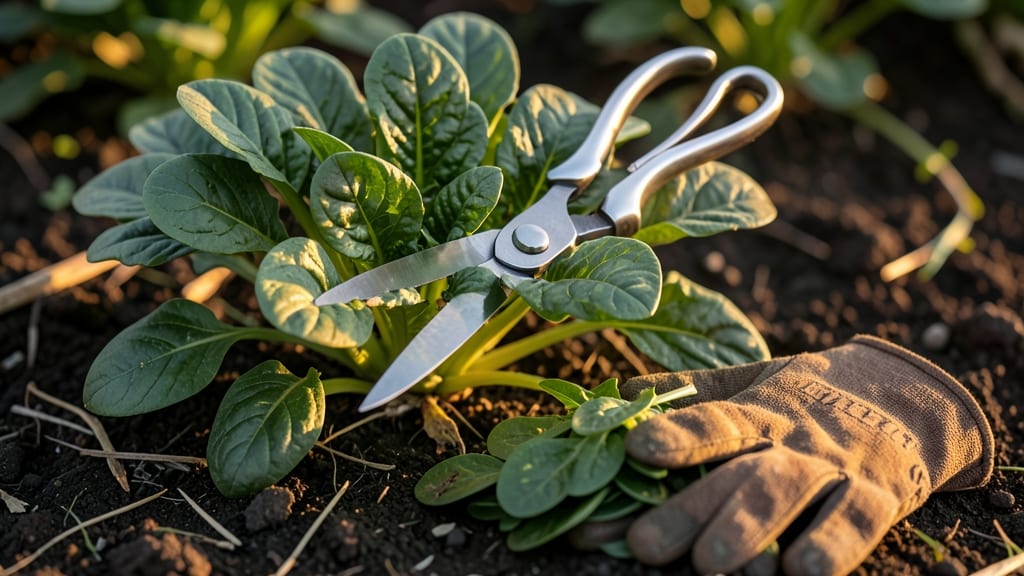
Pruning spinach isn't about cutting back—it's about reviving your plants for a second harvest. 🌱 I used to pull entire plants when they bolted, but learning these three simple cuts saved my garden and gave me fresh greens for weeks longer.
The key? Timing and technique matter more than you'd think.
You only need two things: sharp scissors and a sunny day. Most gardeners skip pruning spinach, assuming it's a one-and-done crop, but cutting the right leaves keeps plants productive.
Start when plants reach 4-6 inches tall, focusing on the largest, oldest leaves first—this directs energy to new growth, not bolting.
After your first harvest, you'll notice bright green regrowth within days. The plants stay compact, resist heat stress better, and produce tender leaves for 4-6 weeks longer than unpruned plants. It's the difference between a single harvest and a steady supply of homegrown greens.
This method works for all spinach varieties, from baby leaf types to mature bunching varieties. Even if you've never pruned spinach before, these cuts are foolproof—no green thumb required. Let's get those scissors ready!
📚 In This Guide
- What you need
- Instructions
- Tips and common mistakes
- Wrapping up and next steps
What you need
- ● Sharp pruning shears or scissors: A pair with clean, sharp blades (preferably sterilized with rubbing alcohol) to avoid damaging plants or spreading disease. Size: 4-6 inches (10-15 cm) for precision.
- ○ Gloves (optional but recommended): Lightweight gardening gloves to protect your hands from thorns or rough stems.
- ● Clean towel or paper towels: For wiping blades between cuts and sanitizing tools.
- ● Spinach plants: Healthy, mature plants (at least 4-6 weeks old) with visible outer leaves for harvesting.
- ● Compost bin or bag: For disposing of pruned leaves (or repurposing them as mulch).
- ○ Watering can or hose: To hydrate plants post-pruning (optional but helpful for recovery).
- ● Pruning saw (for thick stems): Rarely needed for spinach, but useful if dealing with woody or overgrown bases.
- ● Disinfectant spray (e.g., hydrogen peroxide): To sterilize tools between plants if pruning multiple batches.
- ● Markers or labels: To track pruning dates or plant varieties (helpful for large gardens).
Step-by-Step guide to pruning spinach for continuous harvest
Reviving your spinach plants with strategic cuts keeps them productive for weeks—here's how to do it right.
✂️ Step 1: Identify Mature Outer Leaves for First Harvest
Spinach thrives when you remove the largest, oldest leaves first—these are the ones that taste toughest and drain energy from new growth. Look for leaves that are at least 4-6 inches long with visible stems. These are ready for harvest, while the smaller inner leaves stay tender and keep growing.
Use clean, sharp pruning shears to avoid crushing stems. Cut just above the next set of leaves where the stem meets the plant—this encourages branching. I always start with the outermost leaves to prevent shading the inner growth. Never remove more than one-third of the plant at once, or you'll stunt regrowth.
🌱 Step 2: Encourage Bushier Growth With Strategic Cuts
After your first harvest, wait 7-10 days until new growth appears. When the plant shows 3-4 inches of fresh leaves in the center, it's time for the second cut. This time, focus on the middle leaves that have matured since your first harvest—these are the ones that will taste best while allowing the inner leaves to stay tender.
I like to make my cuts at a 45-degree angle just above a leaf node (the bump where new leaves emerge). This prevents water from pooling on the cut and reduces disease risk. Spinach is remarkably resilient—after this second cut, you'll often see 3-5 new leaves sprout within a week, ready for another harvest.
⏰ Step 3: Time Your Final Harvest for Peak Flavor
Spinach's third cut is the most delicate—this is where you balance harvest with plant health. Wait until the plant has at least 6-8 inches of new growth with 3-4 mature leaves in the center. Cut these leaves at the base, leaving 1-2 inches of stem to protect the growing point.
This final harvest is your chance to use the largest leaves for cooking (they're still tender) while preserving the plant's core. After this cut, spinach often bolts (goes to seed) within 2-3 weeks, especially in warm weather. If you want to extend the season, harvest the entire plant at once and save seeds for next year.
💧 Bonus Step: Post-Pruning Care for Revived Plants
After each harvest, give your spinach a light watering to help it recover. The soil should be moist but not soggy—spinach roots need consistent moisture but hate waterlogged conditions. I always add a balanced fertilizer (like 10-10-10) after the second cut to replenish nutrients lost during harvesting.
Watch for signs of stress: if leaves curl or yellow after pruning, your plant needs more shade or cooler temperatures. Spinach bolts faster in heat, so if your region hits 75°F consistently, consider harvesting the entire plant early and replanting with heat-tolerant varieties like 'Bloomsdale Long Standing.'
Tips & tricks for perfect spinach pruning
These simple yet effective strategies will help you maximize your spinach harvest without stressing your plants.
Timing is Everything: The 7-10 day wait between harvests in Step 2 is critical—it allows the plant to recover and develop new growth. I've found that checking for 3-4 inches of fresh leaves in the center is the best visual cue rather than relying solely on days passed. Spinach grows at different rates depending on temperature and sunlight, so always prioritize leaf size over strict timing.
Cutting Technique Matters: That 45-degree angle in Step 2 isn't just for show—it prevents water from pooling on the cut surface, which reduces disease risk. I've ruined multiple harvests by making straight cuts that collected water. Also, always cut just above a leaf node (the little bump where new leaves emerge) to stimulate branching. This simple technique can double your yield over time.
Heat Management: The instructions mention spinach bolts faster at 75°F, but I've learned the hard way that even brief exposure to afternoon heat can trigger bolting. If your region hits 75°F consistently, consider harvesting your entire plant early and replanting with heat-tolerant varieties like 'Bloomsdale Long Standing' for a second crop. Morning harvests also help—spinach tastes sweeter and is less stressed when picked in cooler temperatures.
Pro Tips for Prune Spinach
- These simple yet effective strategies will help you maximize your spinach harvest without stressing your plants.
- Timing is Everything: The 7-10 day wait between harvests in Step 2 is critical—it allows the plant to recover and develop new growth.
- Cutting Technique Matters: That 45-degree angle in Step 2 isn't just for show—it prevents water from pooling on the cut surface, which reduces disease risk.
Frequently asked questions
Got questions about pruning spinach? You’re not alone! Here are answers to the most common concerns—so you can keep your plants thriving with confidence.
When is the best time of day to prune spinach?
Prune spinach in the early morning (before 9 AM) or late afternoon (after 4 PM) to avoid stressing the plant. This timing reduces heat and moisture loss, helping it recover faster. Skip pruning on hot, windy days—spinach is delicate!
Do I need to prune spinach if it’s already bolted?
If your spinach has bolted (sent up flower stalks), pruning won’t reverse it—but you can harvest the outer leaves for greens before they get bitter. Cut bolted stems at the base to redirect energy to remaining leaves. For next time, opt for heat-tolerant varieties like ‘Tyee’ or ‘Bloomsdale Long Standing.’
Can I reuse spinach clippings for cooking?
Young, tender pruned leaves are perfect for salads, smoothies, or sautéing. Avoid using woody stems or overly mature leaves—they’re tough and less flavorful. Store clippings in a damp paper towel in the fridge for up to 3 days, or freeze for later use.
What should I do if my spinach looks yellow after pruning?
Yellowing can signal over-pruning or nutrient deficiency. If only older leaves turn yellow, it’s normal—prune less aggressively next time. For widespread yellowing, check soil moisture (spinach hates dry roots) and add compost or a balanced fertilizer. Avoid pruning again until new growth appears.
Is there a difference between pruning baby spinach vs. mature spinach?
Yes! For baby spinach, pinch off just the top 1–2 inches to encourage bushier growth. For mature spinach, cut back 1/3 of the plant at a time, focusing on outer leaves. Baby spinach recovers faster, while mature plants benefit from more dramatic pruning to boost regrowth.
Wrapping up and next steps
Pruning spinach is a simple yet powerful way to keep your plants thriving and productive! By following these three easy cuts—removing yellow leaves, trimming leggy growth, and harvesting outer leaves—you’ll encourage healthier regrowth and a bountiful harvest. 🌱
Now that you’re armed with the know-how, give it a try! Start with just a few plants to build confidence, and soon you’ll be a spinach-pruning pro. Next, explore companion planting or soil enrichment tips to take your garden to the next level.