
Pruning
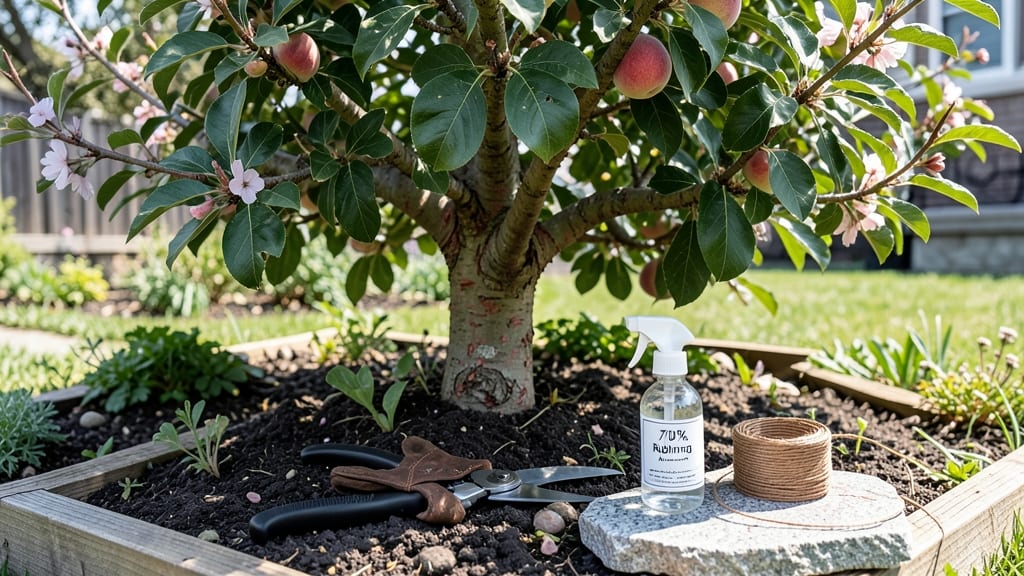
Pruning peach trees in late winter unlocks their full potential—stronger branches, better airflow, and bigger fruit next season. I’ve pruned mine every year since planting, and the difference in harvest size is night-and-day.
The key is timing: dormant season (when the tree isn’t actively growing) is the perfect window to shape without stressing the tree.
You’ll need sharp bypass pruners, a saw for thicker branches, and a clean workspace. Start by removing dead, crossing, or diseased wood first—this keeps the tree healthy and prevents future problems.
For young trees, focus on creating an open center; mature trees need thinning to let sunlight reach the center canes. Every cut should aim for an outward-facing bud to encourage growth in the right direction.
The payoff is immediate: better airflow reduces disease risk, and the tree directs energy into fruit production instead of weak, tangled branches. My 5-year-old tree now produces enough peaches for fresh eating and preserves, all thanks to proper pruning.
The first year I skipped it, the branches were crowded, and the fruit was smaller. Don’t make that mistake!
Works for both backyard peach trees and orchard varieties—just adjust the intensity based on tree age and health. Here’s how to do it right the first time, with no guesswork. Let’s get those branches in shape!
📚 In This Guide
- What you need
- Instructions
- Tips and common mistakes
- Wrapping up and next steps
What you need
- ● Pruning shears: Bypass pruners (sharp, 6-8 inch blades) for cutting small branches (up to ½ inch thick). Quantity: 1 pair.
- ● Pruning saw: Curved-tooth saw (8-10 inch blade) for thicker branches (½ inch to 2 inches). Quantity: 1.
- ● Loppers: Bypass or anvil loppers (18-24 inch handles) for medium branches (up to 2 inches thick). Quantity: 1 pair.
- ● Disinfectant: 70% isopropyl alcohol or bleach solution (1 part bleach to 9 parts water) to sterilize tools between cuts. Quantity: Small spray bottle or wipe.
- ● Gloves: Heavy-duty, cut-resistant gloves (gardening or pruning-specific) to protect hands from thorns and splinters. Quantity: 1 pair.
- ● Safety glasses: Impact-resistant to shield eyes from debris. Quantity: 1 pair.
- ● Tarp or drop cloth: Heavy-duty plastic or canvas (4x6 feet) to collect fallen branches and debris. Quantity: 1.
- ○ Pruning sealant: Tree wound paint (optional for peach trees; research shows mixed benefits, but some gardeners use it for larger cuts). Quantity: Small bottle.
- ● Marking spray: Bright-colored spray paint (e.g., pink or white) to mark branches for removal. Quantity: Small can.
- ● Step ladder or stool: Sturdy, non-slip (if tree is taller than 6 feet). Quantity: 1.
- ● Sharpener: File or honing tool for keeping blades sharp between uses. Quantity: 1.
- ● Timing: Prune during late winter or early spring (before buds swell) or summer after harvest (for light shaping). Avoid pruning in fall.
- ● Weather: Choose a dry, calm day (no rain or wind forecasted for 24 hours).
- ● Safety: Wear long sleeves and pants to protect against thorns and sun exposure.
- ● Knowledge: Review your peach tree’s age, health, and growth habits (young trees need different pruning than mature ones).
Step-by-step guide to pruning peach trees in dormant season
Here's the method I've used for years to keep peach trees healthy, productive, and easy to manage.
Identify and Remove Dead or Diseased Branches
Start by examining the tree for any branches that are completely dead, showing no signs of life. These will be dry, brittle, and often brown or gray in color. Use sharp pruning shears to cut these branches back to the main trunk or a healthy side branch. The goal is to remove all dead wood first—this prevents disease from spreading to healthy parts of the tree.
Next, look for branches with signs of disease, such as fungal spots, cankers, or oozing sap. These should also be removed immediately, cutting back to a point at least 6 inches below the affected area. Always sterilize your shears between cuts by wiping them with rubbing alcohol to avoid transferring pathogens.
Thin Out Crowded or Crossing Branches
Peach trees thrive when they have good airflow and sunlight reaching all parts of the canopy. Look for branches that are growing too close together or crossing over each other. These compete for nutrients and can rub against one another, creating wounds that invite disease. Use your shears to remove the weaker of the two branches, cutting back to a healthy bud or lateral branch.
When thinning, aim to create an open center in the tree. This allows sunlight to penetrate deeper into the canopy, encouraging stronger fruit production. Don't remove more than 25% of the tree's foliage in one season—this can stress the tree and reduce fruit yield the following year.
Prune for Structure and Fruit Production
Focus on shaping the tree by removing branches that grow inward or downward. These branches rarely produce quality fruit and can create a dense, unmanageable canopy. Cut them back to a strong outward-facing bud or branch. This step is where you'll see the most immediate improvement in fruit quality and tree health.
Pay special attention to water sprouts—these are fast-growing, upright shoots that emerge from the trunk or larger branches. While they may look vigorous, they divert energy away from fruit production. Remove them completely at the base. You'll know you're doing this right when the tree's structure becomes more open and balanced.
Shorten Last Year's Growth to Encourage New Branches
Peach trees benefit from a technique called "heading back," where you cut back the tips of last year's growth by about one-third. This encourages the tree to produce new, fruiting wood from lateral buds. Make your cuts just above a bud that faces outward or slightly upward—this helps maintain an open canopy.
When pruning, avoid leaving stubs. Always cut just outside the bud collar, the swollen area where the branch meets the trunk or larger branch. A clean cut heals faster and reduces the risk of disease. If you're unsure where to make the cut, imagine a pencil eraser—your cut should follow that shape to protect the bud.
Clean Up and Apply Protective Measures
After pruning, gather all the cut branches and dispose of them properly. Do not leave them on the ground beneath the tree, as this can harbor pests and diseases. Burn them if possible, or take them to a green waste facility. This step is crucial for preventing problems next season.
Once the tree is pruned, apply a fresh layer of mulch around the base, keeping it 2-3 inches thick and 6 inches away from the trunk. This helps retain moisture and suppresses weeds. If your area is prone to peach tree borers, consider wrapping the trunk with tree wrap or aluminum foil to deter these pests.
Tips & tricks for pruning peach trees
Here's what nobody tells you about pruning peach trees—these tricks will save you time and headaches while keeping your tree thriving.
Tool Prep Matters: Before you start, sharpen your pruning shears and sterilize them with rubbing alcohol. Dull blades tear wood instead of making clean cuts, which slows healing and invites disease. I keep a small bottle of alcohol in my tool belt and wipe between every cut—especially when dealing with diseased branches in Step 1. This simple habit prevents cross-contamination that could ruin your entire tree.
Visualize the Final Shape: In Step 2, when thinning crowded branches, step back every few cuts to visualize the tree's structure. You're not just removing branches—you're sculpting a balanced shape that allows sunlight to reach all parts of the canopy. Think of it like editing a photo: you want to remove what's distracting, not just what's obvious. Aim for that open center where you can see light through the middle.
Bud Direction is Everything: When making cuts in Steps 3 and 4, pay attention to bud direction. Always cut just above an outward-facing bud—this ensures new growth will continue the branch's natural shape rather than growing inward and creating future problems. I use a simple trick: hold your pruners at a slight angle and imagine the bud is at the top of a clock face. For best results, aim for buds between 10 and 2 o'clock positions on the branch.
Seasonal Timing Secret: The dormant season (late winter/early spring) is ideal because the tree isn't actively growing, so it can recover faster. But if you must prune in summer, do it on a cloudy day to reduce stress. I've learned this the hard way—pruning in hot summer sun can shock the tree and invite pests. The key is to minimize stress during the tree's active growing periods.
Pro Tips for Prune Peach
- Here's what nobody tells you about pruning peach trees—these tricks will save you time and headaches while keeping your tree thriving.
- Tool Prep Matters: Before you start, sharpen your pruning shears and sterilize them with rubbing alcohol.
- Visualize the Final Shape: In Step 2, when thinning crowded branches, step back every few cuts to visualize the tree's structure.
Frequently asked questions
Got questions about pruning peach trees? You’re not alone! Here are some of the most common concerns—and straightforward answers—to help you prune like a pro.
When is the best time to prune a peach tree?
The ideal time is late winter or early spring, before buds swell (dormant season). This prevents disease spread and encourages vigorous growth. Avoid pruning in fall—it can leave wounds vulnerable to fungal infections. If you missed dormant season, wait until summer after harvest, but avoid heavy pruning then.
How much should I cut back a young peach tree?
For first-year trees, aim to remove about 25-30% of the canopy to open the center and improve airflow. Focus on:
- Dead, diseased, or crossing branches
- Suckers at the base (they drain energy)
- Weak, upward-growing branches
What if my peach tree doesn’t produce fruit after pruning?
Lack of fruit often stems from over-pruning or poor timing. Double-check:
Did you prune in dormant season? (Never in summer/fall for peaches!)
Are you leaving enough scaffold branches? (3-5 main branches for structure)
Is the tree healthy? (Yellow leaves or weak growth may signal nutrient issues or pests.)
Peach trees need sunlight and time—give it 1-2 years to recover before expecting a full harvest.Can I prune a peach tree in summer?
Summer pruning is risky but can be done lightly to control size or remove water sprouts (fast-growing vertical shoots). Avoid heavy cuts—it stresses the tree and increases disease risk. If pruning in summer:
Watch for these red flags:
Pro tip: Seal larger cuts with pruning sealant only if your climate is humid or rainy.
How do I know if I’ve pruned too much?
If you’ve overdone it, stop pruning for a year and focus on:
Peach trees are resilient—give them time to bounce back!
Wrapping up and next steps
Pruning your peach tree during dormancy isn’t just about shaping—it’s about setting the stage for a bountiful harvest! By removing dead wood, thinning crowded branches, and opening the canopy to sunlight, you’re giving your tree the best chance to thrive.
Remember, patience and precision are key—take your time, and your peach tree will reward you with sweeter fruit and stronger growth.
Ready to put your new skills to the test? Grab your pruners, mark your calendar for next winter, and enjoy the satisfaction of a well-maintained peach tree! 🌱✨