
Pruning
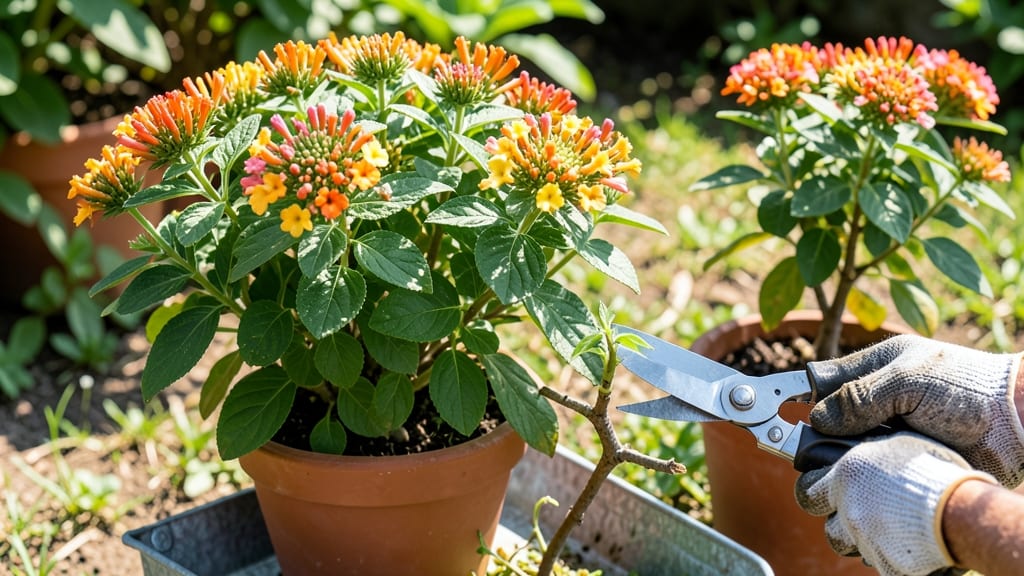
Pruning lantana in pots unlocks that burst of vibrant blooms you’ve been missing all summer. 🌸 I’ve turned my leggy, overgrown potted lantana into a nonstop flower factory by cutting back just right—here’s how to do it without sacrificing next year’s growth.
The best time is right after your last frost or when you spot long, bare stems. Grab sharp pruners, sterilize them with rubbing alcohol, and cut just above a leaf node at a 45-degree angle.
This encourages new branches to sprout from those dormant spots, giving you a bushier plant in weeks.
After pruning, your lantana will reward you with denser foliage and more flowers—and the fragrance alone makes it worth the effort. Just keep the pot in bright, indirect light and water when the top inch of soil feels dry. The blooms will come back thicker than ever.
This works for any pot size, from tiny window boxes to large containers. The key is consistent pruning—don’t wait until it’s a tangled mess. Trust me, your neighbors will be asking for your secret by July!
📚 In This Guide
- What you need
- Instructions
- Tips and common mistakes
- Wrapping up and next steps
What you need
- ● Pruning shears or bypass pruners: Choose sharp, sterilized shears with a 4- to 6-inch blade for clean cuts. (Avoid dull tools—they crush stems!) 🔪
- ● Hand pruners or small lopers: For thicker stems (over ½-inch diameter), opt for bypass pruners to prevent tearing.
- ● Rubbing alcohol (70% or higher) or bleach solution: For sterilizing tools between cuts (mix 1 part bleach to 9 parts water).
- ● Garden gloves: A durable pair (nitrile or leather) to protect against thorns and sap.
- ○ Disposable pruning saw (optional): For very thick, woody stems (rare in potted lantana but useful for older plants).
- ● Horticultural oil or fungicide: Apply to cuts if your plant shows signs of disease (e.g., black spots).
- ● Plant tie or twine: To secure leggy stems after pruning if needed.
- ● Trash bag or bucket: For collecting pruned debris—lantana stems can be invasive if not disposed of properly! 🗑️
- ● Plant food (balanced fertilizer, 10-10-10 or similar): Ready to feed your lantana post-prune for a rebound of growth.
- ● ✅ Choose the right time: Prune in early spring (before new growth) or late winter for best results. Avoid pruning during flowering season unless deadheading.
- ● ✅ Check the weather: Wait for a mild, dry day (no rain forecast for 24 hours) to prevent fungal issues.
- ● ✅ Assess your plant: Identify dead, diseased, or overcrowded stems first—these take priority!
Step-by-Step instructions for pruning lantana in pots
Here’s how to breathe new life into leggy, overgrown lantana—no green thumb required.
✂️ Step 1: Time Your Prune for Maximum Regrowth
Prune lantana in early spring (just as new growth begins) or late winter before buds swell. This timing ensures you’re cutting back just before the plant’s natural flush of energy, which triggers dense, bushy regrowth. Avoid pruning in fall—you’ll cut off next year’s blooms entirely. Wait until temperatures stay above 50°F at night; cold snaps stress newly pruned stems.
If your lantana’s looking ragged mid-summer, don’t panic—you can still give it a light trim to encourage more flowers. Just avoid heavy cuts now; the plant’s focused on blooming, not recovery. Look for woody stems (thick, brown) and green stems (flexible, newer growth). You’ll prune back to just above a leaf node on the green stems—this is where new branches will sprout.
✂️ Step 2: Sterilize Tools and Remove Dead Wood
Clean your pruners with rubbing alcohol before you start—this prevents spreading disease between cuts. Start by removing any dead, brown stems at the base. These won’t regrow and compete with healthy growth for resources. Snip them off cleanly at the soil line. Next, look for crossing branches or stems growing inward toward the center of the plant. These rub against each other, creating wounds that invite pests.
For every cut, aim to leave two to three sets of leaves below the pruning point. This ensures the remaining stem has enough energy to support new growth. If you’re pruning heavily, cut back to about half the plant’s height—lantana’s tough and will bounce back, but don’t strip it bare. You’ll see fresh, vibrant green shoots emerging within 7-10 days if conditions are right.
🌿 Step 3: Shape for Airflow and Sunlight
Step back and assess the plant’s shape. Lantana thrives with good airflow—this prevents fungal issues like powdery mildew. Thin out crowded areas by removing one-third of the oldest stems first. These are the thickest, woody ones at the base. Next, prune to open up the center so sunlight reaches all sides. You’ll notice the plant’s natural growth habit is bushy and rounded; mimic that shape by cutting back uneven growth.
Use your pruners at a 45-degree angle just above a leaf node when shaping. Avoid leaving stubs—these can rot. For stems that are too thick for scissors, use loppers. After pruning, the plant should look like a miniature tree with a sturdy trunk and branches fanning out evenly. This shape encourages more blooms and prevents future overcrowding.
💧 Step 4: Water and Fertilize for Recovery
Give your lantana a deep watering right after pruning to help it recover. Water until it drains from the pot’s holes—this ensures the roots stay hydrated as they adjust to the new growth demands. Avoid wetting the leaves, though; damp foliage can lead to fungal problems. Let the top 1-2 inches of soil dry out between waterings once new growth appears.
Feed the plant with a balanced, water-soluble fertilizer (like 10-10-10) diluted to half strength. Apply it one week after pruning to support the flush of new growth. You’ll see tiny buds forming along the stems within 2-3 weeks. If your lantana’s in a small pot, consider repotting into a 1-2 inch larger container to give roots more room to expand—this helps prevent root-bound stress.
☀️ Step 5: Monitor and Maintain Through the Season
Keep your pruned lantana in full sun (at least 6-8 hours daily) to encourage vibrant blooms. If you notice new growth stretching toward the light, it’s a sign the plant needs more brightness. Rotate the pot a quarter turn weekly so all sides get even exposure. You’ll see flowers returning in 4-6 weeks, starting with small buds that open into clusters of bright blooms.
Continue light pruning throughout the season to remove spent flowers and encourage more blooms. Pinch back the tips of new growth occasionally to keep the plant compact. By late summer, your lantana should be a dense, flower-covered bush—exactly the kind of nonstop color you’re after. If it outgrows its pot, prune back by one-third again in early fall to prep for next year’s growth.
Tips & tricks for pruning lantana in pots
Here's what nobody tells you about pruning lantana—these tricks turn a potentially stressful task into a rewarding transformation.
Timing Secret: The early spring timing in Step 1 is your golden window for maximum regrowth. I learned this the hard way after pruning too late in fall and watching my lantana struggle to recover. Look for those tiny, fresh green shoots emerging—those are your cue to prune. For mid-summer touch-ups, keep cuts light (no more than 20% of the plant) to avoid shocking it during its blooming phase. This prevents the plant from diverting energy away from flowers to new growth.
Tool Prep Matters: Sterilizing your pruners with rubbing alcohol in Step 2 isn't just about hygiene—it's about protecting your plant's health. I once skipped this step and ended up with powdery mildew on my lantana. Use a small brush to scrub between the blades if you notice sap buildup. For thick stems, loppers create cleaner cuts than pruners, which reduces stress on the plant. Always make cuts at a 45-degree angle to prevent water from pooling on the wound.
Pruning Angle Technique: That 45-degree angle mentioned in Step 3 isn't just arbitrary—it's about directing water away from the cut surface. When you leave stubs, they collect moisture and become breeding grounds for fungal infections. I recommend practicing on a small branch first to get comfortable with the angle. For particularly thick stems, make the cut just above a leaf node where two leaves meet—the plant will sprout new growth from this spot within 7-10 days.
Post-Pruning Recovery: The deep watering in Step 4 is crucial, but don't overdo it. I've seen people drown their plants by watering too frequently after pruning. Let the top 1-2 inches of soil dry between waterings once new growth appears. The fertilizer application one week later gives your lantana the nutrients it needs to bounce back strong. If you notice yellowing leaves after pruning, it's usually a sign of overwatering or nutrient deficiency—adjust accordingly.
Pro Tips for Prune Lantana In Pots
- Here's what nobody tells you about pruning lantana—these tricks turn a potentially stressful task into a rewarding transformation.
- Timing Secret: The early spring timing in Step 1 is your golden window for maximum regrowth.
- Tool Prep Matters: Sterilizing your pruners with rubbing alcohol in Step 2 isn't just about hygiene—it's about protecting your plant's health.
Frequently asked questions
Got questions about pruning lantana in pots?
You’re not alone! Here are answers to the most common concerns—from timing to troubleshooting—so you can keep your lantana thriving with minimal fuss.
When is the best time to prune lantana in pots?
Prune lantana after the last frost in spring (zones 8–11) or when new growth appears. Light trimming can happen anytime, but avoid heavy pruning in fall—it stimulates tender new growth that won’t survive winter. For container plants, a mid-spring cleanup is ideal to encourage bushy, vibrant blooms all season.
How often should I prune lantana in pots?
Lantana thrives with regular light pruning—every 4–6 weeks during the growing season (spring to frost). Deadhead spent blooms monthly to prolong flowering, and trim leggy stems to maintain shape. Pro tip: If your plant looks overgrown, don’t wait—prune back by ⅓ to encourage denser growth!
What if my lantana in a pot looks dead after winter?
Don’t panic! Lantana often appears dormant in cold months but regrows from the base when warmed. Wait until after the last frost to prune back any brown stems. If no new growth appears by late spring, check for root rot (soggy soil) or pests. Repot in fresh, well-draining soil if needed.
Can I use the pruned lantana cuttings for propagation?
Lantana cuttings root easily. Take 4–6 inch tips, strip lower leaves, and dip in rooting hormone. Plant in moist perlite or water—roots form in 2–4 weeks. Bonus: This lets you share plants with friends or expand your collection without spending a dime!
What’s the difference between pruning for blooms vs. shape?
| Goal | How to Prune | When |
|---|---|---|
| More blooms | Trim back spent flower clusters and leggy stems to encourage new growth. | Monthly during bloom season. |
| Shape/size control | Cut back 1/3 of the plant’s height to promote bushiness. | Early spring or after flowering peaks. |
Pro tip: For a fuller pot, pinch back tips of new growth to trigger branching.
Wrapping up and next steps
Pruning your potted lantana doesn’t have to be intimidating—just a little trim, tidy, and tend to keep those vibrant blooms coming all season long! 🌿 With the right tools, timing, and techniques, you’ll transform wilted stems into lush, colorful foliage that thrives in containers.
Now that you’re armed with expert tips, grab those shears and give your lantana the TLC it deserves—your future blooms will thank you!
Next step: Schedule your first pruning session on a bright, sunny morning and watch your lantana bounce back with renewed energy!