
Pruning
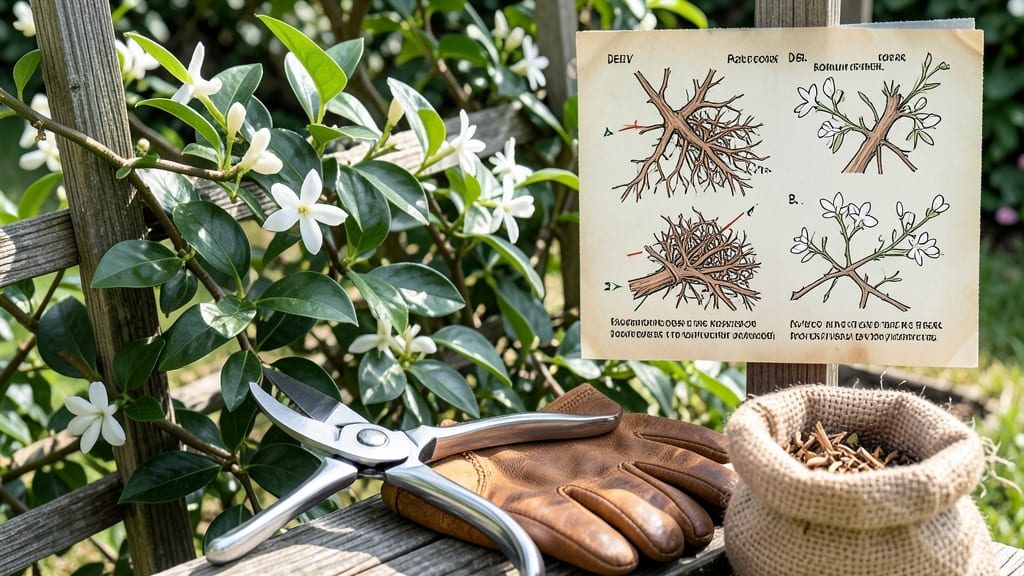
Pruning jasmine plants isn’t just about shaping—it’s about unlocking more blooms and thicker growth year after year. 🌿 I’ve learned the hard way that skipping pruning leads to leggy, sparse vines with fewer flowers, but the right cuts transform them into fragrant, bushy powerhouses.
The secret? Timing and technique matter more than you’d think.
Start with the basics: clean, sharp pruners and a clear plan. Prune right after flowering (spring or summer) to encourage new growth, but avoid heavy cuts in fall—jasmine needs time to harden off before winter.
For climbing varieties, focus on training vines along trellises or fences, while bush types benefit from thinning out crowded branches. Even a little effort makes a big difference in how full your plant looks.
You’ll notice the results almost immediately—more flowers, better air circulation, and a shape that fits your space perfectly. The key is to cut back about one-third of the oldest growth each year, always making cuts just above a leaf node or bud.
This simple habit keeps your jasmine thriving for decades, filling your garden with that intoxicating scent.
Whether you’re dealing with a rambling vine or a compact shrub, these tricks work for all jasmine types. The best part? You can prune year-round as long as you avoid heavy cuts during dormancy. Let’s get those shears ready—your jasmine will thank you!
📚 In This Guide
- What you need
- Instructions
- Tips and common mistakes
- Wrapping up and next steps
What you need
- ○ Pruning shears: Bypass pruners (sharp, clean, and with a 4- to 6-inch blade) for clean cuts on stems up to ½-inch thick. Optional: Anvil pruners for thicker branches (but avoid crushing stems).
- ● Hand pruners: Small, ergonomic for delicate trims on thin stems (¼-inch thick).
- ● Loppers: Long-handled (20-24 inches) for thicker branches (½- to 1½-inch diameter).
- ● Garden gloves: Cut-resistant (e.g., nitrile-coated) to protect hands from thorns and sap.
- ● Disinfectant: 70% isopropyl alcohol or rubbing alcohol + water (1:9 ratio) to sterilize tools between cuts (prevents disease).
- ○ Pruning sealant: Optional but helpful for large cuts (>¾-inch diameter) to prevent sap bleeding (e.g., tree wound pruning paste).
- ● Bucket or tray: For collecting clippings (use a 5-gallon bucket for large jobs).
- ○ Extension pole: Optional for high-reaching branches (look for a 3- to 5-foot telescoping pole with a pruner attachment).
- ● Timing: Prune on a dry, overcast day (avoid peak sun to reduce stress on the plant). Early morning is ideal! ⏰
- ● Weather check: Ensure temps are between 50–85°F (jasmine handles light frost but not extreme cold).
- ● Safety first: Wear closed-toe shoes (thorns are sneaky!).
- ● Have a first-aid kit handy for minor scratches.
- ● Cleanup supplies: Trash bags (for disposal).
- ● Compost bin (if you plan to compost clippings—jasmine decomposes quickly).
Step-by-Step instructions for pruning jasmine plants
Here’s the method I’ve used for years to keep my jasmine lush, fragrant, and full of new blooms.
✂️ Step 1: Prune After Flowering to Encourage New Growth
Wait until your jasmine finishes blooming in late spring or early summer before you start cutting. This is when the plant has stored enough energy to support new growth. I like to prune right after the last flowers fade—usually in June or July—to shape the plant and encourage bushier growth for next season.
Use clean, sharp pruning shears to make 45-degree cuts just above a leaf node or bud. This angle helps water run off the cut and prevents rot. If you’re cutting back leggy stems, trim them to about one-third of their length, but never remove more than a third of the plant at once. You’ll see fresh new shoots emerge within 2-3 weeks—that’s your sign the pruning worked.
✂️ Step 2: Thin Out Crowded Branches for Better Airflow
Jasmine plants can get dense, which traps moisture and invites fungal diseases. I scan the plant for branches that cross or rub against each other—these are the first to go. Remove any dead, diseased, or weak-looking stems completely, cutting them back to the main trunk or a healthy bud.
For thicker branches, use your pruners to make a clean cut just outside the branch collar (the swollen area where the branch meets the trunk). Avoid leaving stubs—they can attract pests. After thinning, you’ll notice more sunlight reaching the inner branches, which helps the plant stay healthier and produces more flowers.
☀️ Step 3: Lightly Prune in Late Winter for Shape and Structure
In late winter or early spring (just before new growth starts), give your jasmine a light trim to shape it and remove any winter-damaged branches. Focus on cutting back any overly long or misplaced stems to maintain the plant’s natural form. I usually prune no more than 10-15% of the plant at this time—just enough to tidy it up.
This is also a good time to check for any suckers (shoots growing from the base of the plant) and remove them if they’re not wanted. Suckers can drain energy from the main plant, so keeping them in check ensures stronger blooms. After this prune, your jasmine will burst with fresh, vibrant growth as spring arrives.
⏰ Step 4: Maintain Year-Round with Minimal Trimming
Throughout the year, keep an eye out for any branches that look overcrowded, damaged, or out of place. A quick trim here and there—like snipping off a few stray shoots or shaping a branch that’s growing too long—keeps the plant looking neat without stressing it. I do this every 4-6 weeks during the growing season.
If your jasmine is climbing, gently guide new growth along the trellis or support structure. Avoid heavy pruning in fall—just a light cleanup is enough before winter sets in. The key is to prune just enough to encourage growth, not so much that you weaken the plant. With consistent care, your jasmine will reward you with abundant, fragrant blooms for years to come.
Tips & tricks for perfect jasmine plant pruning
Here's what I've learned after years of pruning my own jasmine plants—these little details make all the difference for healthy, fragrant growth.
Timing is Everything: The June-July pruning window in Step 1 is critical because that's when your jasmine has finished blooming and stored enough energy for new growth. If you prune too early, you'll cut off potential flowers. I've made the mistake of pruning in May when some flowers were still lingering—it took my plant two full seasons to recover that lost bloom cycle.
The 45-Degree Cut Secret: That angled cut in Step 1 isn't just for looks—it's a water runoff system. The angle prevents water from pooling in the cut, which would otherwise cause rot. I use a small mirror to check my angle before making each cut. For thicker branches, I make a slight horizontal cut just above the angle to create a natural water channel.
Branch Collar Awareness: When thinning branches in Step 2, never cut flush with the trunk. That swollen area called the branch collar contains healing tissues that help the plant recover. I've seen too many pruning mistakes where people cut too close, leaving ugly scars that never heal properly. Always leave that collar intact—it's nature's bandage for your plant.
Year-Round Maintenance Hack: For the 4-6 week maintenance in Step 4, I keep a small pair of pruners in my gardening tool belt. When I notice a branch growing toward my neighbor's fence or getting too leggy, I snip it back immediately. This prevents the plant from getting overgrown and makes the big pruning sessions in spring and summer much easier. Think of it as preventive maintenance for your jasmine.
Pro Tips for Prune Jasmine Plant
- Here's what I've learned after years of pruning my own jasmine plants—these little details make all the difference for healthy, fragrant growth.
- Timing is Everything: The June-July pruning window in Step 1 is critical because that's when your jasmine has finished blooming and stored enough energy for new growth.
- The 45-Degree Cut Secret: That angled cut in Step 1 isn't just for looks—it's a water runoff system.
Frequently asked questions
Got questions about pruning your jasmine? You’re not alone—this fragrant beauty can be tricky if you’re new to the game! Here are answers to the most common queries to keep your plant thriving and blooming like a pro.
When is the best time to prune jasmine?
The ideal window is late winter or early spring (just before new growth starts), but you can also prune lightly after flowering to encourage bushier growth. Avoid heavy pruning in fall—jasmine needs time to harden off before winter. For tropical varieties, prune year-round to maintain shape!
How much can I trim off my jasmine plant?
For established plants, you can safely remove up to one-third of the plant’s growth in a single session. Focus on dead, crossing, or overcrowded branches first. If your jasmine is leggy, trim back to just above a leaf node (where new buds form) to promote fuller regrowth. Never cut into old wood—this won’t regenerate!
Will pruning stop my jasmine from flowering?
Not at all! Pruning actually encourages more flowers by redirecting energy to new growth. Just time it right: Prune after the main flowering season (usually spring/summer) to avoid sacrificing blooms. Over-pruning in fall can delay next year’s flowers, so go easy if you’re trimming late in the season.
What if my jasmine doesn’t bloom after pruning?
Several factors could be at play:
- Lack of sunlight: Jasmine needs 6+ hours of direct sun daily to flower.
- Over-fertilizing: Too much nitrogen = leafy growth, fewer blooms. Use a balanced fertilizer (like 10-10-10) in spring.
- Pruning too late: If you cut back after summer, blooms may not form until next year.
- Age of the plant: Young jasmine (under 2 years) may need time to mature before flowering heavily.
Can I prune jasmine in containers?
Container jasmine follows the same rules as in-ground plants, but with extra attention to size. Prune regularly to prevent root-bound stress, and repot every 2–3 years for better airflow and growth. If your plant outgrows its pot, trim back by 20–30% to stimulate bushier, more compact growth.
Pro Tip:
Use clean, sharp pruners and disinfect them with rubbing alcohol between cuts to prevent disease. If your jasmine is climbing, support new growth with a trellis or stakes—this keeps it tidy and encourages upward blooms!
Wrapping up and next steps
Pruning your jasmine plant doesn’t have to be intimidating—just a little love and timing go a long way! 🌿 By following these year-round tricks, you’ll encourage lush, fragrant blooms and keep your plant thriving. Whether you’re trimming for shape, health, or more flowers, remember that consistency is key.
Now that you’re armed with the know-how, grab those shears and give your jasmine the care it deserves. Next up? Watch as your plant rewards you with even more stunning blooms and vibrant growth—happy pruning! 🌸