
Pruning
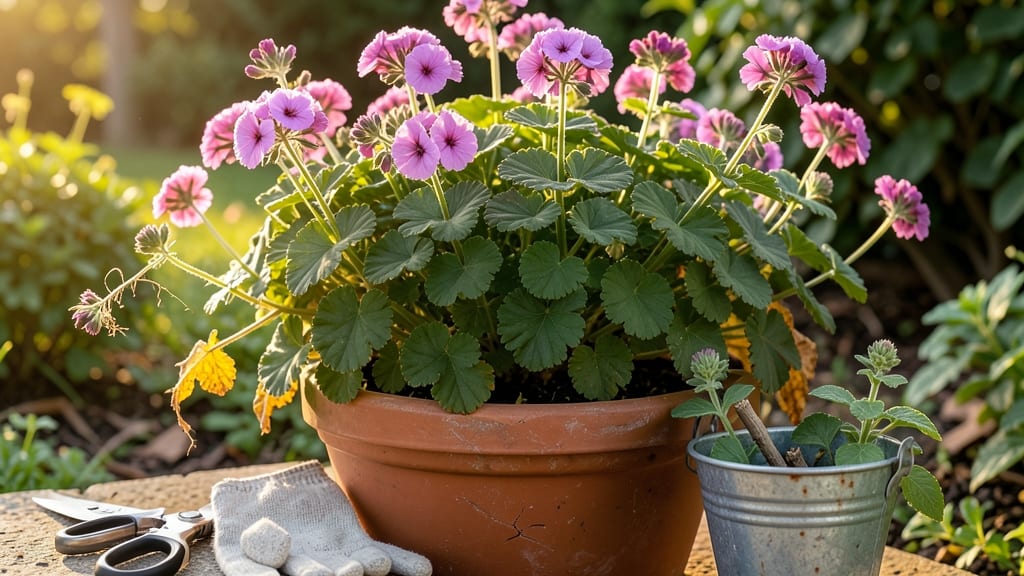
Pruning geraniums in pots isn’t just about tidying up—it’s the secret to nonstop blooms all season long. 🌸 I’ve turned my once-lanky potted geraniums into bushy, flower-covered powerhouses by mastering the right cuts and timing, and you can too.
The key? Pruning isn’t one-and-done—it’s a year-round game of shaping and encouraging growth.
You’ll need just three tools: sharp pruners, gloves (geraniums can be prickly!), and a spray bottle for post-prune care. Timing matters most: pinch back leggy stems in spring, cut back one-third after flowering, and do a light trim in fall to prep for winter.
Most gardeners mess up by pruning too late or too aggressively—both stunt regrowth.
After pruning, you’ll see fresh, vibrant new growth within 2-3 weeks, with flowers returning faster than ever. The trick is cutting just above a leaf node (where new leaves sprout) and keeping the plant well-watered afterward.
Over time, your potted geraniums will grow fuller, healthier, and more productive than you ever thought possible.
This method works for all geranium varieties—zonal, ivy, and scented—whether you’re growing them on patios, balconies, or windowsills. The only rule? Never skip the spring pinch-back, and your plants will thank you with blooms until frost. Ready to transform those sprawling stems into lush, flowering bushes?
📚 In This Guide
- What you need
- Instructions
- Tips and common mistakes
- Wrapping up and next steps
What you need
- ● Pruning shears – Sharp, clean bypass pruners (avoid dull tools to prevent crushing stems). A small pair (4-6 inches) works best for potted plants.
- ● Gloves – Garden gloves (nitrile or leather) to protect your hands from thorns and dirt.
- ● Disinfectant – Rubbing alcohol (70% isopropyl) or a mild bleach solution (1 part bleach to 9 parts water) to sterilize tools before and after pruning.
- ● Container or bucket – For collecting pruned clippings (a 5-gallon bucket or small trash bag works).
- ○ Potting mix (optional but handy) – A small bag of fresh, well-draining potting soil (like a 5-quart bag) if you plan to propagate cuttings.
- ● Rooting hormone – Gel or powder (like Clonex or Hormex) if propagating cuttings for new plants.
- ● Plant ties or twine – To secure leggy stems if you’re training your geraniums to grow bushier.
- ● Spray bottle with water – For misting cuttings if you’re rooting them in water.
- ● Pruning sealant – Wound dressing (like Tree Seal) for large cuts (though geraniums usually heal fine without it).
Step-by-Step instructions for pruning geraniums in pots
Here's the method I rely on to keep my potted geraniums blooming like crazy year after year.
✂️ Step 1: Identify and Remove Dead or Diseased Growth
Start by examining each stem carefully for signs of dead or diseased foliage. Look for brown, crispy leaves or stems that feel hollow when you gently squeeze them—these won't recover. I always begin with the most obvious candidates, cutting back to just above a healthy leaf node or where the stem meets the main plant.
Use clean, sharp pruners to make your cuts at a 45-degree angle about ¼ inch above the leaf node. This angle helps water run off and prevents rot. If you find any blackened or mushy stems, snip those off immediately—they're likely infected and will spread disease to healthy growth.
✂️ Step 2: Pinch Back Leggy Stems for Bushier Growth
Geraniums grow leggy when they don't get enough light, and those long, bare stems produce fewer blooms. To encourage bushier growth, I look for stems that have grown too tall or are stretching toward the light. Using my fingers (no need for pruners here), I pinch off the top 2-3 inches of each leggy stem just above a set of leaves.
This might seem drastic, but it triggers the plant to branch out from the sides. You'll see new side shoots forming within 2-3 weeks—that's your signal it's working. If you're pruning in early spring, this step is especially important to set up a strong framework for summer blooms.
✂️ Step 3: Cut Back Overly Long Stems to Encourage New Blooms
Now focus on stems that have finished blooming or are growing too long. Using your pruners, cut these back by about ⅓ of their length, again making your cut just above a leaf node. For stems with multiple flower clusters, you can trim right above the last healthy set of leaves below the blooms.
This might seem counterintuitive—why remove flowers?—but it redirects the plant's energy toward producing fresh, vibrant blooms rather than supporting spent flowers. You'll notice new flower buds forming at the tips of the remaining stems within 3-4 weeks. For geraniums that bloom continuously, I do this every 4-6 weeks during the growing season.
✂️ Step 4: Shape the Plant for Fullness and Airflow
Step back and look at your geranium as a whole. The goal is to create a rounded, full shape while ensuring good airflow to prevent fungal issues. Trim any stems that are growing inward or crossing over others—these block light and air, creating a perfect environment for powdery mildew.
I like to work from the outside in, shaping the plant like a dome. Cut back any stems that are growing at odd angles or disrupting the overall symmetry. If your geranium is particularly bushy, you can even trim the sides lightly to encourage a more compact form. This step is all about balance—you want your plant to look natural but intentional.
💧 Step 5: Post-Pruning Care for Healthy Regrowth
After pruning, give your geranium a good drink of water to help it recover. Water deeply until it runs out the drainage holes, then let the soil dry slightly before watering again. This prevents root rot while keeping the plant hydrated during its recovery phase.
Move your potted geranium to a spot with bright, indirect light for a few days to reduce stress. Avoid placing it in direct sunlight immediately after pruning—this can scorch the fresh cuts. Once new growth appears (usually within 1-2 weeks), you can gradually reintroduce it to full sun. Fertilize lightly with a balanced, water-soluble fertilizer to support the new growth.
Tips & tricks for pruning geraniums in pots
These simple but game-changing strategies will help you transform your leggy, sparse geraniums into lush, blooming powerhouses.
Tool Prep: Sterilize your pruners with rubbing alcohol before you begin—this prevents spreading disease between plants. I also keep a small spray bottle of water nearby to mist fresh cuts immediately after pruning. This mimics natural rainfall and helps the plant recover faster. The 45-degree angle mentioned in Step 1 isn't just about aesthetics; it creates a larger surface area for water absorption, which is especially important after pruning.
Seasonal Timing: Early spring is ideal for your most aggressive pruning, but don't wait until summer to maintain shape. I schedule a light pruning every 4-6 weeks during the growing season to keep my geraniums compact and blooming continuously. For winter pruning, be more conservative—just remove dead growth and maybe a few leggy stems. The plant needs to conserve energy during dormancy.
Visual Cues: In Step 2, when pinching back those 2-3 inches of leggy stems, look for the point where the stem starts to thicken slightly—this is often where new side shoots will emerge. For Step 3, when cutting back by ⅓ of their length, imagine creating a natural dome shape. The goal is to maintain the plant's inherent form while encouraging outward growth rather than upward stretching.
Post-Pruning Observation: After your initial watering in Step 5, monitor the soil moisture closely. Geraniums in pots dry out faster than in-ground plants, and overwatering after pruning can lead to root rot. I use my finger to check soil moisture—if the top 1 inch feels dry, it's time to water again. The 1-2 weeks for new growth to appear can feel like an eternity, but patience here pays off with stronger stems and more vibrant blooms.
Pro Tips for Prune Geraniums In Pots
- These simple but game-changing strategies will help you transform your leggy, sparse geraniums into lush, blooming powerhouses.
- Tool Prep: Sterilize your pruners with rubbing alcohol before you begin—this prevents spreading disease between plants.
- Seasonal Timing: Early spring is ideal for your most aggressive pruning, but don't wait until summer to maintain shape.
Frequently asked questions
Got questions about pruning your potted geraniums? You’re not alone!
Here are answers to the most common concerns—from timing to troubleshooting—so your plants stay lush and blooming all season.
When is the best time to prune geraniums in pots?
Prune geraniums twice a year for best results: spring (early March–April) to encourage new growth, and late summer (August–September) to promote a second flush of blooms. Avoid heavy pruning in fall or winter, as the plant needs time to rest.
How often should I trim dead flowers (deadheading) vs. full pruning?
Deadhead regularly (every 1–2 weeks) to keep blooms coming. Full pruning (cutting back ⅓ of the plant) happens once in spring and once in late summer. Think of deadheading as maintenance and pruning as a growth reset!
What if my geranium looks sad after pruning?
Don’t panic! A leggy or sparse look after pruning is normal—your plant is redirecting energy to new, bushier growth. Keep it in bright, indirect light and water moderately (let the top inch of soil dry out). In 4–6 weeks, you’ll see a fuller, healthier plant!
Can I prune geraniums too much?
Yes! Over-pruning (cutting back more than ⅓ of the plant at once) can stress geraniums, leading to sparse growth or even death. Stick to light trims in late summer and avoid heavy cuts after early fall. When in doubt, less is more!
Do I need special tools for potted geranium pruning?
Not necessarily! Clean, sharp bypass pruners or even sterilized scissors work great. For small jobs, your fingers can pinch off dead blooms. Just sterilize tools with rubbing alcohol between plants to prevent disease.
Pro Tip:
Label your cuttings!
If you propagate geraniums from pruned stems, place them in water with a plant tag (e.g., “Pink Zonal”) to track varieties. This saves time when replanting or gifting!
Wrapping up and next steps
Pruning your potted geraniums doesn’t have to be intimidating—just a little timely care and the right technique can transform them into lush, blooming beauties! 🌿 With the steps you’ve learned, you’ll encourage stronger growth, more vibrant flowers, and healthier plants year-round.
Now that you’re ready to prune like a pro, why not take it a step further?
🌱 Your Next Step: Refresh & Repot!
After pruning, give your geraniums a fresh boost by repotting (if needed) or adding a slow-release fertilizer. Watch them thrive—and don’t forget to share your progress with fellow plant lovers! Happy gardening! 🌸