
How To
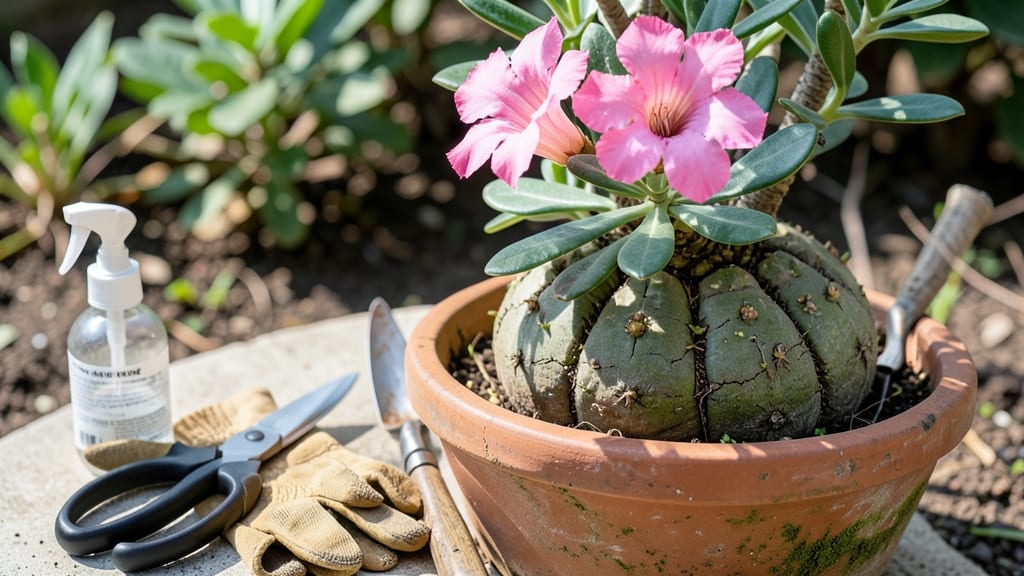
Pruning desert rose in late winter reveals its hidden potential—thicker stems, more blooms, and a bushier shape by spring. ✨ The key is timing: wait until after the first cold snap but before new growth starts, usually around February in most desert climates.
Start by removing dead or crossing branches with clean cuts just above a leaf node. For shaping, trim back up to ⅓ of the plant if needed, but never cut into the thickened base (the caudex). This dormant-season prune forces energy into new growth and next year’s flowers.
You’ll see fresh, vibrant green shoots by early spring, with blooms arriving 4-6 weeks after pruning. The plant rewards patience—thicker stems store more water, and the open structure allows better airflow, reducing pests. Just avoid heavy pruning in hot months, as it stresses the plant.
📚 In This Guide
- What you need
- Instructions
- Tips and common mistakes
- Wrapping up and next steps
What you need
- ● Sharp bypass pruners – Must be clean and sterilized (alcohol wipes work). Choose a pair with 4- to 6-inch blades for precision.
- ● Sterilized pruning shears – For thicker stems (½-inch or larger). Look for bypass-style shears to avoid crushing.
- ● Gloves – Nitrile or leather gloves (garden-grade) to protect against thorns and sap irritation.
- ● Disinfectant solution – 70% isopropyl alcohol or a 10% bleach-water mix (1 part bleach to 9 parts water) to sterilize tools between cuts.
- ○ Pruning saw – Optional but helpful for very thick, woody stems (rare in Desert Roses but useful for mature plants).
- ○ Pruning sealant – Optional but recommended for large cuts (½-inch or wider). Use a tree wound sealant or beeswax-based product to prevent sap loss.
- ● Rags or paper towels – For wiping tools and cleaning sap off your hands.
- ● Trash bag or bucket – To collect pruned branches and debris.
- ○ Sharpie or permanent marker – Optional for marking stems you plan to remove (helps avoid confusion!).
- ● Hose or water spray bottle – To rinse tools and clean sap off stems post-pruning.
- ● Dormant season timing – Prune after the first frost (late fall/winter) or before new growth in early spring. Avoid pruning during active growth.
- ● Healthy plant assessment – Inspect for pests (mealybugs, scale) or diseased stems before pruning. Treat issues first if present.
- ● Sunny, dry day – Choose a day with mild temperatures (50–70°F) and no rain forecasted for 24 hours.
- ● Patience and a clear plan – Sketch or mentally map out your cuts to avoid over-pruning!
Step-by-step guide to pruning desert rose in dormant season
Here's how I transform my desert rose into a bushier, more vibrant plant every spring—starting with the right timing and tools.
✂️ Step 1: Time Your Pruning for Dormancy
Prune your desert rose right after flowering in late winter or early spring, when the plant is fully dormant. This is typically 2-4 weeks after the last bloom falls, or when new growth begins to appear. You'll know it's time when the stems feel firm and the plant shows no signs of budding—just a few bare branches with dried flowers.
Never prune during active growth or flowering. Cutting back while the plant is storing energy for blooms stresses it and can reduce next year's flowers. I mark my calendar after the last frost date in my zone—usually mid-March—to ensure I don't miss the window. If you're in a warmer climate, wait until the heat of summer has passed and the plant has rested.
🪴 Step 2: Gather Tools and Assess the Plant
Use only clean, sharp pruning shears or a small saw for thicker stems. Disinfect your tools with rubbing alcohol before starting to prevent spreading disease. I like to lay out a tarp beneath my desert rose to catch fallen debris—this makes cleanup easier and keeps my workspace tidy.
Examine the plant for dead, diseased, or crossing branches. Look for stems that are brown and brittle (dead), or those rubbing against each other (crossing). These need removal first. Healthy branches will have a greenish hue and feel firm when gently squeezed. Hold the plant at eye level to spot any hidden issues—sometimes the lower branches hide behind the bushier top growth.
✂️ Step 3: Remove Dead and Problematic Growth
Start by cutting out any dead or diseased branches at the base. Make clean cuts at a 45-degree angle, about ¼ inch above a leaf node or outward-facing bud. This encourages new growth to sprout in the right direction. If a branch is completely dead, cut it back to the main stem or root collar.
Next, remove any branches that are crossing or rubbing against each other. These create wounds that invite pests and disease. When you make these cuts, step back occasionally to visualize the plant's shape. You're not just removing—you're sculpting. Aim for an open, airy structure that allows sunlight to reach the center, which prevents rot and encourages more blooms.
☀️ Step 4: Shape for Airflow and Light Penetration
Now focus on thinning out the center of the plant. Desert roses need airflow to prevent fungal issues, so aim to reduce density by 20-30%. Cut back the longest branches by about ⅓ to encourage bushier growth. Look for branches that grow inward—these are the first to remove. You'll see the plant start to open up as you work.
For lateral branches, trim them back to a leaf node or bud that faces outward. This directs energy toward new growth in the right direction. Avoid cutting back the main stems too aggressively—desert roses are resilient but can take years to recover from severe pruning. If you're unsure, err on the side of caution and make smaller cuts. You can always prune more next year if needed.
🌱 Step 5: Clean Up and Monitor Recovery
After pruning, rake up all the debris and dispose of it away from your garden. This prevents pests and diseases from overwintering in the clippings. Water the base of the plant lightly to help it recover, but avoid soaking the soil—desert roses prefer dry conditions. I like to add a 1-inch layer of mulch around the base to retain moisture and regulate soil temperature.
Watch for new growth in 4-6 weeks. You'll see small buds forming along the branches you pruned, and the plant will start to fill out. If you notice any yellowing leaves or wilting, it could be a sign of over-pruning or stress. In that case, reduce watering and provide light shade until the plant stabilizes. With proper care, your desert rose will rebound with vibrant new growth and even more stunning blooms next season.
Tips & tricks for pruning desert rose
Here's what nobody tells you about getting the most out of your dormant-season trim—without sacrificing next year's blooms.
Timing is Everything: The 2-4 week window after flowering is non-negotiable. I've learned this the hard way—pruning too early stresses the plant while it's still storing energy for blooms, and too late means missing the dormant period when it's most resilient. Mark your calendar for mid-March in most zones, but adjust for your local last frost date. If you're in a warmer climate, wait until summer's heat has passed—your desert rose needs that rest period to recover properly.
Tool Prep Makes All the Difference: Those clean, sharp pruning shears aren't just for making nice cuts—they're your first line of defense against disease. I always disinfect my tools with rubbing alcohol before starting, and I never reuse them on other plants afterward. Pro tip: Keep a small bottle of rubbing alcohol in your gardening toolkit year-round. And that tarp under your plant? It's not just for cleanup—it catches debris that could harbor pests or diseases, keeping your workspace sterile.
Visualize Your Cuts: Before making any cuts, step back and look at your desert rose from all angles. You're not just removing branches—you're sculpting. Aim for that open, airy structure where sunlight can reach the center. I like to imagine I'm creating a fishbone pattern with my cuts: main branches radiating outward, with lateral branches trimmed back to face outward. This directs energy toward new growth in the right direction and prevents that dreaded "center rot" from poor airflow.
Recovery Checklist: After pruning, your desert rose needs a gentle hand. Light watering at the base (not soaking!) and that 1-inch layer of mulch are your best friends. I monitor for new growth every 2 weeks—those tiny buds forming along your pruned branches are your reward. If you see yellowing or wilting, it's a sign to back off: reduce watering and provide light shade until the plant stabilizes. Think of this as your plant's physical therapy period—rush it, and you'll set back its rebound.
Pro Tips for Prune Desert Rose
- Here's what nobody tells you about getting the most out of your dormant-season trim—without sacrificing next year's blooms.
- Timing is Everything: The 2-4 week window after flowering is non-negotiable.
- Tool Prep Makes All the Difference: Those clean, sharp pruning shears aren't just for making nice cuts—they're your first line of defense against disease.
Frequently asked questions
Got questions about pruning your desert rose? You’re not alone—this striking plant can be a little tricky! Here are answers to the most common concerns to help you trim with confidence.
When is the exact best time to prune my desert rose?
The ideal window is late winter or early spring, just before new growth starts (typically February–March in most desert climates). If you miss this, you can lightly prune in early summer—but avoid heavy cuts then, as it stresses the plant. Pro tip: Wait until temps stay above 50°F (10°C) to prevent frost damage.
How much can I cut back? Should I go crazy or play it safe?
Desert roses are tough but not invincible! Never remove more than 1/3 of the plant in one session. Focus on dead, crossing, or leggy branches first. For dramatic reblooming, you can trim back healthy stems by 50%—but only if the plant looks robust. Warning: Over-pruning can delay flowering or even kill weak specimens.
What if I prune at the wrong time? Will my desert rose die?
Not necessarily! If you prune in summer or fall, your plant may slow down or drop buds—but it won’t die unless you’re aggressive. Recovery tip: Reduce watering post-prune and keep it in partial shade for a few weeks. Most desert roses bounce back, especially with proper aftercare.
Can I propagate my desert rose from pruned cuttings?
Desert rose cuttings root easily if done right. Let cuttings dry for 1–2 days, then dip in rooting hormone and plant in cactus soil. Keep them in bright, indirect light and mist occasionally. Roots form in 4–6 weeks—just be patient! Bonus: This is a great way to multiply your plant for free.
Why are my pruned branches oozing sap or turning mushy?
This is usually bacterial ooze or rot, often from overwatering or fungal issues. Fix it fast: Trim the affected area below the damage with sterilized shears, let it dry, and apply fungicide. Avoid watering the base until it heals. Prevent future problems by ensuring well-draining soil and spacing plants for airflow.
Wrapping up and next steps
Pruning your desert rose during dormancy is a simple yet powerful way to boost its health and ensure a stunning spring comeback! 🌵✨ By following the right timing, techniques, and tools, you’ll encourage lush blooms and stronger growth—without stressing your plant.
Now that you’re armed with the know-how, grab your shears and get ready to transform your desert rose into a thriving centerpiece.
Ready to take the next step? Monitor your plant’s progress after pruning, and don’t hesitate to adjust your approach based on its unique needs. Happy gardening—your desert rose will thank you with vibrant color and resilience!