
How To
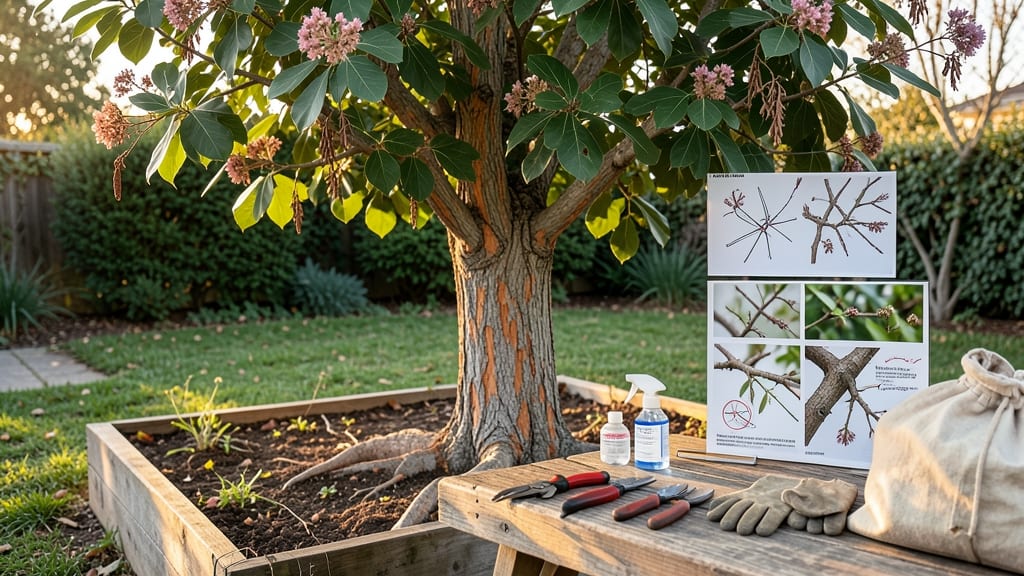
Pruning crepe myrtles in late winter transforms them from tangled messes into showstopping trees with bold canes and vibrant blooms—and I’ve done it wrong enough times to know exactly what to avoid.
The key is timing: wait until after the first hard frost but before buds swell, when the tree’s dormant but ready for direction. One wrong cut can set you back a full year, so grab your pruners and let’s get this right.
Start by removing all dead, crossing, or weak branches—these steal energy from the blooms you actually want. Next, cut back last year’s blooms to just above a set of buds (about ¼ inch above), shaping the tree into an open vase form.
The suckers at the base? Snip them off at the ground—they’ll drain your tree’s energy if left unchecked. With just 30 minutes and a few strategic cuts, you’ll have a tree that blooms heavier than ever before.
📚 In This Guide
- What you need
- Instructions
- Tips and common mistakes
- Wrapping up and next steps
What you need
- ● Pruning shears: A sharp, bypass pair (for clean cuts on smaller branches). Size: 6–8 inches (for most homeowners).
- ● Loppers: For thicker branches (1–2 inches in diameter). Size: 18–24 inches, with ratcheting or bypass blades.
- ● Pruning saw: For stubborn, woody stems (3+ inches thick). Type: Curved-tooth saw for clean cuts.
- ● Gloves: Heavy-duty, cut-resistant gloves (to protect against thorns and rough bark).
- ● Disinfectant: 70% isopropyl alcohol or a pruning sealant (to sterilize tools and prevent disease spread).
- ● Ladder: Extension ladder (if your crepe myrtle is over 6 feet tall). Safety tip: Use a stable, non-slip model.
- ● Trash bags: Heavy-duty bags (for hauling pruned branches). Quantity: 1–2 per tree, depending on size.
- ● Rake or broom: To clear debris from the base of the tree.
- ● Hand pruners: For fine-tuning smaller branches (if you’re detail-oriented).
- ● Pruning paint/sealant: To seal large cuts (if your tree has diameter cuts over ½ inch).
- ● Safety glasses: Protects eyes from flying debris (especially if using a saw).
- ● Work boots: With ankle support (for stability on uneven ground).
- ● Hose or water spray: To rinse tools and remove sap after pruning.
Step-by-Step instructions for pruning crepe myrtle
Late winter is the perfect time to shape your crepe myrtle for stronger growth and bigger blooms.
Identify and Remove Dead or Weak Canes
Start by examining your crepe myrtle for any canes that look dead, diseased, or weak. Dead canes will be brittle and snap easily when bent, while weak ones may be thin and pale. I always prune these first—they’re just taking energy from the healthy parts of the tree.
Use clean, sharp pruning shears to cut these canes back to the ground. Make your cuts at a slight angle, about a quarter-inch above a bud or lateral branch. This prevents water from pooling on the cut and causing rot. If you see any cankers or signs of disease, sterilize your shears with rubbing alcohol between cuts.
Thin Out Crowded Branches for Better Airflow
Crepe myrtles naturally grow multiple canes, and over time, these can become too crowded. Thin out the oldest, thickest canes first—these are the ones that produce fewer blooms and take up space. I aim to leave about 3-5 strong, healthy canes per tree, depending on its size and shape.
When thinning, make your cuts just above a bud or branch that’s growing outward. Avoid leaving stubs—these can attract pests and disease. Step back occasionally to check your progress. You want to see light filtering through the branches and open space between them.
Shape the Tree for Balance and Structure
Now it’s time to shape the tree. Crepe myrtles have a natural, layered look, so I focus on maintaining that while removing any branches that cross or rub against each other. These are called "water sprouts" or "suckers" and often grow in the center of the tree.
Cut these back to a lateral branch or bud that’s growing outward. Avoid cutting into the center of the tree—this can create a weak, hollow structure. If your tree is tall, use a pruning saw for thicker branches. Always make clean cuts just outside the branch collar to encourage faster healing.
Prune for Blooms and Health
Crepe myrtles bloom on new wood, so you don’t need to worry about cutting back old blooms like you would with some other trees. Instead, focus on removing any branches that are growing inward or downward. These won’t contribute to the tree’s overall shape and can block light from reaching the center.
I also look for any branches that are growing too close to the ground or are rubbing against the trunk. These should be pruned back to a healthy lateral branch. After pruning, step back and admire your work—you should see an open, airy structure that’s ready for spring growth.
Clean Up and Prepare for Spring
Once you’ve finished pruning, gather all the cuttings and dispose of them properly. Don’t leave them on the ground—they can harbor pests and diseases. I like to burn them if possible, or at least take them to the curb for yard waste pickup.
Finally, give your crepe myrtle a light layer of mulch around the base, keeping it a few inches away from the trunk. This helps retain moisture and protects the roots as the tree prepares for spring. Water deeply after pruning to help the tree recover and encourage new growth.
Tips & tricks for pruning crepe myrtle
Here's what I've learned after years of shaping these beautiful trees—details that make all the difference between a quick trim and a true transformation.
Tool Preparation: Always sterilize your pruning shears with rubbing alcohol between cuts, especially when dealing with diseased canes in Step 1. I keep a small bottle of 70% isopropyl alcohol in my gardening toolkit—it takes just seconds to wipe down between each cut and prevents cross-contamination that can spread disease throughout your tree.
Visual Pruning Cues: When thinning crowded branches in Step 2, look for the "light test"—step back and see if sunlight filters through the canopy. If you can't see light reaching the center, you still have work to do. Aim to leave about 3-5 strong canes, spacing them evenly around the tree's base like spokes on a wheel.
Branch Angle Matters: In Step 3, pay attention to the angle of your cuts. Always cut just outside the branch collar (that swollen area where the branch meets the trunk) at a slight downward angle. This creates a natural shield that helps the wound heal faster and prevents water from pooling on the cut surface, which can lead to rot.
Post-Pruning Care: After finishing Step 5, give your tree a deep watering that reaches at least 12 inches into the soil. I use a soaker hose for 20-30 minutes to ensure the roots get proper hydration. This helps the tree recover from the stress of pruning and sets it up for vigorous spring growth.
Pro Tips for Prune Crepe Myrtle
- Here's what I've learned after years of shaping these beautiful trees—details that make all the difference between a quick trim and a true transformation.
- Tool Preparation: Always sterilize your pruning shears with rubbing alcohol between cuts, especially when dealing with diseased canes in Step 1.
- Visual Pruning Cues: When thinning crowded branches in Step 2, look for the "light test"—step back and see if sunlight filters through the canopy.
Frequently asked questions
Got questions about pruning crepe myrtles? You’re not alone!
Here are the most common concerns—and expert answers—to help you prune like a pro.
When is the absolute best time to prune crepe myrtles?
The ideal window is late winter or early spring (just before new growth starts). Avoid pruning in fall or winter when the plant is dormant—this can leave it vulnerable to cold damage. If you miss late winter, wait until after the first flush of blooms (but prune before summer heat sets in).
How much can I cut back my crepe myrtle?
You can safely remove up to ⅓ of the plant’s height in one season. For mature trees, prune back to a natural branch node (the bump where leaves or branches grow) to encourage strong regrowth. Avoid "topping" (cutting flat across the top)—this creates weak, ugly growth. Pro tip: Look for water sprouts (thin, vertical shoots) and remove them entirely!
What should I avoid when pruning crepe myrtles?
Avoid these common mistakes that harm your tree:
- Pruning in fall or winter—it delays spring blooms and stresses the plant.
- Cutting into old wood (gray, dead-looking canes)—crepe myrtles bloom on new growth.
- Leaving stubs—always cut just above a bud or branch collar.
- Over-pruning—never remove more than ⅓ of the plant at once.
Will pruning kill my crepe myrtle’s flowers?
Not if done correctly! Crepe myrtles bloom on new wood, so pruning in late winter encourages more vibrant flowers. Just avoid cutting back into last year’s blooming canes (they’re the thicker, woodier stems). If you prune after blooming, you’ll sacrifice that season’s flowers—but the plant will rebound beautifully next year.
What if my crepe myrtle isn’t blooming after pruning?
Check these troubleshooting tips:
- Did you prune too late? Late summer/fall pruning can delay blooms.
- Is the tree over-fertilized? Too much nitrogen = leafy growth, fewer flowers.
- Is it stressed? Look for pests (aphids, scale) or disease (powdery mildew).
- Is it young? Crepe myrtles often take 2–3 years to bloom after planting.
Wrapping up and next steps
Pruning your crepe myrtle in late winter isn’t just about keeping it tidy—it’s about boosting next year’s blooms and ensuring those stunning canes shine! With the right tools, timing, and technique, you’ll transform your shrub into a showstopper that thrives for seasons to come. 🌸
Ready to roll up your sleeves? Grab your pruners and head outside—your crepe myrtle (and future garden guests) will thank you! For extra confidence, check out our FAQs or snap a photo of your progress to track its growth. Happy pruning! ✂️🌿