
Pruning
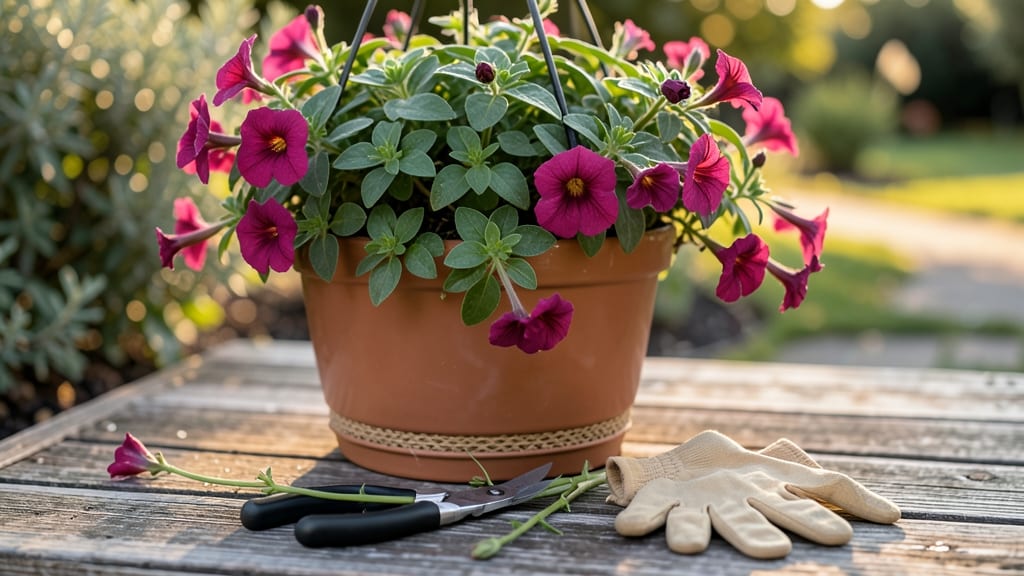
Pinching back calibrachoa in early summer unlocks a cascade of blooms that lasts until frost. 🌸 I learned the hard way—skipping pruning means leggy plants with sparse flowers, but a few minutes of pinching transforms them into lush, flowering machines. The secret lies in timing and technique, not brute force.
You’ll need sharp pruning shears (or just your fingers for pinching), a sunny morning for the job, and a clear goal: encourage bushier growth and more blooms. Start in late spring when plants are 4-6 inches tall, then repeat every 2-3 weeks.
The key is removing the top set of leaves—this forces energy into side shoots that become new blooming stems.
By midsummer, you’ll see the payoff: compact plants bursting with tiny flowers that look like a million little bells. The more you prune, the more blooms you get—just avoid cutting into woody stems or you’ll stunt growth.
Think of it as giving your plants a haircut they’ll thank you for with nonstop color.
For container plants, prune slightly more aggressively to keep them compact. And here’s a pro tip: always prune in the morning when plants are hydrated and can recover quickly. Late-season pruning stresses plants, so stop by August unless you’re in a warm climate.
📚 In This Guide
- What you need
- Instructions
- Tips and common mistakes
- Wrapping up and next steps
What you need
- ● Clean, sharp pruning shears – Bypass pruners (4-6 inch blades) work best to avoid crushing stems. Sterilize with rubbing alcohol before use!
- ● Garden gloves – Lightweight, breathable pair to protect hands from thorns or rough stems.
- ○ Pruning saw (optional but helpful) – Only if dealing with woody, overgrown stems (rare for annual calibrachoa).
- ● Container or bucket – For clippings (compost them later or use as mulch!).
- ● Water spray bottle or hose – To rinse tools between cuts and hydrate plants post-pruning.
- ● Healthy, established plants – Prune after calibrachoa has bloomed for 4-6 weeks or when stems reach 6-8 inches tall.
- ● Morning sunlight – Prune in the early morning to reduce stress on plants and allow wounds to heal by evening.
- ● Clear weather – Avoid pruning if rain is forecasted within 24 hours to prevent fungal issues.
- ○ Plant growth regulator (optional) – Like B-Nine (0.1% concentration) to slow stretching between pinches.
- ● Hand lens or magnifying glass – For spotting tiny pests or diseased areas before pruning.
- ● Pruning sealant (rarely needed) – Only if cutting into thick stems (not typical for calibrachoa).
Step-by-Step guide to pruning calibrachoa
Here's how I keep my calibrachoa blooming like crazy all season long—no fancy tools required.
✂️ Step 1: Identify the Right Time to Prune
Pinch back calibrachoa when plants reach 4-6 inches tall and have 4-6 sets of true leaves. This encourages bushier growth and triggers more flowering. I always do this in early spring after the last frost, then repeat every 2-3 weeks throughout the growing season. The key is to prune just above a leaf node where new growth will emerge.
Look for healthy stems with vibrant green leaves—these are your pruning targets. Avoid cutting into woody or brown stems, as they won’t regrow. You’ll know you’re on track when you see fresh, new shoots forming within 7-10 days after pinching.
✂️ Step 2: Use the Right Technique for Pinching
Use clean, sharp bypass pruners or simply pinch stems with your fingers—no need for anything fancy. Find the top set of leaves on each stem and pinch just above that leaf node using your thumb and forefinger. This small cut signals the plant to branch out instead of growing taller.
I like to pinch one-third of the plant at a time, then wait 2 weeks before doing another round. This prevents shocking the plant and keeps it producing flowers continuously. If you see leggy stems reaching for light, that’s your cue to prune more aggressively.
✂️ Step 3: Deadhead Spent Blooms Regularly
Deadheading isn’t just about looks—it’s what keeps calibrachoa blooming nonstop. Use your fingers or small pruners to snip off spent flowers at the base of the stem, just above the next set of leaves. This prevents the plant from wasting energy on seed production and redirects it to new blooms.
I make it a habit to deadhead every 3-4 days during peak bloom season. Watch for buds forming at the stem junctions—these are your future flowers. If you notice fewer buds, you might be pruning too late in the season, so adjust your schedule accordingly.
☀️ Step 4: Adjust Light and Water After Pruning
After pruning, give your calibrachoa bright, indirect light for a few days to help it recover. If your plants are indoors or in partial shade, move them to a sunnier spot for at least 4-6 hours daily. Too little light after pruning leads to weak, sparse growth.
Water deeply but less frequently—about once a week—unless the top 1 inch of soil feels dry. Overwatering after pruning can cause root stress. You’ll see new growth within 7-10 days if everything’s balanced right.
⏰ Step 5: Plan for Late-Season Care
As summer winds down, calibrachoa slows its growth. In late August or early September, reduce pruning to just deadheading spent blooms. This helps the plant focus on hardening off for fall. If you’re in a warm climate, you can keep pruning lightly until first frost.
I always stop heavy pruning by mid-September to give the plant time to recover. You’ll know it’s working if you see new buds forming even as days get shorter. This sets the stage for a strong start next season if you overwinter your plants indoors.
Tips & tricks for pruning calibrachoa like a pro
These simple tricks will help you keep your calibrachoa thriving and blooming all season long.
Timing is Everything: The 2-3 week pruning schedule in Step 1 is key for continuous blooms. I've learned that sticking to this rhythm prevents the plant from getting overworked. If you notice your calibrachoa slowing down, it might be time to adjust to every 3 weeks instead—especially in hotter months when growth speeds up. Watch for those 7-10 days of new shoots as your success indicator!
Precision Pinching Technique: When you're pinching in Step 2, focus on making clean cuts just above the leaf node. I use my thumb and forefinger to create a small pinch rather than a jagged tear—this prevents damage that could invite pests. For larger plants, I find it helpful to work in sections, starting with the outer stems and moving inward to avoid overwhelming the plant all at once.
Deadheading Discipline: The every 3-4 days deadheading routine in Step 3 can feel tedious, but it's what transforms calibrachoa from a one-time bloomer to a nonstop flower factory. I set a reminder on my phone for this task because consistency is everything. Pro tip: Use a small pair of scissors or your fingers to snip at the base of the stem—never pull flowers off, as this can damage the stem and reduce future blooms.
Recovery Conditions: After pruning, the 4-6 hours of bright indirect light in Step 4 is crucial for helping your calibrachoa bounce back. I've noticed that plants in lower light conditions (like my kitchen windowsill) need extra attention here—sometimes I'll supplement with a grow light for a few hours to ensure proper recovery. The once-weekly watering guideline works for most conditions, but if your soil dries out faster (like in my sunny patio), you might need to water every 5-6 days instead.
Pro Tips for Prune Calibrachoa
- These simple tricks will help you keep your calibrachoa thriving and blooming all season long.
- Timing is Everything: The 2-3 week pruning schedule in Step 1 is key for continuous blooms.
- Precision Pinching Technique: When you're pinching in Step 2, focus on making clean cuts just above the leaf node.
Frequently asked questions
Got questions about pruning your Calibrachoa? You’re not alone!
Here are the most common concerns—plus straight-to-the-point answers to keep your trailing petunias thriving all season.
When is the best time to prune Calibrachoa?
Prune Calibrachoa in the early morning or late afternoon to avoid stressing the plant in peak heat. Start pinching back when the plant is 6-8 inches tall (or after the first blooms fade) to encourage bushier growth. Deadhead spent flowers weekly to redirect energy into new blooms.
How much should I cut back Calibrachoa?
For initial pinching, trim just above a set of leaves (about 1/4 inch) to promote branching. Later, prune lightly—never remove more than 1/3 of the plant at once. Over-pruning can shock the plant and stunt growth. Think "haircut," not "haircut + shave."
Can I prune Calibrachoa in hot or cold weather?
Avoid pruning during heatwaves (above 90°F) or cold snaps (below 50°F). The plant struggles to recover, leading to yellowing leaves or stunted growth. Wait for mild, cloudy days or prune in the shade if you must. Patience pays off!
What if my Calibrachoa stops blooming after pruning?
If blooms halt post-pruning, you’re likely cutting too aggressively or not fertilizing enough. Solution:
- Check for over-pruning—stick to light trims.
- Feed with a balanced liquid fertilizer (10-10-10) every 2 weeks.
- Ensure 6+ hours of sunlight daily—blooms need light!
Can I propagate Calibrachoa from pruned cuttings?
Root cuttings
in perlite or water (with a rooting hormone for faster results). Use 4-6 inch stems, remove lower leaves, and keep them in bright, indirect light until roots form (2-4 weeks). Pro tip: Label varieties—some Calibrachoa mix easily!
Why does my Calibrachoa look leggy after pruning?
Leggy growth usually means too little light or over-pruning. Move the plant to a sunnier spot (full sun is ideal) and reduce pruning frequency. If it’s already in full sun, fertilize with phosphorus-rich food (like 5-10-5) to boost blooms over foliage.
Wrapping up and next steps
Pruning calibrachoa isn’t just about tidying up—it’s your secret to lush, continuous blooms all season! By mastering the art of pinching back and deadheading, you’ll encourage bushier growth and vibrant flowers that’ll make your garden the talk of the neighborhood. 🌸
Ready to transform your calibrachoa into a blooming powerhouse? Grab your pruners and get started—your plants (and future garden guests) will thank you! Next, explore how to fertilize for even more stunning results.