
Pruning
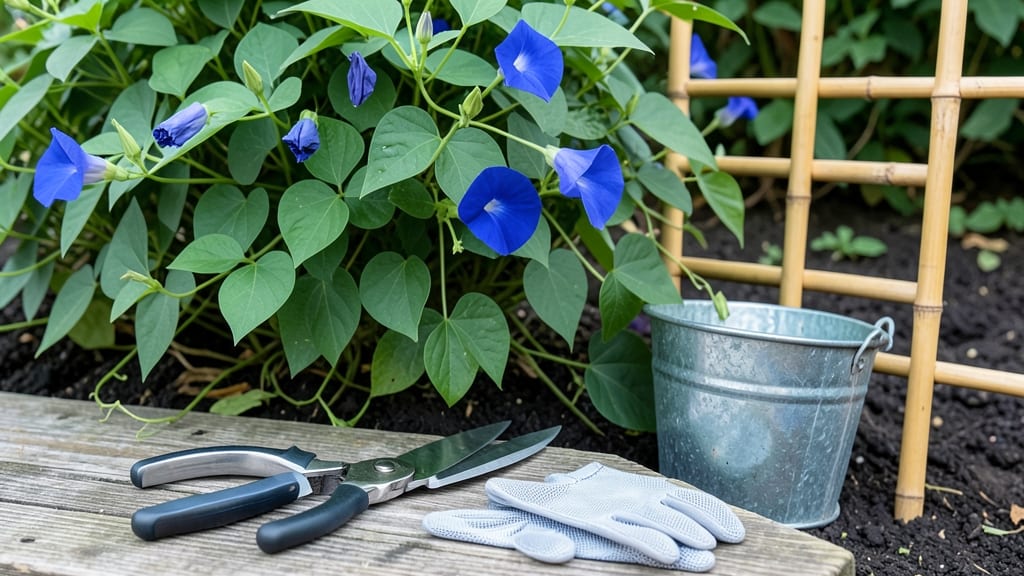
Pruning butterfly pea plants transforms them from leggy vines into bursting blue bloom machines—and it’s easier than you think. ✨ I’ve pruned mine for years, and the secret lies in timing: a quick trim after flowering keeps them compact, while late-winter cuts set the stage for a second flush of vibrant blooms by summer.
The tools you need are simple: sharp pruners (dull blades tear stems), gloves (those thorns are sneaky), and a bucket for spent blooms.
Focus on two key cuts: deadheading faded flowers to redirect energy into new blooms, and light shaping to open up the plant’s center for better airflow and sunlight penetration.
After pruning, your butterfly pea will reward you with thicker foliage and nonstop blooms—the kind that turn heads at garden parties. Just avoid over-trimming (never cut more than 1/3 of the plant at once), and always prune just above a leaf node to encourage new growth.
Works for both containers and garden beds, and the same principles apply whether you’re growing in full sun or partial shade. Ready to turn those sprawling vines into a showstopper? Let’s get those shears out!
📚 In This Guide
- What you need
- Instructions
- Tips and common mistakes
- Wrapping up and next steps
What you need
- ● Pruning shears: Sharp, bypass-style shears (4-6" blade length) to make clean cuts. Dull shears crush stems—avoid this!
- ● Gloves: Lightweight, gardening gloves (nitrile-coated for grip) to protect hands from thorns or sap.
- ● Disinfectant: 70% isopropyl alcohol or rubbing alcohol to sterilize shears between cuts (prevents disease spread).
- ○ Pruning saw (optional but helpful): For thick, woody stems (rare in butterfly pea but useful for mature plants).
- ● Watering can or hose: To hydrate the plant post-pruning (1 gallon of water per pruned section).
- ● Compost or mulch: Organic compost (1-2 cups) to replenish soil after heavy pruning.
- ● Hand lens or magnifying glass: For inspecting buds or pests up close.
- ● Plant growth hormone: Rooting powder (like hormone gel) if propagating from cuttings.
- ● Spray bottle with water: To mist leaves and reduce stress during hot pruning sessions.
- ● Notebook & pen: To log pruning dates, notes on plant response, or sketch growth patterns.
Step-by-Step guide to pruning butterfly pea plants
Keep your butterfly pea plants blooming all season with this easy, science-backed pruning routine.
✂️ Step 1: Understand the Right Time to Prune
Prune butterfly pea plants twice a season—once in early spring and again after the first flush of blooms. This timing encourages bushier growth and continuous flowering. I start by inspecting the plant for woody stems or branches that have finished blooming, as these are your first targets.
The ideal moment is when new growth appears after the initial flowering. You'll notice fresh green leaves emerging from the base or along the stems—this signals the plant is ready for a trim. Avoid pruning during extreme heat or cold, as the plant needs energy to recover.
✂️ Step 2: Deadhead and Trim Finished Blooms
Use clean, sharp pruning shears to snip off spent flowers just above the first set of leaves or a new bud. This prevents the plant from wasting energy on seed production and redirects it toward new blooms. I always work from the bottom up, removing older flowers first to maintain a balanced shape.
Watch for yellowing or brown leaves—these are signs of stress or disease and should be removed immediately. Cut these back to healthy green tissue, and avoid leaving stubs, as they can attract pests. Butterfly pea plants are resilient, but keeping them tidy ensures they stay vibrant and productive.
✂️ Step 3: Shape the Plant for Bushier Growth
After deadheading, focus on shaping the plant by pinching back the tips of new growth. Choose the top two sets of leaves on each stem and pinch just above them. This encourages the plant to branch out, creating a fuller, more compact shape with more blooms.
If your butterfly pea plant is leggy or overgrown, trim back the longest stems by one-third to encourage denser foliage. Avoid cutting into old wood, as it won’t regrow. You’ll see new shoots emerging within 2-3 weeks, signaling that the pruning was successful.
✂️ Step 4: Prune for Winter Preparation (Optional)
In colder climates, prune back the plant by half its height in late fall to protect it from frost damage. This step is optional if you’re growing in a warmer zone, but it helps the plant conserve energy over winter. Cut back to just above a set of leaves or a strong bud to encourage fresh growth in spring.
Remove any dead or diseased stems completely, and clear away fallen debris from the base. This reduces the risk of pests or fungal issues overwintering. In spring, you’ll be rewarded with a vigorous, healthy plant ready to burst into bloom again.
⏰ Step 5: Maintain Pruning Through the Season
Continue deadheading throughout the growing season to keep the plant flowering. I check my butterfly pea plants weekly for spent blooms and trim them as needed. This consistent care ensures a steady supply of vibrant blue flowers from early summer until frost.
If your plant starts to look overcrowded, thin out some of the stems to improve airflow and reduce the risk of disease. A well-maintained butterfly pea plant will reward you with continuous blooms and lush foliage all season long. Keep an eye out for new growth, and adjust your pruning as needed to keep the plant thriving.
Tips & tricks for pruning butterfly pea plants
These practical insights will help you keep your butterfly pea plants thriving with minimal effort and maximum impact.
Timing is Everything: The twice-season pruning schedule in Step 1 is non-negotiable for continuous blooms. Early spring and post-first-flush are the sweet spots because they align with the plant's natural growth cycles. I've noticed that pruning too early can stress young plants, while waiting too long after blooming means missed opportunities for bushier growth. The key is watching for those fresh green leaves—this visual cue is more reliable than following a strict calendar.
Tool Selection Matters: Clean, sharp pruning shears are your best friend in Step 2. Dull blades crush stems instead of making clean cuts, which can invite disease. I've ruined several pruning sessions using borrowed shears that weren't sharp enough—now I keep a dedicated pair just for my butterfly peas. For smaller stems, fingernail clippers work surprisingly well, though they won't handle the thicker branches.
The One-Third Rule: When shaping leggy plants in Step 3, cutting back by one-third isn't just arbitrary—it's rooted in plant physiology. This amount of removal triggers the plant's natural branching hormones without causing shock. I learned this the hard way after over-pruning and nearly losing a plant. For dramatic transformations, spread the cuts over two sessions a week apart to give the plant time to recover between trims.
Winter Prep Wisdom: The optional late-fall pruning in Step 4 is particularly valuable in colder climates. Cutting back by half creates a more compact plant that's easier to protect from frost. I've found that leaving too much foliage can trap moisture against the stems during winter, leading to rot. Always cut back to a leaf node or bud—this ensures new growth will emerge in spring without leaving unsightly stubs.
Pro Tips for Prune Butterfly Pea Plant
- These practical insights will help you keep your butterfly pea plants thriving with minimal effort and maximum impact.
- Timing is Everything: The twice-season pruning schedule in Step 1 is non-negotiable for continuous blooms.
- Tool Selection Matters: Clean, sharp pruning shears are your best friend in Step 2.
Frequently asked questions
Got questions about pruning your butterfly pea plant? You’re not alone! Here are answers to the most common concerns to keep your plant thriving and blooming beautifully.
When is the best time to prune butterfly pea plants?
Prune your butterfly pea plant after flowering or in early spring before new growth begins. Avoid pruning during winter dormancy or when buds are forming—this can stunt blooms. Light trimming can happen throughout the growing season to encourage bushier growth, but major pruning is best saved for off-season.
How much should I cut back my butterfly pea plant?
For healthy plants, cut back one-third to half of the plant’s height or length in one session. If pruning to rejuvenate an overgrown plant, you can trim up to 60% of the foliage, but avoid removing more than that to prevent stress. Always leave a few leaves or nodes to support regrowth.
Can I prune butterfly pea plants during flowering?
Yes, but lightly! If you must prune while flowers are present, focus on removing only dead or damaged stems or spent blooms (deadheading). Avoid heavy pruning—it can reduce flower production. Save major cuts for post-flowering or early spring to maximize blooms.
What if my butterfly pea plant doesn’t bloom after pruning?
If your plant skips blooming after pruning, check these fixes:
- Light: Ensure it gets 6+ hours of sunlight daily—partial shade may reduce flowering.
- Fertilizer: Use a balanced, low-nitrogen fertilizer (like 10-10-10) to encourage blooms over leafy growth.
- Watering: Keep soil consistently moist but not soggy—stress from over/under-watering can delay flowers.
- Patience: New growth may take 4-6 weeks to produce buds.
Can I propagate butterfly pea cuttings from pruned stems?
Pruned stems make great propagation material if they’re healthy and semi-woody. Dip cuttings in rooting hormone, plant in moist potting mix, and cover with a plastic bag to retain humidity. Keep in indirect light until roots form (usually 2-4 weeks). This is a free way to expand your butterfly pea garden!
Wrapping up and next steps
Pruning your butterfly pea plant isn’t just about keeping it tidy—it’s the secret to unlocking vibrant, long-lasting blooms and a healthier, bushier plant! 🌿 By following seasonal best practices, removing spent flowers, and shaping strategically, you’ll encourage lush growth and those stunning blue (or purple!) hues to shine all season.
With a little patience and care, your butterfly pea will reward you with a stunning display that’s sure to turn heads.
Now that you’re armed with the know-how, grab those pruners and get pruning! 🌸 Watch your plant thrive, and don’t forget to share your progress—happy gardening! 📸✨