
Pruning
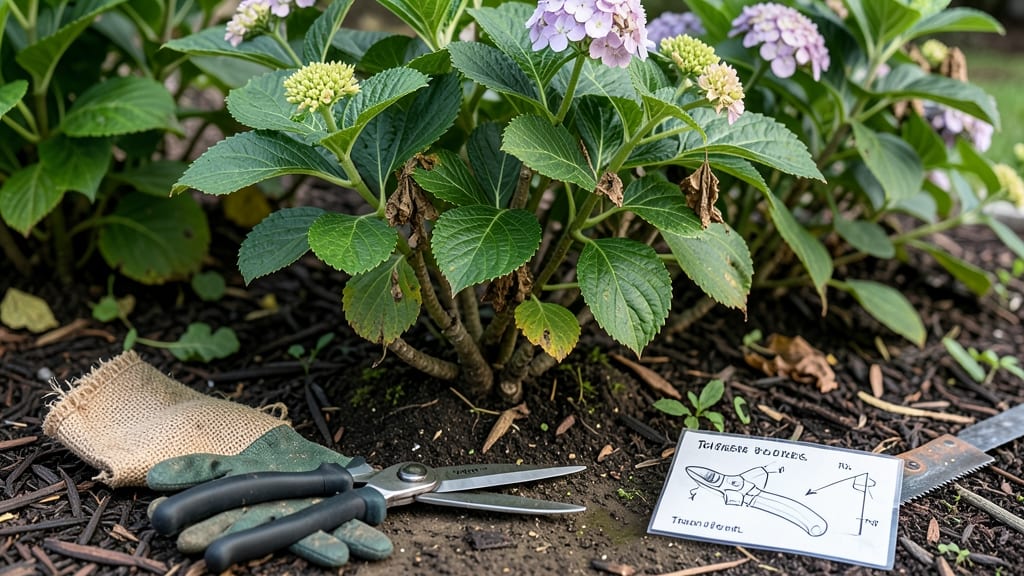
Winter pruning bigleaf hydrangeas isn't just about cutting back—it’s about setting up next summer’s blooms while protecting your plant from frost. ✂️ I’ve learned the hard way that timing and technique make all the difference, especially in colder climates where dormancy is critical.
The right cuts now mean stronger canes and bigger blooms by June, but get it wrong and you’ll struggle with weak growth or even winter damage.
You’ll need sharp pruners, a clean workspace, and a clear plan—no guesswork. The goal is to remove dead or weak stems while leaving the strongest canes intact. I always prune on a dry day when temps are above freezing but before hard frosts hit, usually in late November or December.
This gives the plant time to heal before winter’s worst.
What you’ll end up with is a hydrangea that looks like a well-groomed shrub, not a tangled mess. The canes will be sturdy, the buds will plump up over winter, and by spring, you’ll see vibrant new growth where old wood used to be.
Plus, you’ll avoid the heartbreak of seeing next year’s blooms cut off by late pruning.
Works for zones 5-9, but adjust timing if you’re in a milder climate—just make sure the plant has a chance to harden off before winter. Here’s how to do it right without overcomplicating things.
📚 In This Guide
- What you need
- Instructions
- Tips and common mistakes
- Wrapping up and next steps
What you need
- ● Bypass pruners – Choose a sharp, high-quality pair (e.g., Felco or Fiskars) to make clean cuts without crushing stems.
- ● Loppers – For thicker branches (½" to 1.5" diameter), opt for long-handled loppers (e.g., Corona or Bahco) for leverage.
- ○ Hand pruners (optional) – Useful for smaller trims (under ¼" thick) if you prefer precision.
- ● Garden saw – For very thick canes (over 1.5"), a pruning saw with a fine-tooth blade works best.
- ● Disposable gloves – Nitrile or leather to protect hands from thorns and sap.
- ● Rubbing alcohol (70% or higher) – Small bottle for sterilizing tools between cuts (prevents disease spread).
- ● Sharpie or marker – To label cuts if you’re unsure about regrowth patterns.
- ○ Bucket or tarp – For collecting pruned debris (optional but handy for cleanup).
- ● Dormant season timing – Prune after the first hard frost but before late winter (typically January–February in most U.S. zones).
- ● Dry conditions – Avoid pruning if rain or snow is forecasted within 24 hours (wet wood splinters).
- ● Sunny day – Choose a bright, calm day to reduce stress on the plant.
Step-by-Step guide to pruning bigleaf hydrangea for winter
Here's the method I trust every fall to keep your hydrangea thriving for years.
✂️ Step 1: Time Your Pruning Perfectly
Wait until after the first hard frost when the plant is fully dormant—usually late November to December in most climates. You'll know it's ready when the leaves have browned and fallen, and the stems feel brittle. Pruning too early can stimulate new growth that won't survive winter.
I always check the weather forecast for a 3-day frost-free window before grabbing my shears. This ensures I won't accidentally wake the plant from dormancy. If you live in a mild winter zone, wait until January when temperatures consistently stay below freezing.
✂️ Step 2: Remove Dead and Weak Canes
Start by cutting out any canes that are completely dead, broken, or showing signs of disease—look for blackened stems or strange growths. Use clean, sharp pruners to make cuts at a 45-degree angle about ¼ inch above a outward-facing bud. This angled cut helps rainwater run off instead of pooling at the cut.
I like to bundle the removed canes in a trash bag as I work—it makes cleanup easier later. For healthy canes, I look for ones that are thicker than a pencil and show signs of last year's flower buds (they'll look like small bumps near the base). These are your keepers.
✂️ Step 3: Thin the Center for Better Airflow
Step back and look at your hydrangea from all sides. The goal is to create an open center that allows sunlight and air to reach all parts of the plant. Remove any canes growing inward or crossing others—these compete for nutrients and create a crowded, disease-prone center.
I count the canes I'm keeping: aim to leave 3-5 of the strongest, most outward-growing canes. The oldest canes (those closest to the ground) can be removed completely if they're thin or weak. This rejuvenates the plant and encourages new growth from the base next spring.
✂️ Step 4: Shorten Remaining Canes to Encourage Blooms
For bigleaf hydrangeas, you want to cut back the remaining canes to just above a strong outward-facing bud. This is where next year's flowers will develop. Make your cuts at the bud, not above it—this ensures new growth starts in the right place.
I like to leave the canes at different lengths to create visual interest. The general rule is to cut back to about half the cane's length, but don't be afraid to leave some longer if they're particularly sturdy. The key is to always cut at a bud, never in the middle of a cane.
✂️ Step 5: Clean Up and Protect for Winter
After pruning, rake up all the fallen leaves and debris from around the base of the plant. This removes hiding spots for pests and reduces disease risk. I also apply a 2-3 inch layer of mulch around the base, keeping it 6 inches away from the stem to prevent rot.
For extra protection in cold climates, wrap the plant with burlap or use a frost blanket. This isn't always necessary, but it helps in zones with below 0°F temperatures. I always label the plant with a stake so I remember what it is next spring—hydrangeas can look very different after winter!
Tips & tricks for pruning bigleaf hydrangea in winter
These simple tricks will help you prune like a pro and keep your hydrangea healthy for years.
Timing is Everything: The 3-day frost-free window isn't just about avoiding new growth—it's also the perfect time to assess your plant's health. After pruning, if temperatures drop below 0°F within a few days, your plant will be well-protected by its winter dormancy. I've found that pruning right after a frost helps identify dead canes more easily—they'll be crisp and snap like dry twigs.
Tool Prep Matters: Before you start, clean your pruners with rubbing alcohol or a bleach solution to prevent spreading disease between cuts. I also like to oil the blades if I've been using them for other plants earlier in the season. Sharp tools make cleaner cuts that heal faster, which is especially important for bigleaf hydrangeas that need to recover quickly in spring.
Bud Identification: When cutting back canes in Step 4, look for buds that face outward from the center of the plant. These buds will grow into next year's blooms. I've learned the hard way that cutting above a bud can leave a stub that never grows properly. Always make your cut just above the bud—you'll know you're doing it right when you see a small bump with a tiny scale covering it.
Visual Pruning Check: After thinning the center in Step 3, step back and look at your hydrangea from all sides. You should be able to see light through the center—this is your goal for good airflow. I like to take a photo before and after pruning to compare. The difference in openness is dramatic and makes future pruning much easier to visualize.
Pro Tips for Prune Bigleaf Hydrangea For Winter
- These simple tricks will help you prune like a pro and keep your hydrangea healthy for years.
- Timing is Everything: The 3-day frost-free window isn't just about avoiding new growth—it's also the perfect time to assess your plant's health.
- Tool Prep Matters: Before you start, clean your pruners with rubbing alcohol or a bleach solution to prevent spreading disease between cuts.
Frequently asked questions
Got questions about pruning your bigleaf hydrangea before winter? You’re not alone! Here are some of the most common concerns—and straightforward answers—to help you prune with confidence.
When is the absolute latest I can prune my bigleaf hydrangea before winter?
Prune bigleaf hydrangeas after they’ve dropped leaves in late fall or early winter (November–December), but before new growth starts in spring. Avoid pruning in extreme cold or frost, as it can stress the plant. If you miss the window, wait until late winter or early spring—just be patient!
Do I need to cover my hydrangeas after pruning for winter protection?
Bigleaf hydrangeas are hardy in USDA Zones 6–9, but young plants or harsh winters may need extra care. After pruning, wrap the base with burlap or use a mulch blanket (4–6 inches of mulch) to insulate roots. Remove covers in early spring to prevent rot. Pro tip: Avoid plastic, which can trap moisture.
What if I accidentally prune too much—will my hydrangea survive?
Bigleaf hydrangeas are forgiving, but never remove more than 1/3 of the plant in one season. If you over-prune, focus on healthy canes next year and avoid cutting back old wood. They’ll bounce back with proper care—just give them time! For severe mistakes, fertilize lightly in spring to encourage recovery.
Can I prune bigleaf hydrangeas in early spring instead of winter?
Yes! While winter pruning is ideal, you can prune in early spring (before buds swell) if you missed the fall/winter window. Avoid pruning after buds form, as it removes next year’s blooms. Spring pruning also lets you see the plant’s structure more clearly—just be gentle to avoid damaging tender new growth.
What’s the difference between pruning bigleaf hydrangeas and other types (like panicle or oakleaf)?
Bigleaf hydrangeas bloom on old wood, so you only remove dead, diseased, or crossing branches. Panicle hydrangeas (like ‘Limelight’) bloom on new wood, so you can cut back harder. Oakleaf hydrangeas are similar to bigleaf but slightly more cold-hardy. Key rule: Never prune bigleaf hydrangeas in summer—wait for dormancy!
Wrapping up and next steps
Pruning your bigleaf hydrangea in winter isn’t just about tidying up—it’s your secret weapon for bigger blooms and healthier plants next season! 🌿 By following the right steps—like cutting back 1/3 of the oldest canes and shaping for airflow—you’ll encourage vibrant growth and prevent disease.
Remember, patience and precision pay off in stunning summer displays.
Now that you’re armed with the know-how, grab those shears and give your hydrangea the winter care it deserves! For extra tips, check out our guide on post-pruning care to keep your plant thriving all year. Happy pruning! ✂️💚