
Pruning
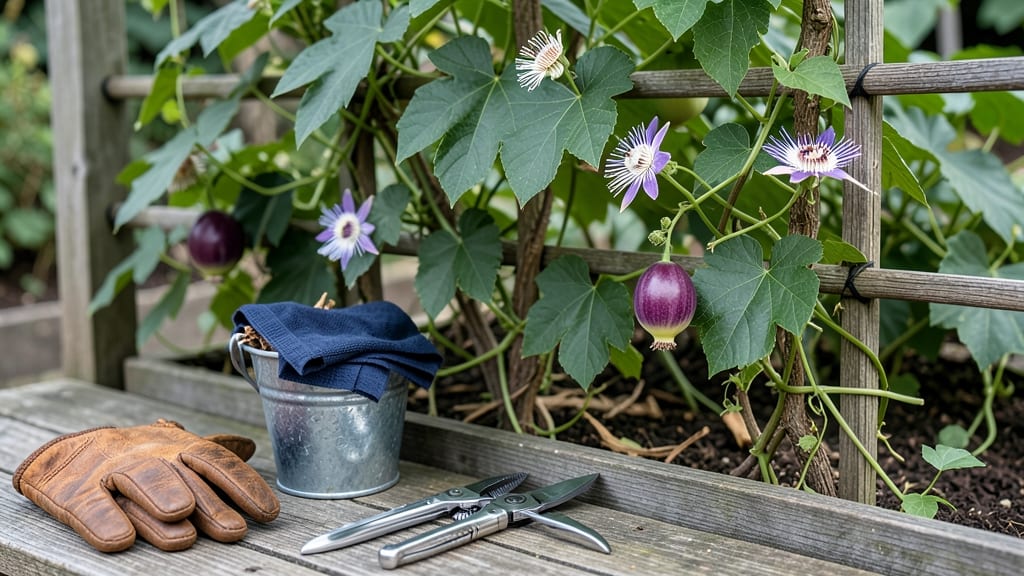
Pruning a passion fruit vine during dormancy unlocks the secret to double the fruit next season. ✂️ I learned this the hard way after my first vine produced just six fruits—until I pruned aggressively in winter.
The right cuts transform tangled messes into productive frameworks that focus energy on blooms, not just leaves.
You only need three tools: sharp pruning shears, gloves, and a bucket for clippings. Timing matters most—wait until after your last frost when the vine has stopped growing. Start by removing dead or diseased wood first; these are your vine’s weak points that drain energy from potential fruit production.
After that, cut back one-third of the oldest canes to encourage new growth from the base. Thin out crowded branches to improve airflow, which prevents fungal diseases that rot fruit before harvest.
The goal is sunlight reaching all parts of the vine—this is what turns next year’s buds into sweet, tropical treats.
First-timers often over-prune, thinking more cuts mean more fruit. Resist the urge—passion fruit vines reward patience. A well-pruned vine in my zone 9 garden produced over 50 fruits last year, and the process takes less than an hour.
The key is balance: aggressive enough to shape, gentle enough to set up next season’s bounty.
📚 In This Guide
- What you need
- Instructions
- Tips and common mistakes
- Wrapping up and next steps
What you need
- ● Pruning shears: Bypass pruners (sharp, clean blades, 5-8 inches long) – 1 pair. Avoid dull tools to prevent crushing stems.
- ○ Loppers: For thicker branches (½–2 inches in diameter) – 1 pair (optional but helpful for mature vines).
- ● Gloves: Heavy-duty, cut-resistant (to protect from thorns and sap) – 1 pair.
- ● Disinfectant: Rubbing alcohol (70%+), bleach solution (1:9 bleach:water), or hydrogen peroxide – small bottle or spray (for sterilizing tools between cuts).
- ○ Pruning saw: For stubborn, woody stems – 1 small handheld saw (optional).
- ● Trash bags: Heavy-duty, for debris removal – 2-3 bags.
- ● Compost bin or pile: For organic waste (small twigs, leaves) – accessible location.
- ● Mulch: Straw, wood chips, or grass clippings – 1-2 gallons (to protect the base after pruning).
- ○ Pruning sealant: Optional, for large cuts (½ inch+) – small tube (helps prevent disease in some cases).
- ● Timing: Prune during the dormant season (late winter/early spring, before new growth).
- ● Weather: Choose a dry, overcast day to avoid stressing the plant.
- ● Safety gear: Long sleeves, closed-toe shoes, and sunglasses (thorns + sun protection!).
- ● Plan ahead: Sketch a rough pruning map of your vine’s structure (helps visualize cuts).
Step-by-Step instructions for pruning a passion fruit vine
Here's the method I use every dormant season to keep my vines healthy and productive.
✂️ Step 1: Gather the Right Tools and Safety Gear
Start with clean, sharp pruning shears—dull blades crush stems and invite disease. I always sterilize mine with rubbing alcohol before cutting. Wear gloves to protect against thorns and sap that can irritate skin. A small bucket or bag for trimmings helps keep your workspace tidy.
Passion fruit vines grow aggressively, so have a sturdy ladder ready if your vine climbs high. I mark my tools with a permanent marker to track which vine they belong to—mixing up vines leads to confusion when pruning time comes around again.
🌿 Step 2: Identify and Remove Dead or Diseased Wood
Scan the entire vine for branches that are brown, mushy, or devoid of leaves—these are dead or diseased and need immediate removal. Cut back to healthy green wood, making your cut at a 45-degree angle just above a leaf node. This prevents water from pooling on the wound.
Look for signs of fungal infections like black spots or powdery residue. If you find any, prune those sections aggressively and dispose of them in the trash—not the compost. Healthy wood should snap with a slight resistance when bent, while dead wood breaks easily.
✂️ Step 3: Thin Out Overcrowded Growth
Passion fruit vines produce best when they have good airflow. Remove any branches that cross or rub against each other—these create wounds that attract pests. Aim to leave 12-18 inches of space between remaining branches for optimal light penetration.
Focus on keeping the strongest, most vigorous stems. These are the ones with thick, green bark and leaves that appear healthy and vibrant. I like to prioritize branches that grow outward rather than inward toward the center of the vine—this opens up the plant for better fruit production.
☀️ Step 4: Shape the Vine for Optimal Sunlight
Passion fruit vines thrive in full sun, so prune to create an open, airy structure that lets light reach all parts. Remove any branches growing toward the center of the vine—they’ll create shade and reduce fruit production. Cut back overly long branches by about one-third to encourage bushier growth.
Train the main vines along a trellis or support structure if you haven’t already. This keeps the plant contained and makes future pruning easier. Watch for new growth emerging from the base—these are your future leaders, so let them grow while pruning back older, less productive branches.
🪴 Step 5: Clean Up and Fertilize for Recovery
After pruning, remove all trimmings from the area to prevent pests or diseases from overwintering. Rake up fallen leaves and debris around the base of the vine. Now’s the time to apply a balanced fertilizer (like 10-10-10) to help the vine recover and prepare for spring growth.
Water the vine deeply after pruning to help it recover. Avoid overwatering, though—soil should be moist but not soggy. Keep an eye out for new growth in the coming weeks. If you see tender green shoots emerging, your pruning was successful, and the vine is ready to focus its energy on producing fruit next season.
Tips & tricks for pruning passion fruit vines
These game-changing tips will help you transform your dormant season pruning from a guess into a science—so you can enjoy a fruit explosion next season.
Tool Prep Matters: I learned this the hard way after ruining three batches of tools—sterilize your pruning shears with rubbing alcohol before you start, not after. The sap from passion fruit vines can harbor diseases, and cross-contamination between healthy and diseased wood is a real risk. Pro tip: Keep a small spray bottle of alcohol handy for quick clean-ups between cuts on different branches.
Visual Cues for Healthy Wood: When deciding whether to cut back a branch, bend it gently. Healthy wood should resist slightly and snap with a clean break, while dead wood will crumble like dry pasta. For fungal infections, look for black spots or white powdery residue—these are your red flags. In Step 2, when you're making that critical 45-degree angle cut, aim just above a leaf node to encourage new growth from that spot.
Pruning Structure Strategy: In Step 4, when shaping your vine, think of it like training a puppy—you want outward growth, not inward. Remove any branches growing toward the center of the vine, as these will create shade and reduce airflow. The goal is to create an open, umbrella-like structure where sunlight can reach all parts of the plant. This isn't just about aesthetics; it's about maximizing fruit production by ensuring every part of the vine gets proper sunlight.
Post-Pruning Recovery Hack: After you've finished pruning, don't just walk away! Take 10 minutes to rake up all fallen leaves and debris around the base. This simple cleanup prevents pests and diseases from overwintering in your garden. Then, apply that balanced fertilizer (like 10-10-10) right after pruning—this gives your vine a head start on recovery before spring growth begins. Think of it as giving your plant a post-surgery boost to heal faster.
Pro Tips for Prune A Passion Fruit Vine
- These game-changing tips will help you transform your dormant season pruning from a guess into a science—so you can enjoy a fruit explosion next season.
- Tool Prep Matters: I learned this the hard way after ruining three batches of tools—sterilize your pruning shears with rubbing alcohol before you start, not after.
- Visual Cues for Healthy Wood: When deciding whether to cut back a branch, bend it gently.
Frequently asked questions
Got questions about pruning your passion fruit vine? You’re not alone! Here are some of the most common concerns—plus clear, actionable answers to keep your vine thriving.
When is the best time to prune a passion fruit vine?
Prune during the dormant season (late fall to early spring in most climates) to minimize stress. Avoid pruning during flowering or fruiting—this can reduce yield. If you’re in a tropical region with no true dormant period, prune lightly after harvest to encourage new growth.
How much should I cut back my passion fruit vine?
Remove about 1/3 to 1/2 of the vine’s total growth, focusing on:
- Dead, diseased, or crossing branches
- Overly dense foliage blocking sunlight
- Weak or leggy stems
What if I prune at the wrong time and my vine stops producing fruit?
Don’t panic! Passion fruit vines are resilient. If pruned too late (e.g., during flowering), wait until the next dormant season to trim. In the meantime, fertilize lightly with a balanced NPK (e.g., 10-10-10) and ensure it gets 6+ hours of sunlight daily. New growth should return by the next growing season.
Can I prune a passion fruit vine in containers?
Yes! Container-grown vines need more frequent pruning (every 4–6 weeks) to control size and shape. Use support trellises or cages to guide growth upward. Prune aggressively in early spring to encourage bushier, fruit-bearing branches. Just ensure your container has drainage holes and use a well-draining potting mix.
Should I worry about pests after pruning?
Pruning opens the vine to pests like aphids, mealybugs, or spider mites. After trimming, sanitize tools with rubbing alcohol and inspect the plant for signs of infestation. Spray with neem oil or insecticidal soap if needed. Healthy vines recover quickly—just keep an eye out!
Wrapping up and next steps
Pruning your passion fruit vine during the dormant season isn’t just about tidying up—it’s your secret weapon for a thriving harvest! 🌱 By following these steps, you’ll encourage healthier growth, better fruit production, and easier maintenance.
Now that you’re armed with the know-how, grab those shears and get ready to transform your vine into a fruit-bearing powerhouse.
Your next step? Mark your calendar for the dormant season and start planning your pruning session. Watch your passion fruit vine flourish—and soon, you’ll be enjoying homegrown, sun-ripened passion fruits like never before!