
How To
Pruning a mango tree during dormancy unlocks its full fruiting potential—this is how to do it right. 🌱 I’ve learned the hard way that skipping this step means fewer harvests and weaker branches. The key? Timing, sharp tools, and knowing where to cut for airflow and sunlight.
Start with clean, sterilized pruners and focus on three goals: removing dead wood, thinning crowded branches, and shaping the tree into an open vase. Avoid heavy cuts—never remove more than 25% of the canopy—or you’ll stress the tree. The best time?
Late winter or early spring, just before new growth begins. You’ll see the difference in 6-8 weeks: stronger branches, better airflow, and more fruit clusters forming. The tree won’t just look healthier—it’ll reward you with sweeter, heavier harvests.
Just remember: patience pays off, and less is more when it comes to pruning.
📚 In This Guide
- What you need
- Instructions
- Tips and common mistakes
- Wrapping up and next steps
What you need
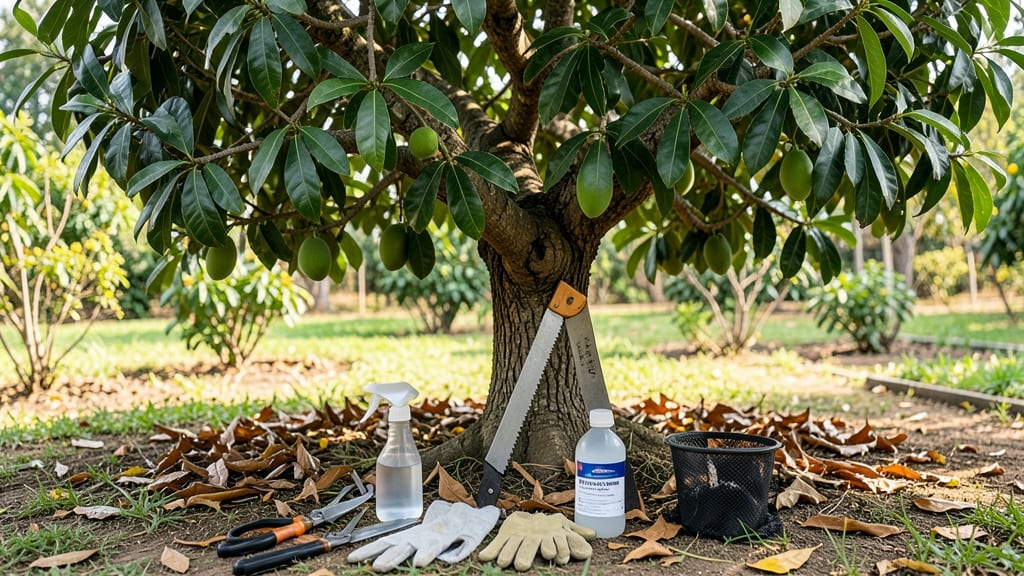
- ● Pruning shears: Bypass pruners with sharp, sterilized blades (4-6 inch blades for small branches). Pro tip: 💡 Test sharpness by cutting a piece of paper—if it tears, sharpen them!
- ● Pruning saw: A curved-tooth handsaw (8-10 inch blade) for thicker branches (1.5+ inches in diameter). Pro tip: 🔥 Avoid cheap saws—they can tear wood, inviting disease.
- ● Ladder or step stool: Sturdy, non-slip (extendable ladders work best for tall trees). Pro tip: ✨ Always have a spotter if working high!
- ● Gloves: Heavy-duty, cut-resistant gloves (gardening or work gloves) to protect from thorns and splinters.
- ● Disinfectant: 70% isopropyl alcohol or a bleach solution (1 part bleach to 9 parts water) to sterilize tools between cuts. Pro tip: 🌡️ Never skip this—diseases hide in tools!
- ● Rag or paper towels: For wiping tools clean before and after use.
- ● Pole pruner: Extendable tool for high branches (10-15 feet reach).
- ● Tree wound dressing: Pruning sealant (like Tanglefoot Tree Wound Pruning Seal) for large cuts (controversial but some swear by it!).
- ● Marking spray: Fluorescent paint to mark branches for removal (great for complex pruning plans).
- ● Safety glasses: Protect your eyes from debris.
- ● First-aid kit: Just in case—thorns and tools can be sneaky!
- ● Weather: Prune on a dry, cloudy day (avoid wind or rain). Ideal temps: 50–75°F (10–24°C).
- ● Timing: Dormant season (late winter/early spring, before buds swell) for best results.
- ● Tree health: Only prune if the tree is healthy (no signs of disease or pest infestation).
- ● Plan: Sketch a rough map of cuts or take photos beforehand. Pro tip: 🎯 "See the tree in your mind’s eye" before making a single cut!
Step-by-step instructions for pruning a mango tree
Here’s the method I’ve used to keep my mango tree healthy and productive—timed perfectly for the dormant season when it’s safest.
✂️ Step 1: Identify and Remove Dead or Diseased Branches
Start by examining the tree for branches that are brown, brittle, or hollow—these are dead and must go. Use sharp pruning shears to cut these back to healthy wood, making your cuts at a 45-degree angle just above a leaf node or outward-facing bud. This prevents water from pooling on the wound and causing rot.
Next, look for branches with signs of disease, like black spots, oozing sap, or fungal growth. Remove these entirely, even if they’re not completely dead. Sterilize your shears with rubbing alcohol between cuts to avoid spreading any pathogens. I always prune these first—they’re the easiest to spot and the most urgent to remove.
✂️ Step 2: Thin the Canopy for Better Airflow and Light
Mango trees need airflow to prevent fungal diseases and sunlight to produce fruit. Focus on removing branches that are crossing, rubbing, or growing inward—these compete for resources and can damage each other. Cut these back to the main trunk or a strong lateral branch, again at a 45-degree angle.
Next, thin out any branches that are too dense. Aim to create an open, vase-like shape with 6-8 main scaffold branchesfruit buds or small mangoes—these are your future harvest.
✂️ Step 3: Prune for Shape and Size Control
If your mango tree is too tall or leggy, it’s time to shape it. Focus on reducing the height by cutting back the longest, upward-growing branchesside branch or leaf node. This encourages bushier growth and makes future harvesting easier. Never cut more than 25% of the tree’s foliage at once
For younger trees, you can be more aggressive with shaping, but for mature trees, I recommend smaller, gradual cutswater sprouts
After pruning, rake up and dispose of all the clippings—especially the diseased ones—to prevent pests or fungi from reinfecting the tree. Seal larger cuts (over ½ inch in diameter) with a tree wound sealant to protect the tree from disease. For smaller cuts, let them heal naturally—they’ll callus over in time. Finally, give the tree a light application of balanced fertilizer (like 10-10-10) to help it recover and prepare for the next growing season. Water deeply after fertilizing to help the nutrients soak into the soil. This is also a great time to add a 2-3 inch layer of mulch
After pruning, keep an eye on the tree for new growthyellowing leaves or wilting branches
Plan to do a light pruning in late summersuckers or water sprouts
✂️ Step 4: Clean Up and Protect the Tree
⏰ Step 5: Monitor and Maintain Through the Season
Tips & tricks for pruning a mango tree
These simple strategies will help you prune like a pro and keep your mango tree thriving for years to come.
Timing is Everything: The dormant season is your best window for pruning—typically late winter or early spring before new growth begins. I’ve learned this the hard way after seeing trees stress from pruning during active growth. If you miss this window, a light pruning in late summer can help, but avoid heavy cuts then. The tree’s natural defenses are strongest when it’s resting, so you’re less likely to introduce diseases or pests.
Tool Prep Matters: Before you start, sharpen your pruning shears and sterilize them with rubbing alcohol. Dull blades tear wood instead of making clean cuts, which slows healing and invites infections. I also keep a small brush and bucket nearby to clean up debris as I go—this prevents pests from hiding in fallen leaves and branches. A pair of gloves will save your hands from splinters and sap.
Visual Cues for Healthy Cuts: When making your 45-degree cuts in Step 1 and Step 2, aim for a smooth, clean slice just above a leaf node or outward-facing bud. This ensures new growth will sprout in the right direction. A good rule of thumb is to cut where the branch collar meets the trunk—this natural swelling helps the wound heal faster. If you’re unsure where to cut, look for the slight bump where the branch meets the trunk; that’s your target zone.
Seasonal Follow-Up: After your dormant-season pruning, mark your calendar for a light maintenance check in late summer. This is when water sprouts and suckers often appear—those fast-growing vertical shoots that steal energy from fruit production. Remove them immediately by cutting back to a lateral branch. Think of this as your mid-season tune-up to keep the tree focused on producing fruit rather than unnecessary growth.
Pro Tips for Prune A Mango Tree
- These simple strategies will help you prune like a pro and keep your mango tree thriving for years to come.
- Timing is Everything: The dormant season is your best window for pruning—typically late winter or early spring before new growth begins.
- Tool Prep Matters: Before you start, sharpen your pruning shears and sterilize them with rubbing alcohol.
Frequently asked questions
Got questions about pruning your mango tree? You’re not alone! Here are some of the most common concerns—plus straightforward answers to help you prune like a pro.
When is the best time to prune a mango tree?
The ideal time is during the dormant season (late winter or early spring, before new growth starts). Avoid pruning after flowering or during fruit development, as this can stress the tree and reduce yields. For tropical climates, prune during the dry season instead.
How much of the mango tree should I cut back?
Remove about 20–30% of the tree’s canopy to improve airflow and sunlight penetration. Focus on:
- Dead, diseased, or crossing branches
- Suckers (shoots growing from the base or trunk)
- Overcrowded or weak growth
What if I prune at the wrong time?
Pruning during active growth (summer) or after flowering can lead to:
- Fewer flowers/fruit next season
- Increased pest/disease risk from open wounds
- Stress that weakens the tree
Do I need to seal pruning cuts?
No—sealing cuts with paint or pruning sealant is not recommended. Mango trees heal naturally, and sealants can trap moisture, inviting rot. Instead, use clean, sharp tools and make cuts at a 45-degree angle just outside the branch collar for the best healing.
What should I do with the pruned branches?
Pruned branches can be:
- Composted (if disease-free)
- Used as mulch around the base (not touching the trunk)
- Repurposed for crafting or firewood (if dry)
Wrapping up and next steps
Pruning your mango tree during the dormant season is a game-changer—it boosts fruit production, improves airflow, and keeps your tree healthy and strong! 🌱 With the right tools, timing, and technique, you’re well on your way to a bountiful harvest.
Now that you’ve got the know-how, grab those pruners and get ready to transform your tree into a fruit-bearing powerhouse.
Ready for the next step? Monitor your tree’s growth after pruning, and don’t forget to fertilize and water it properly to support new growth. Happy pruning—your future mango feast starts now! 🍈