
Pruning
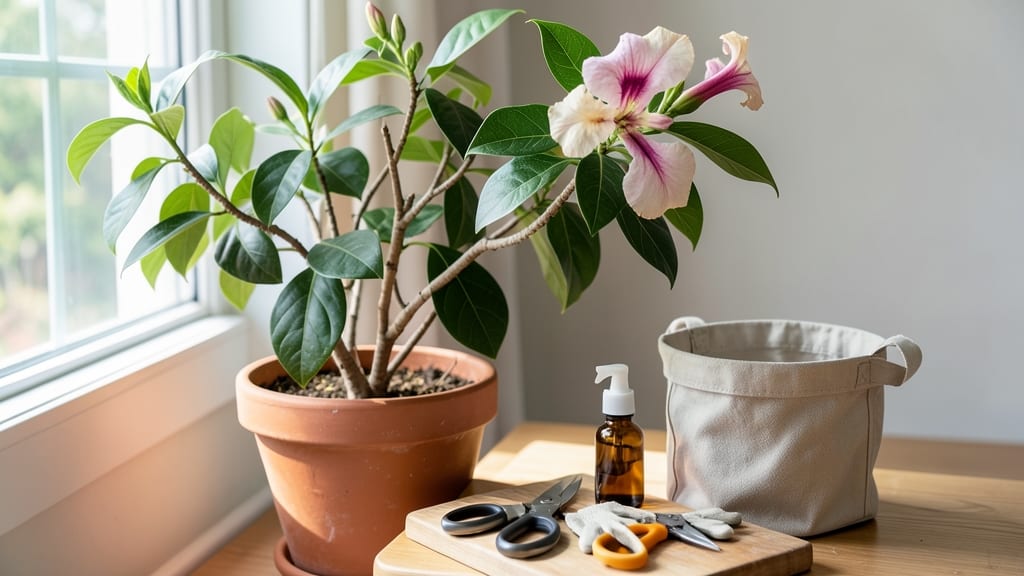
How to prune a mandevilla plant for winter isn’t just about cutting back—it’s about setting the stage for next year’s showstopper blooms. 🌿 I’ve learned the hard way that skipping this step means leggy, weak canes that struggle to rebound, no matter how much you water them. The key is timing: prune after the first frost when growth naturally slows, but before temperatures drop below 20°F—that’s when the plant goes dormant.
Start with clean, sharp pruners and cut back one-third to half of the current season’s growth, always making cuts just above a leaf node or bud. You’re not trying to shrink the plant—you’re encouraging thicker, stronger stems that will produce more flowers.
Think of it like giving your mandevilla a haircut for winter: shorter on top, but healthier underneath.
After pruning, move potted plants indoors to a bright spot (like a sunroom or under grow lights) where temperatures stay between 50-60°F. Keep the soil barely moist—overwatering is the fastest way to invite rot.
By spring, you’ll see fresh green shoots pushing through, and those canes will be sturdier and more vigorous than ever before.
Here’s the secret weapon: don’t throw away those cuttings. Root them in water or moist perlite, and you’ll have free plants ready to replant outdoors next season.
It’s like getting a head start on spring—without the extra cost. Now, let’s get those shears out and prep your mandevilla for its winter nap.
📚 In This Guide
- What you need
- Instructions
- Tips and common mistakes
- Wrapping up and next steps
What you need
- ● Pruning shears or secateurs: Sharp, bypass-style shears (4-6" blade) for clean cuts. Dull tools crush stems—avoid this!
- ● Loppers: For thicker canes (½"–1" diameter). Opt for ratcheting or bypass loppers for ease.
- ● Garden gloves: Heavy-duty, cut-resistant gloves (size medium/large) to protect from thorns and sap.
- ● Disinfectant (70% isopropyl alcohol or bleach solution): 1 part bleach to 9 parts water—clean tools before and after each cut to prevent disease.
- ● Rubbing alcohol or hand sanitizer: For wiping down tools and hands between cuts.
- ○ Pruning sealant (optional but helpful): Wound sealant (like Tanglefoot Tree Wound Pruning Seal) for large cuts to reduce sap loss.
- ● Trash bag or bucket: For collecting pruned debris (10–20 gallon size, depending on plant size).
- ● Notebook & pen: To map out your pruning plan (e.g., mark canes to remove or shorten).
- ● Long-handled pruners: If your Mandevilla is in a hard-to-reach spot (e.g., hanging basket or tall trellis).
- ● Safety glasses: Protect your eyes from sap splatter or debris.
- ● Hose or water spray bottle: To rinse off sap from tools and hands post-pruning.
- ● Plant food (balanced fertilizer): Like 10-10-10 or 20-20-20—apply after pruning to support regrowth.
- ● Mulch (pine bark or straw): 2–3 inches to insulate the base after pruning (especially in colder climates).
Step-by-step guide for pruning mandevilla plants for winter
Here's how to prepare your mandevilla for dormancy—so next spring's blooms are even more spectacular.
✂️ Step 1: Time Your Pruning Perfectly
Wait until after your first hard frost—when the plant's leaves have already yellowed and dropped naturally. This usually lands in late fall, around November to early December depending on your zone. Never prune before frost, or you risk encouraging new growth that won't survive winter. I always check the weather forecast for that first hard freeze date, then schedule my pruning for 2-3 days after.
Look for these signs: all leaves have fallen, and the canes feel woody to the touch. If you see any green leaves remaining, wait another week. Pruning too early stresses the plant and weakens its ability to enter proper dormancy. This is the moment that matters: get it right now, and you'll have stronger canes come spring.
🌿 Step 2: Gather Your Tools and Safety Gear
You'll need sharp pruning shears (sterilized with rubbing alcohol), gloves (mandevillas can be thorny), and disposable pruning bags or a bucket. I keep a small spray bottle of 70% isopropyl alcohol handy to clean my shears between cuts—this prevents spreading disease between plants. Wear long sleeves too; those thorns pack a punch.
Work on a clean, dry surface like a tarp or concrete patio. This keeps your workspace organized and makes cleanup easier. I like to lay out my tools in order of use: shears first, gloves next, then the disposal bag. This simple routine prevents last-minute scrambling and keeps everything sterile.
✂️ Step 3: Remove Dead and Damaged Canes First
Start by identifying canes that are completely brown, mushy, or hollow—these won't regrow. Cut these back to the ground using a 45-degree angle about ¼ inch above a healthy bud if one exists. For truly dead canes, cut at the base. I always work from the outside of the plant inward, making it easier to see what's left after each cut.
Don't skip this step—dead wood harbors pests and disease that can infect healthy canes. You'll know a cane is truly dead if it snaps like a dry twig when bent. Healthy canes bend slightly before breaking. Remove any canes that are less than pencil-thick too; they won't produce strong new growth next season.
🌱 Step 4: Prune Healthy Canes to Encourage Stronger Growth
For remaining healthy canes, cut back one-third to one-half of their length. Make cuts just above a leaf node (the bump where leaves used to attach) using a clean, sharp motion. This encourages the plant to send out multiple new shoots from those nodes next spring. I like to visualize the plant as a tree—pruning this way creates a natural branching structure.
Never leave stubs longer than ½ inch. These can rot over winter or become entry points for pests. If you're unsure where to cut, look for the small brown buds along the cane—these are your growth points. After pruning, your plant should look more like a bush than a long vine. This shape handles winter better and produces fuller blooms.
🪴 Step 5: Clean Up and Prepare for Storage
After pruning, dispose of all cuttings immediately in your pruning bags. Never leave them on the ground—this attracts pests and spreads disease. Wipe down your tools with alcohol again, then store them in a dry place. I keep my shears in a small toolbox with a piece of oiled cloth to prevent rust.
For container-grown mandevillas, reduce watering to once every 2-3 weeks until spring. Let the soil dry completely between waterings. If you're overwintering outdoors in mild climates, mound 4-6 inches of mulch around the base to insulate roots. This simple step prevents freeze-thaw cycles that damage roots. Mark the location with stakes so you don't disturb it in spring.
Tips & tricks for pruning mandevilla plants for winter
These simple strategies will help you prune like a pro and set your mandevilla up for a spectacular spring comeback.
Timing is Everything: The 2-3 days after your first hard frost is the sweet spot for pruning—this gives the plant time to fully shut down its growth cycle. Here's what I do: I set a calendar reminder for the day after the forecasted frost, then double-check the canes the next morning. If they're still slightly green, wait one more day. This timing ensures the plant enters dormancy properly without stress.
Tool Prep Matters: Sterilizing your pruning shears with rubbing alcohol between cuts is non-negotiable. I keep a small spray bottle handy and give my shears a quick wipe after every 3-5 cuts. This prevents bacterial spread between healthy and damaged canes. Also, make sure your shears are sharp—dull blades crush stems instead of making clean cuts, which stresses the plant. Test them on a few dead canes first to ensure they're cutting cleanly.
Visual Cues for Perfect Cuts: When pruning healthy canes in Step 4, look for those small brown buds along the stem—they're your growth points for next spring. Make your cut just above one of these buds at a 45-degree angle. This angle helps water run off the cut instead of pooling, which prevents rot. I like to visualize making a tiny roof over the bud to protect it during winter. This technique creates a natural branching structure that produces fuller blooms.
Winter Care Extension: For container-grown mandevillas, consider moving them to an unheated garage or shed during winter if your climate gets extremely cold. This extra protection gives you more flexibility with your mulching strategy. If you do leave them outdoors, mound that 4-6 inches of mulch around the base and cover the pot with burlap for added insulation. This double protection prevents freeze-thaw damage that can crack containers and harm roots.
Pro Tips for Prune A Mandevilla Plant For Winter
- These simple strategies will help you prune like a pro and set your mandevilla up for a spectacular spring comeback.
- Timing is Everything: The 2-3 days after your first hard frost is the sweet spot for pruning—this gives the plant time to fully shut down its growth cycle.
- Tool Prep Matters: Sterilizing your pruning shears with rubbing alcohol between cuts is non-negotiable.
Frequently asked questions
Got questions about pruning your Mandevilla for winter? You’re not alone! Here are the most common concerns—plus clear, actionable answers to keep your plant thriving.
When is the exact best time to prune Mandevilla for winter?
The ideal window is late fall to early winter (November–January in most U.S. zones), after the first hard frost but before temperatures drop below 30°F (-1°C). Prune too early, and you risk stimulating new growth that won’t survive cold. Too late? The plant may suffer frost damage. Pro tip: Wait until foliage yellows or wilts slightly—this signals dormancy.
How much should I cut back? Can I prune it too aggressively?
You can trim up to ⅔ of the plant’s height, but avoid shearing into bare wood. Aim to cut back to healthy, outward-facing buds or nodes (the bumps where leaves grow). Over-pruning risks stressing the plant, but under-pruning can lead to weak, leggy growth next season. Think of it like a haircut: confident, not drastic!
What if my Mandevilla doesn’t go dormant? Should I still prune?
If your plant stays green year-round (common in USDA Zones 9–11), prune lightly in late winter (February–March) to shape it and encourage bushier growth. Focus on removing dead, diseased, or crossing branches—avoid heavy cuts. Mandevillas in pots may also need minimal pruning if kept indoors with consistent warmth.
Can I prune Mandevilla in spring instead of winter?
Yes, but with trade-offs. Spring pruning (March–April) is better than never pruning, but you’ll miss the chance to strengthen the plant’s root system before winter. If you skip winter pruning, wait until after the last frost in spring to trim back by ⅓—just don’t expect the same vigorous regrowth as a dormant-season cut.
My pruned Mandevilla has blackened stems or mushy leaves—what went wrong?
This usually means frost damage or overwatering after pruning. If stems are black and brittle, they’re dead—cut them off at the base. For mushy leaves, reduce watering and ensure the plant has well-draining soil. Prune in dry conditions and avoid fertilizing right after cutting to prevent stress. Need more help? Check for pests (like spider mites) or fungal spots too!
Can I propagate my Mandevilla cuttings from winter pruning?
6–8 inch cuttings
with at least 2–3 nodes root easily in water or perlite. Place them in bright, indirect light and keep soil moist (not soggy). Roots should form in 2–4 weeks. Bonus: This is a great way to multiply your plant for free! Just avoid using cuttings from frost-damaged stems—they won’t root well.
Wrapping up and next steps
Pruning your Mandevilla plant for winter is all about giving it a fresh start while protecting it from the chill. By following these steps—cleaning up dead growth, shaping for airflow, and prepping for dormancy—you’ll ensure a healthier, more vibrant plant when spring rolls around. 🌱
Now that you’re armed with the know-how, roll up your sleeves and get pruning! Your Mandevilla will thank you with stronger canes and even more stunning blooms next season. Need a little extra confidence? Check out our FAQs for quick reminders or troubleshooting tips.