
Pruning
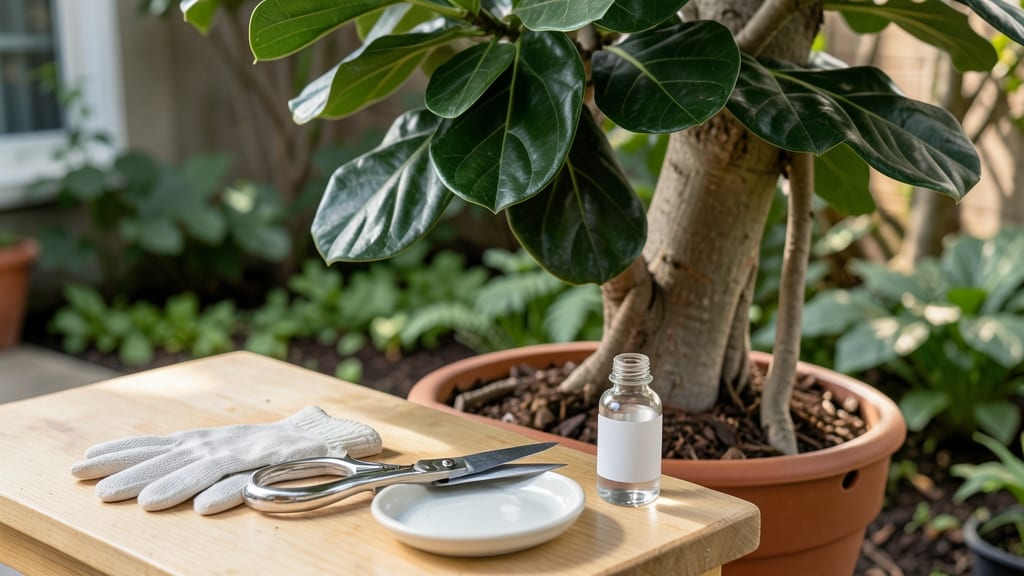
To prune a fiddle fig tree, trim dead or yellowing leaves year-round, shape the canopy in late winter before new growth, and remove crossing branches to improve airflow. Use sterilized pruners and avoid cutting more than 25% of the foliage at once to prevent stress.
Fiddle fig trees thrive when you prune strategically to encourage healthy growth. 🌿 The year-round maintenance keeps your tree looking tidy while preventing disease, while the late-winter shaping session is your chance to reset the canopy's structure before spring's vigorous growth begins.
I've found that focusing on airflow—by removing crowded branches—helps prevent fungal issues that plague many tropical plants. The 25% rule acts as a safety net; cutting too much shocks the tree and can trigger excessive regrowth that weakens its overall health.
What sets fiddle figs apart is their ability to regenerate quickly, but that doesn't mean you should prune aggressively. The key is working with the tree's natural rhythms: removing dead wood anytime you spot it, but saving major structural cuts for that dormant winter window.
This approach mimics how these plants would naturally shed in their native environments, creating a more balanced and resilient tree over time.
💡 In This Article
- Best Pruning Times for Fiddle Fig Trees
- Step-by-Step Fiddle Fig Pruning Techniques
Best pruning times for fiddle fig trees
The ideal time to prune your fiddle fig tree is during its dormant period—typically late winter (January-February in most climates). This timing aligns with the tree's natural growth cycle, when it's not actively producing new leaves or flowers.
Pruning at this stage encourages fresh, vigorous growth in spring while minimizing stress on the plant. 🌱 The tree's reduced metabolic activity during dormancy also means it can heal cuts more efficiently, reducing the risk of infections.
Fiddle figs thrive in tropical climates, and their growth patterns reflect this. In warmer regions, you might see year-round growth, but even then, the coolest months offer the best window for major pruning. Avoid pruning during extreme heat or cold snaps, as these conditions slow wound healing.
For example, if you live in Zone 10 where temperatures rarely drop below 50°F, you can prune anytime except during summer heatwaves when the tree is most vulnerable to stress.
Seasonal pruning also plays a role in blooming. Fiddle figs produce flowers in late winter or early spring, and strategic cuts can encourage more abundant blooms. When you remove overcrowded branches in late winter, you're redirecting the tree's energy toward new growth and flowering rather than maintaining unnecessary foliage.
This is particularly effective for mature trees where you want to stimulate fresh, vibrant leaves and flowers for the upcoming season.
Timing matters for disease prevention too. Wet conditions create ideal environments for fungal infections, which is why late winter—when rainfall is typically lower—is the safest period. If you must prune during the growing season, do so on dry, sunny days when humidity is low.
The tree's natural sap flow is also slower during dormancy, reducing the risk of sap bleeding from cuts, which can attract pests or pathogens.
What most people don't realize is how the tree's age affects pruning timing. Young fiddle figs (under 3 years old) benefit from minimal pruning—just removing dead or damaged growth. Mature trees, however, can handle more aggressive shaping during their dormant period.
For instance, a 5-year-old tree might need up to 20% of its canopy removed to maintain its shape, while a 10-year-old specimen could safely handle 25% of cuts without stress.
Consider this visual cue: Look for dormant buds along the branches in late winter—they appear as small, swollen areas where new growth will emerge. Pruning just above these buds signals the tree to grow from that point, creating a fuller, more balanced shape.
This method is especially useful for restoring trees that have become leggy or top-heavy over time.