
Pruning
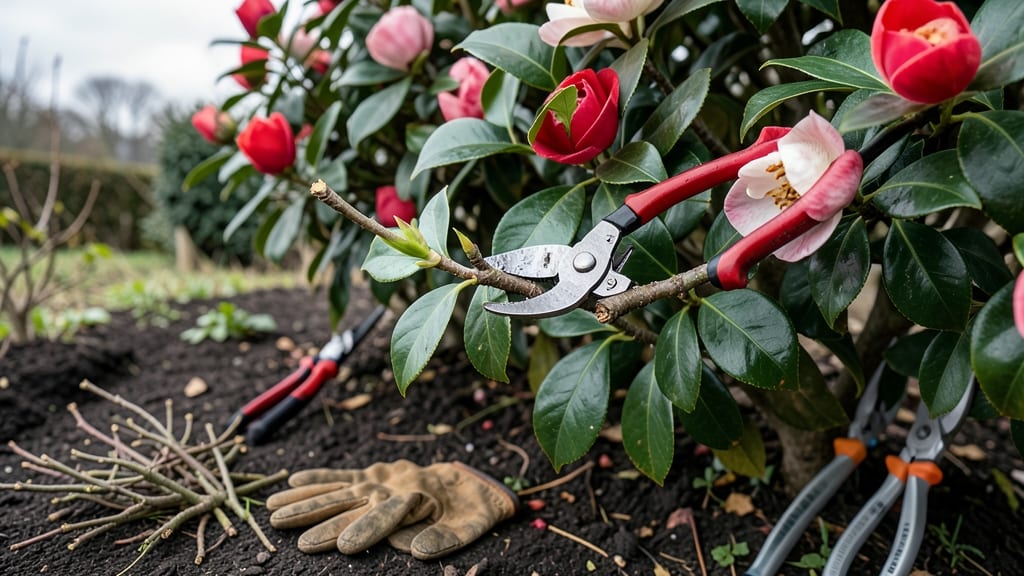
Hard pruning camellias in late winter gives you the boldest blooms of spring—I’ve transformed my leggy, overgrown bushes into showstopper shrubs using this exact method. The key is timing: wait until after flowering (or before buds swell) when the plant is dormant but still strong enough to bounce back.
Most gardeners avoid hard pruning because they fear killing the plant, but with the right cuts, you’ll encourage thicker growth and double the blooms next season.
You’ll need sharp pruners, a clean saw for thicker stems, and rubbing alcohol to sterilize tools between cuts—this prevents disease from spreading. Start by removing dead, crossing, or weak branches first; these are the ones that rob energy from your showy blooms.
Then, cut back the remaining branches by one-third to one-half their height, always making cuts just above a outward-facing bud or leaf joint. The goal is to open up the center of the plant so sunlight reaches all the way in.
After pruning, your camellia will look like a sad, overgrown mess—but patience pays off. Within 4-6 weeks, you’ll see fresh green shoots pushing out from those cuts, and by next spring, those branches will be loaded with larger, more abundant blooms than ever before.
The secret is in the new growth: every cut you make today becomes a future flower stem. Just avoid pruning in fall or early spring, when the plant is still storing energy for next year’s blooms.
Here’s the part most gardeners miss: water deeply after pruning to help the plant recover, and hold off on heavy fertilizing until new growth appears. If you’re in a hot climate, provide afternoon shade for a few weeks to reduce stress.
And if your camellia is particularly old or woody, don’t be afraid to go bold—some of the most stunning specimens I’ve seen are the ones that got the most aggressive pruning in their youth. The results are worth the temporary sacrifice.
📚 In This Guide
- What you need
- Instructions
- Tips and common mistakes
- Wrapping up and next steps
What you need
- ● Pruning shears – Bypass pruners (4-6" blades) for clean cuts on small stems. Sharpness is critical! 🔪
- ● Loppers – 8-10" bypass loppers for thicker branches (½"–1" diameter). Look for ratcheting or bypass models for precision.
- ● Pruning saw – Curved or folding saw for branches thicker than 1" (e.g., Felco or Fiskars brands).
- ● Disinfectant (70% isopropyl alcohol or bleach solution) – 1 part bleach to 9 parts water to sterilize tools between cuts and prevent disease spread. 🧴
- ● Garden gloves – Heavy-duty, cut-resistant gloves (e.g., Wright & McGill) to protect against thorns and sap.
- ● Ladder or step stool – Sturdy, 6-8 ft tall (if your camellia is over 5 ft). Never stand on the shrub itself! ⚠️
- ● Trash bags or bucket – For collecting pruned branches and debris.
- ○ Permanent marker – To label pruning cuts (optional but helpful for tracking growth).
- ● Hand pruners with anvil blades – For quick trims on very small stems (though bypass is preferred to avoid crushing).
- ● Pruning sealant – Wound dressing (e.g., Tanglefoot Tree Wound Pruning Sealer) for large cuts (controversial—skip if unsure).
- ● Work apron or bandana – To keep your clothes clean from sap and debris.
- ● Camera or phone – To document your camellia’s structure before/after pruning (great for tracking progress!).
Instructions for hard pruning camellias in dormant season
This is the method I’ve used for years to revitalize mature camellias—timing and technique matter most.
Time the Prune Precisely After Flowering
Wait until late spring or early summer, after your camellia has finished blooming for the season. This ensures you’re not removing next year’s flower buds, which form on old wood. Look for dormant stems with no new growth—these are ready for aggressive pruning. I always mark the date on my calendar so I don’t miss the window.
If you prune too early, you risk cutting off flower buds that haven’t yet developed. If you wait too long, new growth will have already started, making the process more difficult and less effective. The goal is to shape the plant while it’s still in its natural dormant state between blooms.
Assess the Shape and Identify Problem Areas
Examine the camellia’s structure from all angles, looking for crossing branches, dead wood, or stems growing inward. These are your targets—removing them opens the plant’s center to better airflow and sunlight. I use a small notepad to sketch a rough outline of what I plan to cut, which helps me visualize the final shape before making any cuts.
Focus on thick, woody stems first—they’re the easiest to remove and will have the biggest impact on the plant’s health. Thin, flexible branches can wait until the second round of pruning. Never remove more than one-third of the plant’s total foliage in a single session, or you risk shocking the camellia.
Make Clean Cuts at the Right Angle
Use sharp, bypass pruners to make cuts just above a bud or outward-facing branch. The cut should be at a 45-degree angle, about ¼ inch above the bud, to prevent water from pooling and causing rot. I always wipe the blades with rubbing alcohol between cuts to avoid spreading disease.
For larger stems, switch to loppers or a pruning saw, making the cut just outside the branch collar—the swollen area where the branch meets the trunk. Avoid leaving stubs, as they can invite pests and disease. If a branch is too thick to cut cleanly in one motion, make two cuts: the first notch on the underside, then the second to remove the branch entirely.
Thin Out the Center and Encourage Airflow
The key to hard pruning camellias is opening the plant’s center so sunlight and air can reach the inner branches. Remove any suckers (shoots growing from the base or roots) and water sprouts (fast-growing, vertical stems). These compete with the main structure for nutrients and weaken the plant’s overall vigor.
Step back frequently to assess the shape—you want a balanced, open canopy that resembles an inverted cone. Avoid over-pruning the outer edges, as these branches provide the most foliage and flower production. If you’re unsure, take a photo before you start so you can reference the original structure.
Clean Up and Apply Post-Pruning Care
Remove all pruned debris from the base of the plant and dispose of it in the trash—not the compost bin—to prevent disease. Sterilize your tools with a 10% bleach solution (1 part bleach to 9 parts water) to kill any lingering pathogens. I also apply a balanced, slow-release fertilizer (10-10-10) around the root zone to replenish nutrients lost during pruning.
Water the camellia deeply immediately after pruning to help it recover, then monitor the soil moisture closely. Avoid heavy watering for the first 24 hours, as fresh cuts are vulnerable to rot. Mulch the base with 2-3 inches of organic mulch (like shredded bark) to retain moisture and regulate soil temperature.
Tips & tricks for bold camellia pruning
A few strategic adjustments can transform your pruning from routine maintenance into a transformative experience that sets up your camellia for spectacular spring blooms.
Timing is Everything: The late spring to early summer window after flowering is non-negotiable for hard pruning. I've learned this the hard way—pruning too early risks cutting off next year's flower buds, while waiting too long means you're working against new growth. Mark your calendar for when your camellia finishes blooming, then wait an additional 2-3 weeks before pruning to ensure all flower buds have fully developed.
Visualize Before You Cut: Before making any cuts, step back and examine your camellia's structure from all angles. I use a small notepad to sketch a rough outline of what I plan to remove—this helps me visualize the final shape before I start cutting. Focus on creating an open, airy center while preserving the outer canopy that produces the most foliage and flowers. Think of it like sculpting: you're removing material to reveal the form beneath.
Tool Maintenance is Critical: Sharp, clean tools are non-negotiable. I always sterilize my pruners and loppers with rubbing alcohol between cuts to prevent disease transmission. For larger branches, make clean cuts just outside the branch collar using the notch-and-cut method—this prevents tearing and promotes faster healing. Invest in quality tools if yours are dull; you'll notice the difference in how cleanly you can make those precise 45-degree cuts.
Post-Pruning Recovery Strategy: The 24-hour water restriction after pruning is crucial—fresh cuts are vulnerable to rot when overwatered. Instead of heavy watering, focus on deep watering immediately after pruning, then monitor soil moisture closely. Apply 2-3 inches of organic mulch to retain moisture and regulate soil temperature, which helps the plant recover more quickly. I've seen camellias recover dramatically faster when given this proper post-pruning care.
Pro Tips for Hard Prune Camellia
- A few strategic adjustments can transform your pruning from routine maintenance into a transformative experience that sets up your camellia for spectacular spring blooms.
- Timing is Everything: The late spring to early summer window after flowering is non-negotiable for hard pruning.
- Visualize Before You Cut: Before making any cuts, step back and examine your camellia's structure from all angles.
Frequently asked questions
Got questions about hard pruning your camellia? You’re not alone! Here are answers to the most common concerns to help you tackle this task with confidence—and get those stunning spring blooms you’re dreaming of.
When is the best time to hard prune camellia?
Hard prune your camellia only during dormant season—typically late winter (January–February) in most U.S. zones (7–10). Avoid pruning after buds form (late winter/early spring) or during active growth (spring/summer), as this can stress the plant or reduce blooms.
How much can I cut back without killing my camellia?
With hard pruning, you can reduce up to ⅓ of the plant’s height (or more for severely overgrown camellias). Focus on removing dead, crossing, or weak branches first, then shape the rest. Never cut into old wood (woody stems)—new growth will sprout from the remaining healthy buds.
What if my camellia doesn’t bloom after hard pruning?
Patience is key! Hard pruning stimulates new growth, but blooms may take 1–2 seasons to return. Ensure your plant gets full sun to partial shade, well-draining soil, and regular watering (but avoid soggy roots). Over-pruning or poor care can delay blooms—adjust next year if needed.
Can I hard prune a young camellia?
Young camellias (<3 years old) don’t need hard pruning—focus on light shaping to encourage strong structure. Wait until they’re established (3+ years) before aggressive cuts. If you must prune early, stick to removing only dead or diseased branches to avoid stunting growth.
Are there alternatives to hard pruning for shaping?
Yes! For milder shaping, try renewal pruning (cutting back ⅓ of the oldest stems annually) or selective pruning (removing only problematic branches). Hard pruning is best for revitalizing neglected plants, but lighter methods work for maintenance. Test a small area first to see how your camellia responds!
Wrapping up and next steps
Mastering the hard prune camellia during dormancy is your secret weapon for showstopping spring blooms—and you’ve got all the tools to make it happen! 🌸 With sharp tools, a clear plan, and a little patience, you’re well on your way to transforming your camellia into a lush, flowering masterpiece.
The key? Confidence in your cuts and a commitment to post-prune care.
Now’s the time to roll up your sleeves! Grab those pruners, mark your calendar for follow-up checks, and enjoy the anticipation of blooms that’ll steal the show. Your garden’s spring transformation starts with one bold cut at a time.