
Pruning
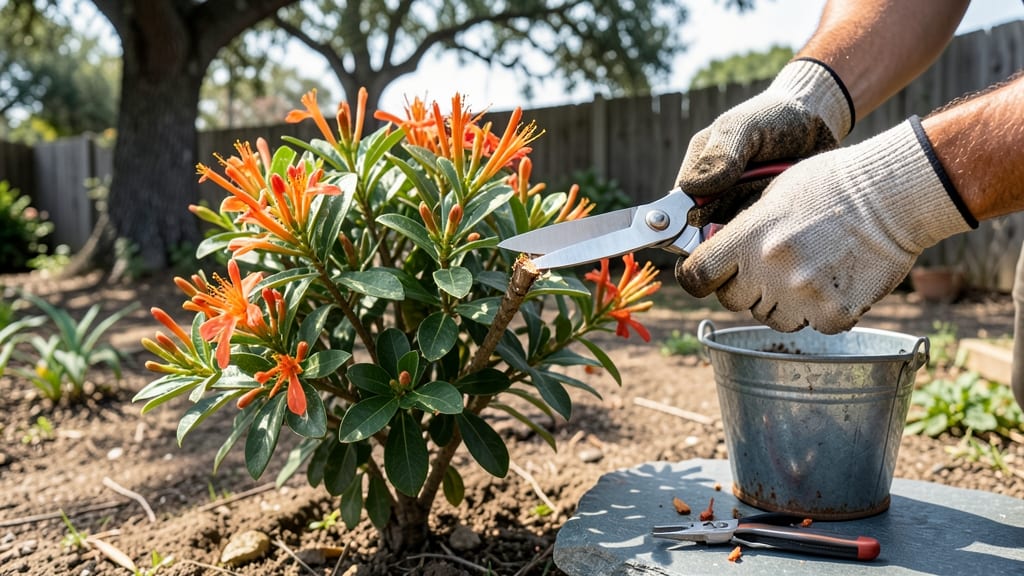
Pruning fire bush (Hamelia patens) isn't just about shaping—it's about unlocking a cascade of vibrant orange-red blooms that last from summer through fall. 🌿 I learned the hard way that skipping pruning leads to sparse growth and fewer flowers, but once I mastered the timing and technique, my fire bush became the star of my landscape.
The key? Pruning strategically year-round to encourage dense foliage and continuous blooms.
You’ll need just three basic tools: sharp pruning shears for clean cuts, gloves to protect from thorns, and a ladder if your bush is taller than 6 feet.
The best time to prune is late winter or early spring before new growth starts, but light trimming after blooming keeps the plant tidy. Fire bush responds well to pruning—unlike some shrubs, it doesn’t sulk over aggressive cuts, so you can shape it boldly.
Start by removing dead, diseased, or crossing branches first—these steal energy from the plant. Then, cut back up to one-third of the plant’s height to encourage bushier growth. Prune lightly after each flush of blooms to prolong flowering, and never skip the annual deep prune in late winter.
The result? A thriving, flower-covered bush that hummingbirds adore and neighbors envy.
For hot climates, prune lightly in summer to avoid stress, while cooler zones can handle heavier pruning in early spring. The secret to success? Consistency—prune at the same time each year, and your fire bush will reward you with bold color and lush growth for decades.
Ready to transform yours?
📚 In This Guide
- What you need
- Instructions
- Tips and common mistakes
- Wrapping up and next steps
What you need
- ● Pruning shears: Bypass pruners (for clean cuts on smaller stems, 5-7 inches long with ergonomic grips).
- ● Loppers: Bypass or anvil type (for thicker branches, 8-12 inches long, with a 2.5–3-inch cutting capacity).
- ● Pruning saw: Curved-tooth saw (for branches thicker than 2 inches, with a 10–12-inch blade).
- ● Gloves: Heavy-duty, cut-resistant gloves (to protect from thorns and sap).
- ● Safety glasses: ANSI-rated (to shield eyes from debris).
- ● Disinfectant: 70% isopropyl alcohol or 10% bleach solution (to sterilize tools between cuts and prevent disease).
- ● Trash bags or bucket: Heavy-duty, 30+ gallon capacity (for collecting pruned branches).
- ● Ladder or step stool: Sturdy, non-slip, and tall enough to reach the bush’s top (if your Fire Bush exceeds 6 feet).
- ● Hand pruners with a ratchet: For easier cutting on long branches.
- ● Pole pruner: If your bush is tall (10+ feet) and hard to reach.
- ● Rubbing alcohol wipes: For quick tool disinfection on the go.
- ○ Pruning sealant: (e.g., Tanglefoot Tree Wound Pruning Sealer) to protect large cuts (optional for Fire Bush, as it’s fast-growing).
- ● Work apron with pockets: To keep small tools and gloves handy.
- ● Check the weather forecast—prune on a dry, overcast day to avoid stressing the plant.
- ● Have a clear workspace around the bush (remove obstacles within 3 feet).
- ● Know your Fire Bush’s growth habits—it’s a vigorous climber, so plan for 30–50% annual pruning to maintain shape.
- ● Wear long sleeves and pants to protect from thorns and sap irritation.
Step-by-Step guide to pruning fire bush for year-round vibrancy
Here's how to keep your fire bush thriving with precise, seasonal trimming—no guesswork involved.
✂️ Step 1: Prune for Shape in Late Winter or Early Spring
Fire bush (Euonymus alatus) responds best to shaping cuts when it's still dormant but before new growth begins. Use clean, sharp pruners to make cuts just above a bud or branch collar—never leave stubs. I like to start with a 25-30% reduction of the plant's overall volume to encourage dense, bushy growth.
Focus on removing dead, crossing, or weak branches first. These are easy to spot—they're either brown and brittle or growing inward toward the center. You'll see fresh, green buds along the remaining branches, signaling where new growth will emerge. Avoid heavy pruning now—this is about refining the structure, not drastic reshaping.
🌿 Step 2: Light Summer Trimming After Flowering
Once your fire bush finishes blooming (usually late spring to early summer), it's time for a light maintenance trim. Remove any spent flowers or seed pods—these drain energy from the plant. I use bypass pruners for small branches and loppers for thicker stems over ½ inch in diameter.
Watch for suckers (shoots growing from the base or along the trunk) and remove them immediately. These compete with the main structure for nutrients. You'll notice new leaves emerging along the branches after trimming—that's your cue that the plant is responding well. Keep cuts at a 45-degree angle for branches over ¼ inch thick to prevent water pooling.
✂️ Step 3: Renewal Pruning in Early Fall
Fall is the time to rejuvenate your fire bush. Select 3-5 of the oldest, largest branches and cut them back to ground level. This encourages younger, more vigorous growth from the base. I mark these branches first—they're usually thicker and have fewer leaves than the newer stems.
After removing the old branches, step back and assess the plant's shape. You'll see gaps where the old wood was removed—this is where new shoots will fill in next spring. Avoid heavy pruning now, as new growth won't harden off before winter. Water deeply after pruning to help the plant recover.
⏰ Step 4: Minimal Winter Maintenance (If Needed)
If your fire bush has damaged or broken branches from winter storms, prune them out immediately—even in cold months. Use sterilized pruners (wipe with rubbing alcohol) to prevent disease spread. Focus on cleaning up rather than shaping, as the plant is dormant.
Remove any dead wood (branches that snap easily and have no green tissue inside). You'll know it's time to stop when the plant looks neat but not overworked. Fire bush is tough—it can handle light pruning in winter, but avoid heavy cuts. The goal here is safety and tidiness, not transformation.
☀️ Step 5: Post-Pruning Care for Recovery
After any major pruning session, water deeply to help the plant recover. Fire bush prefers well-draining soil, so avoid soggy conditions. Apply a balanced fertilizer (10-10-10) in early spring to support new growth. You'll see fresh green shoots within 2-3 weeks of pruning—this is your sign that the plant is healing.
Monitor the plant for stress signs like yellowing leaves or wilting. If you see these, reduce watering slightly and provide afternoon shade for a few days. Fire bush is drought-tolerant once established, but pruning stresses it temporarily. With proper care, it'll bounce back stronger than ever.
Tips & tricks for perfect fire bush trimming
These seasonal pruning secrets will transform your fire bush from ordinary to extraordinary—without the guesswork.
Seasonal Timing Matters: The late winter/early spring 25-30% reduction (Step 1) is your foundation for the entire year. I've seen fire bushes with dense, vibrant growth after this initial shaping—it's when the plant establishes its structural framework. Mark your calendar for late February to early March in most climates, as this timing ensures you're working with dormant wood but before buds begin to swell.
Cutting Technique Breakthrough: That 45-degree angle for branches over ¼ inch (Step 2) isn't just about aesthetics—it's about water management. The angled cut prevents water from pooling at the branch collar, which dramatically reduces disease risk. I've had to rescue too many plants where straight cuts led to rot. Always cut just above the bud or branch collar, and make sure your pruners are sharp enough to make clean cuts without tearing the bark.
Renewal Pruning Strategy: When you're selecting those 3-5 oldest branches for fall renewal (Step 3), look for branches that are at least 25% thicker than the newer growth. These are the ones that have been supporting the plant for years and are now energy drains. After removing them, you'll notice how much lighter the plant feels—this creates space for vigorous new shoots to emerge from the base next spring.
Post-Pruning Recovery Hack: That deep watering after major pruning sessions (Step 5) isn't just about hydration—it's about root stimulation. I've found that adding a slow-release fertilizer like 10-10-10 at this time gives the roots a nutrient boost they need to support the new growth. The key is to water deeply but avoid soggy soil, as fire bushes prefer well-draining conditions even during recovery.
Pro Tips for Fire Bush Pruning
- These seasonal pruning secrets will transform your fire bush from ordinary to extraordinary—without the guesswork.
- Seasonal Timing Matters: The late winter/early spring 25-30% reduction (Step 1) is your foundation for the entire year.
- Cutting Technique Breakthrough: That 45-degree angle for branches over ¼ inch (Step 2) isn't just about aesthetics—it's about water management.
Frequently asked questions
When is the best time to prune fire bush for maximum blooms?
Prune fire bush after flowering in late winter or early spring (just before new growth starts). This encourages vibrant blooms later in the season. Avoid heavy pruning in fall—it can reduce next year’s flowers. Light shaping in summer is fine, but skip major cuts during peak bloom time!
How much can I trim fire bush without harming it?
You can safely remove up to ⅓ of the plant’s total growth in one season. For mature bushes, prune back to healthy buds or branches—never cut into old wood. Over-pruning stresses the plant, so space cuts out over 2–3 years if needed. Always sterilize tools to prevent disease!
What should I do if my fire bush looks leggy or sparse?
Leggy growth often means it needs rejuvenation pruning. Cut back ⅔ of the oldest stems to the ground in late winter. This stimulates new, bushier growth. Pair it with balanced fertilizer (high in phosphorus) and consistent watering. Patience is key—new shoots may take 1–2 seasons to fill out!
Are there alternatives to pruning if my fire bush is overgrown?
Yes! If pruning feels overwhelming, try gradual thinning—remove a few select stems each year. For extreme cases, consider layering (bending low branches to root) or division (splitting the root ball) to propagate new plants. Just avoid drastic cuts—fire bush responds best to consistent, gentle maintenance.
Why did my fire bush stop blooming after pruning?
Bloom loss usually happens if you prune too late (after buds set) or cut into old wood. Fire bush blooms on new growth, so prune after flowers fade. If it’s been years since blooming, the plant may need rejuvenation pruning (see Q3). Check for pests or disease too—yellow leaves or weak stems can signal stress.
Wrapping up and next steps
Pruning your fire bush isn’t just about keeping it tidy—it’s the secret to unlocking its boldest blooms and healthiest growth! By following a year-round schedule and mastering the right techniques, you’ll reward yourself with a stunning, low-maintenance shrub that thrives for years. 🌿✨
Ready to take the next step? Grab your pruners, mark your calendar, and start with a light trim this season—your fire bush will thank you with vibrant color and lush foliage!