
Pruning
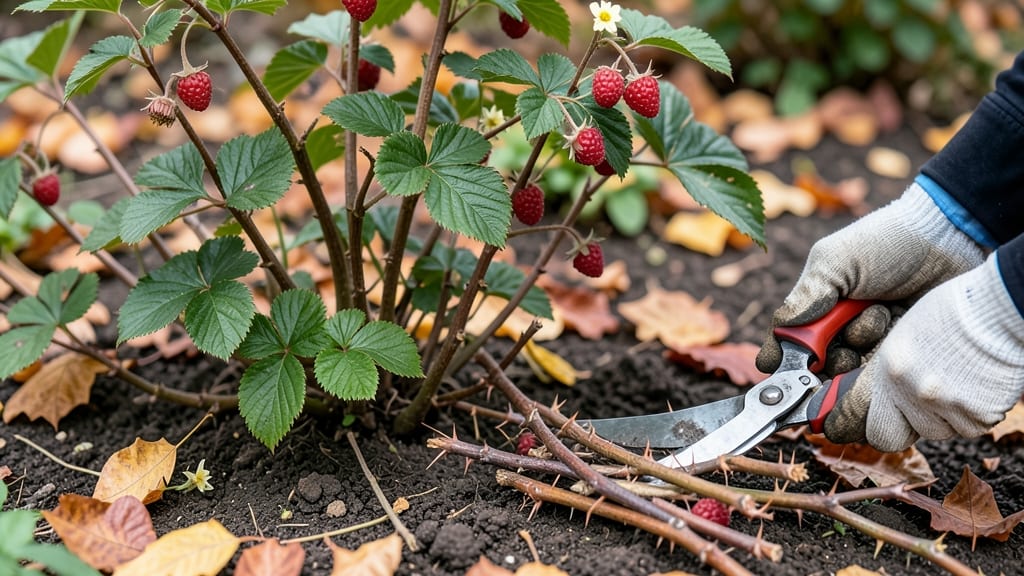
You should avoid pruning raspberry bushes in the fall unless you're only removing dead or diseased canes, as aggressive cuts can delay winter hardening and leave plants vulnerable to cold damage or new growth that won't survive the season.
Fall pruning is particularly risky because it disrupts the natural dormancy cycle of raspberry bushes, which need time to harden off before winter. 🌿 Summer-bearing varieties can handle light trimming in early fall, but everbearing types should wait until late winter or early spring to avoid stunting next year's harvest.
The key is to work with the plant's natural rhythms—cutting too late can stress the roots and reduce their ability to store energy for spring growth.
For those who must prune in fall, focus on removing only the worst offenders: canes that are brown, mushy, or showing signs of disease. Use clean, sharp pruners to make clean cuts just above a healthy bud or lateral branch.
This minimal approach reduces stress while still improving air circulation around the bush. Always prune on a dry day when temperatures are above 50°F to minimize shock to the plant.
💡 In This Article
- Fall Pruning Risks for Raspberry Bushes and Safe Alternatives
- Step-by-Step Guide to Pruning Raspberry Bushes in Early Fall
Fall pruning risks for raspberry bushes and safe alternatives
The primary risk of fall pruning lies in how it disrupts the raspberry bush's winter hardening process. During late summer and early fall, canes gradually build up protective sugars and antioxidants to withstand freezing temperatures.
If you cut back too aggressively after mid-September, you remove these hardening canes, leaving the plant vulnerable to cold damage or winter dieback. This is especially critical in regions with sudden freezes, where temperatures can drop below 20°F overnight.
Another major concern is the potential for new growth after fall pruning. Raspberry bushes respond to cuts by sending out fresh shoots, but these tender canes lack time to mature before winter.
In Zone 5-7 climates, where winters average 10-20°F, this new growth often freezes back to the ground, wasting the plant's energy reserves.
Everbearing varieties are particularly sensitive—cutting them in fall can reduce next year's fruit production by 30-50% since they rely on both old and new canes for harvests.
Disease risk also spikes with fall pruning. When you make cuts late in the season, you create fresh wounds that pathogens like Botrytis (gray mold) can exploit. These fungi thrive in cool, damp conditions—common in fall—and can overwinter on pruning debris.
The plant's weakened state after cutting makes it more susceptible to infection, which may not become visible until spring. This is why professional growers often recommend sterilizing tools with rubbing alcohol between cuts and removing all pruned material from the site.
For summer-bearing varieties, the safest window is late winter to early spring (just before buds swell), when the plant is fully dormant. Everbearing types can tolerate light pruning in early fall (August-September) to remove only the worst canes, but avoid heavy cuts.
The key is to work with the plant's natural cycle: summer-bearing bushes rely on 2-year-old canes for fruit, while everbearers produce on both old and new growth—disrupting either system can lead to poor yields.
Climate plays a huge role in timing. In warmer southern regions (Zones 8-10), where winters rarely drop below 30°F, light fall pruning might be safer. But in colder northern areas (Zones 3-5), even minimal cuts after October 1st can be risky.
Always check your local frost dates and aim to finish pruning at least 6-8 weeks before first frost to allow for proper healing. The goal is to give the plant enough time to seal wounds and prepare for winter without overstressing it.
What most gardeners don't realize is how root activity ties into this timing. Raspberry roots continue growing until the soil temperature drops below 50°F—usually around October in most climates.
When you prune in fall, you remove the plant's above-ground energy producers while the roots are still active, forcing them to work harder to support regrowth. This can deplete their carbohydrate reserves, which are critical for spring recovery.
The plant essentially goes into winter with an empty "gas tank," making it more susceptible to stress.