
Pruning
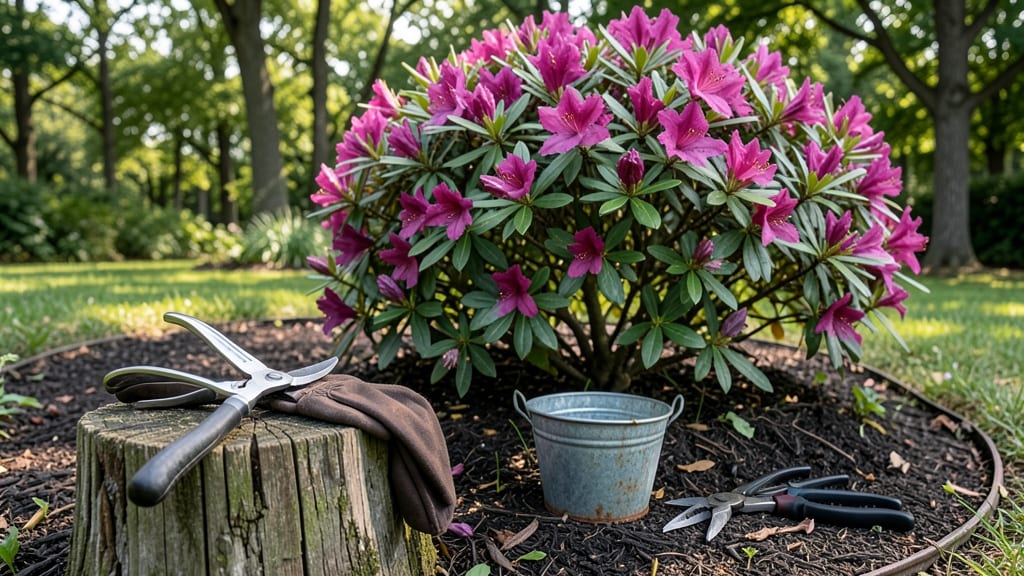
Azaleas do need pruning, but only light trimming after blooming to maintain shape and airflow—never aggressive cuts, which can ruin next year’s flowers since they bloom on old wood.
Azaleas are unique because they set flower buds on last year’s growth, so heavy pruning removes potential blooms. 🌸 The best time is right after flowering, when you can safely trim back about one-third of the new growth without harming next year’s buds.
This keeps the plant healthy while preserving its stunning spring display. I’ve seen many gardeners accidentally over-prune in late summer, thinking they’re helping, but this actually stresses the plant and reduces flowering.
When pruning, focus on removing dead or crossing branches first, then lightly shape the shrub. Use clean, sharp shears to make clean cuts just above a leaf node. Avoid cutting into old wood—this is where next year’s flowers form.
For best results, prune on a dry day when the plant isn’t under stress from heat or drought.
💡 In This Article
- Why Pruning Azaleas Differently Than Other Shrubs
- Step-by-Step Azalea Pruning Guide for Beginners
Why pruning azaleas differently than other shrubs
Azaleas bloom on old wood, meaning their flower buds form on last year's growth rather than new shoots. This is a key difference from many shrubs that bloom on new growth—like hydrangeas—which can handle heavier pruning.
When you cut back azaleas aggressively, you remove next year’s flower buds before they even open, leaving you with a sparse or non-existent bloom cycle. The plant’s natural growth habit prioritizes flower production over foliage density, so pruning must be gentle to preserve this delicate balance.
The timing of pruning directly impacts flower production. Azaleas set buds in late summer, but these buds need the old wood to mature fully. If you prune in late summer or fall, you risk removing these developing buds.
Instead, wait until after flowering, typically in late spring or early summer. This gives the plant time to establish new growth while still leaving enough old wood to support next year’s blooms.
The ideal moment is when about one-third of the new growth has hardened off—this signals the plant has finished flowering and can tolerate light trimming.
Airflow and sunlight play crucial roles in azalea health. Dense foliage can trap moisture, creating ideal conditions for fungal diseases like powdery mildew or leaf spot. Light pruning opens the canopy, allowing sunlight to reach the inner branches and improving airflow. This isn’t just about aesthetics—it’s about preventing disease.
I’ve noticed that azaleas in shaded or crowded spaces often suffer from more pests and slower growth, while those with proper airflow bloom more vigorously. The goal is to maintain a natural, open shape rather than forcing a rigid, manicured look.
Another critical factor is the plant’s stress response. Azaleas are native to woodland understories, where they thrive in dappled sunlight and moist, acidic soil. Heavy pruning mimics the stress of harsh environmental conditions, triggering the plant to redirect energy toward survival rather than flowering.
Think of it like a delicate piece of jewelry—you wouldn’t polish it aggressively, but rather clean it gently to preserve its beauty. Over-pruning is like sanding down a vintage vase; it might look better at first, but you’ve permanently altered its structure and reduced its value.
For visual learners, imagine an azalea’s growth like layers of an onion. The outer layer is this year’s new growth, while the inner layers are last year’s wood where the buds form. Each time you prune, you’re peeling back a layer.
If you remove too much, you strip away the very foundation of next year’s blooms. This is why professional gardeners often say azaleas should be pruned with a "light touch"—it’s not just a saying, but a botanical necessity.
The plant’s survival instincts are hardwired to protect its flowering cycle, so pruning must work with these instincts, not against them.
Here’s a quick comparison to help visualize the difference: Pruning a hydrangea (which blooms on new wood) is like trimming your hair—you can cut it short without losing future growth.
Pruning an azalea is more like trimming a bonsai tree—every cut matters, and overdoing it means fewer flowers next season. 🌿 The key is patience and precision, not haste.