
Trees
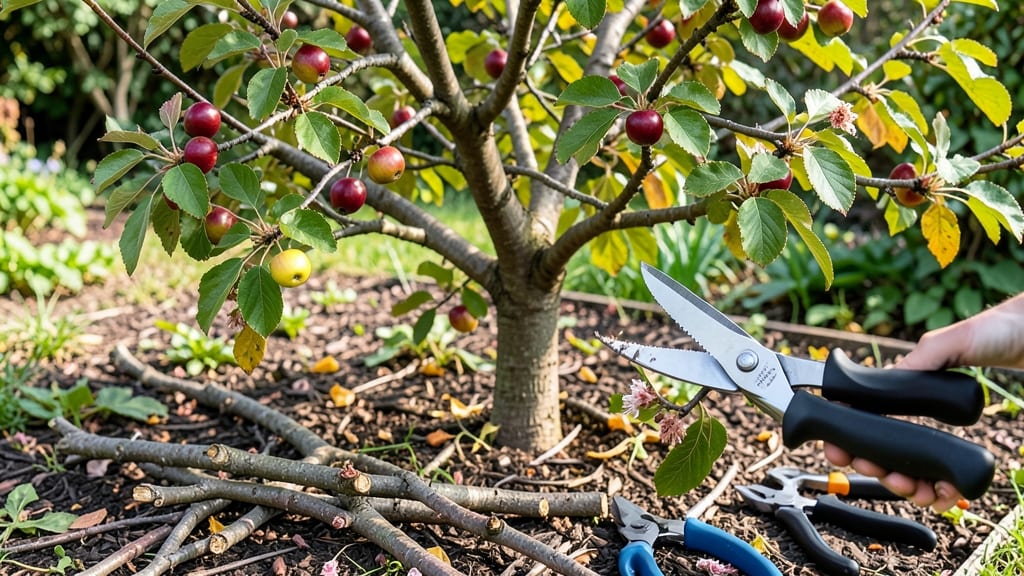
You can prune crabapple trees in the fall only for light shaping after leaf drop (late November), but avoid heavy cuts due to increased fungal risks and winter dieback. Sterilize tools and make precise cuts to minimize damage.
Fall pruning poses real threats to crabapple trees because late-season wounds heal slowly, inviting fungal pathogens like Valsa canker—a common disease that thrives in damp autumn conditions. 🌳 The tree’s reduced sap flow after leaf drop also makes it more vulnerable to pests.
That said, if you must trim in fall, focus on removing only dead or diseased branches with sterilized tools, and keep cuts small to reduce exposure. For major shaping, wait until early spring when the tree’s natural defenses are stronger.
When done carefully, light fall maintenance can actually benefit your tree by improving air circulation and removing weak growth before winter. The key is timing: aim for late November when the ground is still warm enough to support healing, but before hard frosts set in.
Always prioritize tool sanitation—bleach or alcohol wipes between cuts prevent cross-contamination of diseases.
💡 In This Article
- Why Fall Pruning Damages Crabapple Trees
- Best Fall Pruning Alternatives for Crabapple Trees
Why fall pruning damages crabapple trees
Crabapple trees enter a vulnerable state in fall because their natural defenses weaken as temperatures drop. The real threat comes from fungal pathogens like Valsa canker, which thrives in the damp, cool conditions of autumn.
These fungi enter through fresh pruning wounds that fail to heal quickly enough before winter dormancy sets in. The tree’s reduced sap flow after leaf drop (a process called "sap descent") further limits its ability to seal cuts, leaving them exposed for weeks.
Sap descent begins in late fall when the tree redirects nutrients downward to protect roots.
This process slows wound healing by 30-50% compared to spring rates. 🌿 For example, a 1-inch diameter cut made in November might take 6-8 weeks to callus over, while the same cut in March would heal in just 3-4 weeks.
The longer the wound stays open, the higher the risk of infection. Even healthy-looking branches can harbor latent diseases that flare up when stressed by improper pruning.
Pests also exploit these weakened trees. Bark beetles and borers target freshly cut surfaces, laying eggs in the exposed wood. These insects then introduce secondary fungal infections that can kill branches or even the entire tree over time.
The combination of fungal pressure and insect activity creates a perfect storm for fall pruning disasters—one that experienced arborists see far too often in crabapple care.
Another critical factor is the tree’s hormonal changes. As days shorten, crabapples shift from growth mode to survival mode, reducing energy allocation to wound repair.
This hormonal shift explains why even small cuts in fall can lead to dieback—the sudden death of branches—whereas identical cuts in spring would be safely absorbed by the tree’s active growth systems.
Consider this real-world example: A 10-year-old crabapple tree pruned heavily in October for shape may lose 20-30% of its branches to winter dieback if not properly cared for.
The same tree pruned in March would recover fully with minimal branch loss. The difference comes down to timing wounds with the tree’s biological rhythms rather than convenience.