
Pruning
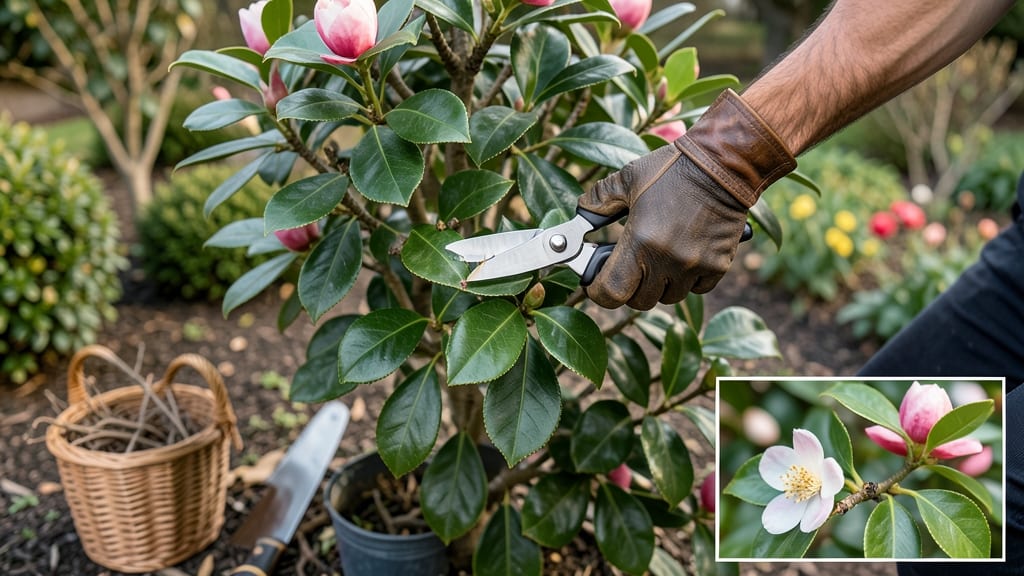
Camellia tree pruning should happen right after blooms fade in late spring or early summer, trimming only 25% of foliage to preserve shape and stimulate next year's flowers while preventing winter cuts that can harm frost-sensitive buds.
Timing is everything with camellias—these evergreens set flower buds on old wood, meaning last year's growth determines this year's blooms. 🌸 The key is to prune after flowering when new growth has already begun, as cutting back too early removes potential buds.
I always sterilize my tools with rubbing alcohol to prevent spreading disease, especially when dealing with older plants that might have weak branches. Even a small misstep can mean fewer flowers next season, so patience pays off!
For those in warmer climates, summer pruning works well, but cooler regions should wait until early summer when frost risk has passed. The 25% rule is non-negotiable—exceeding this can stress the plant, leading to sparse foliage or even leaf drop.
Think of it as a haircut: you want to shape without sacrificing volume.
💡 In This Article
- Best Camellia Pruning Techniques for Healthy Growth
- When to Prune Camellias for Maximum Bloom Production
Best camellia pruning techniques for healthy growth
Camellia trees develop flower buds on last year's growth, so pruning must focus on shaping rather than aggressive cutting. Start by removing dead, diseased, or crossing branches first—they compete for nutrients and can harbor pests.
Use clean, sharp pruners sterilized with rubbing alcohol to prevent bacterial infections, especially on older plants where wounds take longer to heal. For healthy branches, make cuts at a 45-degree angle just above a leaf node or bud to encourage proper regrowth.
The two key cutting methods are thinning and heading. Thinning cuts remove entire branches back to the trunk or main stem, improving airflow and light penetration to the center of the plant. Heading cuts trim the tips of branches to encourage bushier growth, but these should only be used sparingly—overdoing them can lead to weak, leggy new shoots.
Always aim to maintain the tree's natural vase shape, as camellias bloom most abundantly on outer branches where sunlight reaches.
Tool selection matters too. Bypass pruners work best for clean cuts on branches up to 1 inch thick, while loppers handle thicker branches up to 2 inches. For larger limbs, use a pruning saw—but avoid tearing the bark, which invites disease.
After pruning, apply a thin layer of wound sealant (like tree paint) only to cuts larger than ½ inch to protect against moisture loss and pests. The goal is to minimize stress while maximizing the plant's ability to redirect energy toward next season's blooms.
One common mistake is pruning too aggressively in winter. Camellias are evergreens, but their buds are frost-sensitive. Cutting back hard during dormancy removes potential flower buds that formed on last year's wood. Even in mild climates, winter pruning can shock the plant, leading to delayed spring growth.
Instead, wait until after blooms fade in late spring when new growth has already begun—this ensures you're only removing spent branches while preserving next year's potential.
Consider the plant's age too. Young camellias (under 5 years) need minimal pruning—just remove dead wood and shape lightly. Mature trees benefit from more structured pruning every 2-3 years, focusing on opening the canopy to prevent fungal issues.
I've seen mature camellias with dense centers develop powdery mildew because of poor airflow—pruning solves this by creating an open, airy structure. The key is balance: enough shaping to maintain health, but never so much that you sacrifice next season's flowers.
For those in humid climates, prune on dry days to allow wounds to heal before rain. In drier regions, morning pruning prevents afternoon heat stress. Always step back after finishing to check for symmetry—camellias have a graceful, slightly irregular shape, so avoid over-trimming to create a rigid, geometric look.
The goal is to enhance their natural beauty while keeping them thriving for decades.