
Pruning
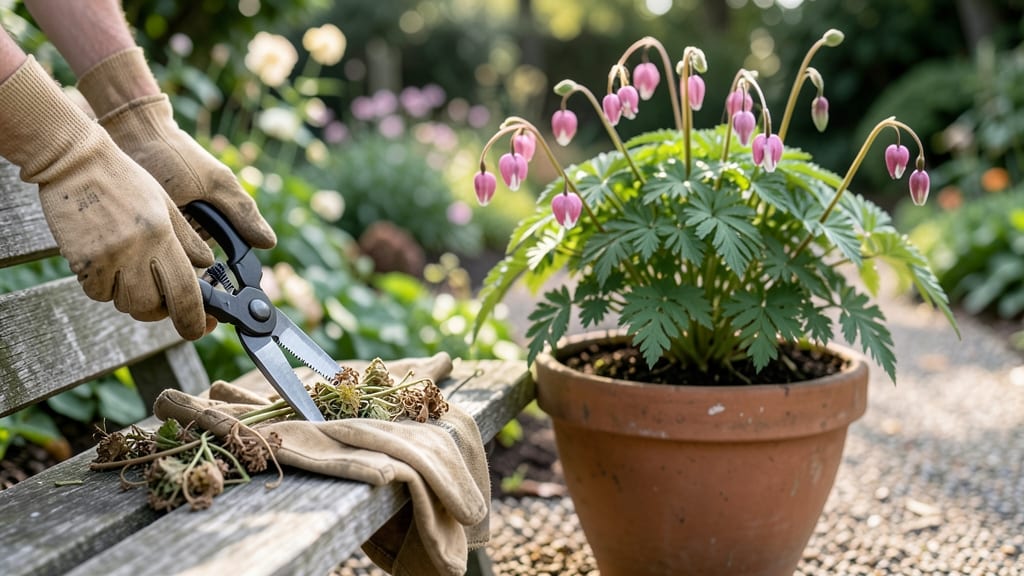
Bleeding heart plant pruning in late winter isn’t just about cleanup—it’s the secret to next year’s showstopping blooms. 🌱 I’ve learned the hard way that skipping this step means fewer heart-shaped flowers and more floppy stems.
The right cuts now mean a plant that rebounds with lush foliage and abundant blooms by spring. You’ll need just three things: sharp pruners, gloves, and a sunny day. The goal is to remove dead growth while leaving the crown intact—this plant stores energy underground.
Start by cutting back last year’s brown stems to the base, then trim any remaining damaged foliage. It’s less about shaping and more about making room for new growth. What you’ll end up with is a tidy plant that looks nearly bare but is actually primed for a vigorous comeback.
The key is patience—new leaves will emerge from the crown within weeks, and by late spring, those iconic pink or white blooms will appear. Just don’t rush it; bleeding hearts reward careful pruning, not aggressive cutting.
This method works for all Dicentra varieties, whether you’re growing them in shady borders or woodland gardens. The only real mistake is pruning too early—wait until late winter when new growth is just starting to peek through the soil.
📚 In This Guide
- What you need
- Instructions
- Tips and common mistakes
- Wrapping up and next steps
What you need
- ● Sharp, clean pruners or bypass shears – Must be sterilized (rubbing alcohol or bleach wipe) to prevent disease. Size: 5–7 inches for precision.
- ○ Garden gloves – Heavy-duty (nitrile or leather) to protect from thorns and sap. Optional: Rose gloves for extra grip.
- ● Disinfectant spray (70% isopropyl alcohol or 10% bleach solution) – 1–2 sprays per cut to keep tools sterile.
- ○ Pruning saw (optional) – Only if stems are thicker than 1 inch (rare for Bleeding Hearts).
- ● Compost bin or bag – For clippings (up to 2–3 pounds per plant, depending on size).
- ● Dormant plant – Prune after the first hard frost but before new growth emerges (late winter, zones 3–9).
- ● Overcast or early-morning light – Avoid pruning in direct sun (stresses the plant).
- ● Water source nearby – A 5-gallon watering can or hose for post-pruning hydration.
Step-by-step instructions for bleeding heart plant pruning
Here’s how I revive my bleeding hearts every late winter—simple cuts that guarantee a showstopping spring display.
✂️ Step 1: Time Your Pruning for Late Winter
Wait until after the last frost date in your zone, but don’t delay past early March. Bleeding hearts need this dormant-season trim to redirect energy into next year’s growth. I prune mine in late February in Zone 6—just as buds begin to swell but before new shoots appear.
Check your plant’s dormancy state: if the foliage is completely brown and crispy, it’s ready. If any green remains, wait a week. Pruning too early risks damaging tender new growth, while waiting too long means you’ll cut off next season’s blooms.
✂️ Step 2: Cut Back Dead Foliage to the Ground
Grab sharp, clean pruners and snip all the dead stems at the soil line. Don’t leave stubs—they trap moisture and invite rot. I make the cuts at a 45-degree angle for better water runoff, but straight cuts work too. Remove any thick, woody stems that haven’t produced new growth in years.
This might look drastic, but trust me: the plant’s energy will pour into fresh shoots from the base. You’ll see tiny green buds pushing through the soil in 2-3 weeks—that’s your signal everything’s working. If your plant looks sparse after pruning, it’s normal; bleeding hearts grow from the ground up.
✂️ Step 3: Thin Out Overcrowded Stems
After removing dead growth, assess the remaining stems. Bleeding hearts perform best with 3-5 of the healthiest, most vigorous canes per plant. Use your pruners to cut back any weak or crossing stems at the base. I always keep the strongest central stems—they’ll produce the most dramatic blooms.
Look for stems with thick, green buds at the base. These are your future bloomers. Thin now to prevent overcrowding, which leads to small, weak flowers. You’ll notice new shoots emerging from the soil within 3-4 weeks—these are your replacements for the stems you removed.
💧 Step 4: Feed and Water for Spring Revival
After pruning, spread a 1-inch layer of compost around the base (but not touching the stems) and water deeply. This jumpstarts root growth. I use a balanced 10-10-10 fertilizer at half strength in early spring to encourage lush foliage and abundant blooms.
Water consistently to keep the soil evenly moist but not soggy—bleeding hearts hate wet feet. You’ll see new leaves unfurling in 4-6 weeks, and by late spring, your plant will be bursting with heart-shaped blooms. Mulch again in late spring to retain moisture and suppress weeds.
☀️ Step 5: Monitor Light and Support for Upright Growth
Bleeding hearts thrive in partial shade (4-6 hours of morning sun). If yours is in full sun, you’ll notice leaves scorching by midday. Move it to a spot with dappled light if possible. I stake my taller varieties with 3-foot bamboo stakes tied loosely to prevent flopping.
Watch for new growth direction—if stems lean toward the light, rotate the pot a quarter turn weekly to keep them upright. By midsummer, your pruned plant will look fuller than ever, with strong stems ready for another season of stunning blooms.
Tips & tricks for bleeding heart plant revival
Here's what nobody tells you about pruning bleeding hearts that'll make all the difference in your spring display.
Timing is Everything: That 2-3 week window after pruning when you spot tiny green buds isn't just a coincidence—it's your plant's way of showing you're on the right track. If you don't see these buds within that timeframe, check your pruning timing. You might have cut too early when some green was still present, or too late when buds had already formed. The goal is to catch that sweet spot where the plant is dormant but ready to wake up.
Tool Selection Matters: I can't stress enough how important clean, sharp pruners are. Dull blades crush stems instead of making clean cuts, which can damage the plant and invite disease. I keep a pair of bypass pruners specifically for my bleeding hearts and sanitize them with rubbing alcohol before each use. For stubborn woody stems, I use a small handsaw—just be careful not to damage the surrounding soil. The cleaner the cut, the better the plant can heal and regenerate.
Light Monitoring After Pruning: Those 4-6 hours of morning sun mentioned in Step 5 are crucial after pruning. If your plant was previously in shade, don't suddenly move it to full sun—this can cause leaf scorch. Instead, gradually acclimate it by moving it to a spot with slightly more light each week. I've seen plants that looked perfect after pruning suddenly develop brown patches because they were moved too quickly to brighter conditions. Patience pays off with these shade-loving beauties.
Fertilizer Timing Secret: When I mentioned using a 10-10-10 fertilizer at half strength, I want to emphasize the timing. Apply this fertilizer immediately after pruning but before you see new growth. This gives the plant a nutrient boost to support its revival without overwhelming tender new shoots. I also recommend watering thoroughly before applying fertilizer to help distribute it evenly through the soil. This timing ensures your plant gets the nutrients it needs right when it needs them most.
Pro Tips for Bleeding Heart Plant Pruning
- Here's what nobody tells you about pruning bleeding hearts that'll make all the difference in your spring display.
- Timing is Everything: That 2-3 week window after pruning when you spot tiny green buds isn't just a coincidence—it's your plant's way of showing you're on the right track.
- Tool Selection Matters: I can't stress enough how important clean, sharp pruners are.
Frequently asked questions
Got questions about pruning your Bleeding Heart (Dicentra spectabilis)? You’re not alone! Here are the most common concerns—plus expert answers to keep your plant thriving.
When is the best time to prune a Bleeding Heart?
Prune in late winter or early spring (just before new growth emerges) to avoid cutting off next year’s blooms. Avoid pruning in fall—this plant needs its foliage to store energy for spring. Pro tip: If you see dead or yellowed leaves in winter, trim those only to tidy up.
How much should I cut back my Bleeding Heart?
Cut back one-third to half of the plant’s height, but leave at least 6 inches of stems above the ground. This encourages bushier growth and prevents legginess. Warning: Never prune into bare wood—always leave some green or dormant buds to spark new growth.
Will pruning my Bleeding Heart hurt it?
Not if done right! Pruning stimulates healthier growth by removing old wood and redirecting energy. However, over-pruning (cutting too close to the ground or removing too much foliage) can stress the plant. Think of it like a haircut—less is more for a fuller comeback!
Can I prune Bleeding Heart in summer after it blooms?
Yes, but lightly. After flowering, you can trim spent blooms and leggy stems to encourage a second flush of leaves (though blooms may be fewer). Avoid heavy pruning—this plant’s foliage is its superpower for next year’s growth. Pro tip: Deadhead flowers to redirect energy into foliage, not seeds.
My Bleeding Heart isn’t rebounding after pruning—what’s wrong?
Check these fixes:
- Light: Needs partial shade (6+ hours of dappled sun). Too much sun = stress.
- Soil: Amend with organic matter (compost) for moisture retention.
- Water: Keep soil consistently moist (not soggy) during dormancy.
- Patience: New growth may take 4–6 weeks—don’t panic!
Wrapping up and next steps
Pruning your bleeding heart plant in late winter isn’t just about tidying up—it’s your secret weapon for a showstopping spring rebirth! 🌿 By following the right techniques, you’ll encourage healthier growth, more vibrant foliage, and those iconic heart-shaped blooms you adore.
Remember, patience and precision are key, but the results—lush, leafy abundance—are totally worth it.
Now that you’re armed with the know-how, roll up your sleeves and give your plant the TLC it deserves. Grab those shears, take a deep breath, and enjoy the process—your bleeding heart will thank you with a stunning comeback! Ready to see the magic happen? Start pruning today!