
Pruning
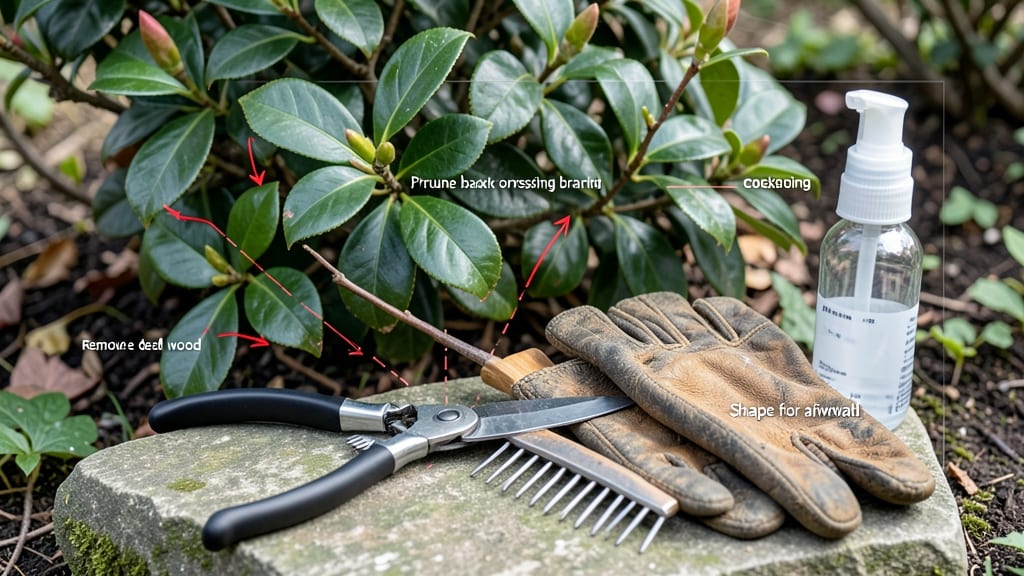
The best time to prune camellias is during their dormant season—late winter to early spring—when your 🌸 shrub is still resting but before buds begin to swell.
Picture this: you’ve just finished admiring your camellia’s stunning winter blooms, and now you’re wondering whether to trim it back. The answer? Never prune after flowers appear—that’s when the buds for next year’s blooms are already forming. Cutting too late risks stripping your plant of its showstopping display.
Timing matters because camellias set flower buds on old wood, meaning last year’s growth holds next season’s potential. Prune too early, and you might remove those buds before they’ve even formed. Too late, and you’ll sacrifice blooms for a cleaner shape.
Below, I’ll break down the exact dormant-season windows for your USDA zone, the tools you’ll need, and how to make clean cuts that encourage healthier blooms without damaging your plant’s future.
When to prune camellias for maximum bloom potential
Timing your camellia pruning correctly is the secret to show-stopping blooms and a healthier shrub. These elegant plants set their flower buds in late summer, so pruning too late risks removing next year's blooms entirely.
The best window is during dormant season, when the plant conserves energy and recovers quickly from cuts.
For most USDA zones 7-10, the ideal pruning time falls between late winter and early spring, specifically after the last frost date but before bud swell begins. This timing ensures you’re not disturbing the delicate flower buds that form in late summer and winter.
Miss this window, and you might end up with sparse blooms or leggy growth.
| Key Timing Factor | Best Time to Prune | What to Avoid |
|---|---|---|
| Dormant Season | Late winter to early spring (post-first frost) | Pruning after buds swell (March-April) |
| Bud Formation | Before buds form (late summer/early fall) | Pruning after buds appear (winter) |
| USDA Zone 7 | February-March | April-May (active growth phase) |
| USDA Zone 10 | January-February | March-April (bud swell) |
| Post-Flowering | Light shaping after blooms fade (spring) | Heavy pruning after flowering |
If you live in warmer climates (Zones 9-10), you can also prune lightly in late summer to encourage new growth before the next blooming cycle. However, avoid heavy pruning during this time, as it can stress the plant and reduce next year’s flower production.
The key is to prune when the plant is dormant but not yet actively growing.
For cooler climates (Zones 7-8), wait until after the first frost has passed but before bud swell begins in early spring. This usually falls between February and March.
Pruning too early can expose tender growth to cold damage, while pruning too late risks cutting off next year’s blooms.
One critical rule for all zones: never prune after blooms appear. This is a common mistake that leads to reduced flowering the following year. Camellias form their flower buds on old wood, so pruning after blooming removes potential blooms for next season.
Instead, wait until the flowers have faded completely before doing any light shaping.
When pruning, focus on removing dead or diseased branches first, then thin out crowded areas to improve air circulation. Make cuts just above an outward-facing bud to encourage the shrub to fill out.
Avoid topping or shearing, as this can lead to a bushy but flower-sparse appearance. Use clean, sharp pruners to make precise cuts that heal quickly.
After pruning, give your camellia a light feeding with an acid-loving plant fertilizer to encourage new growth. Water deeply to help the plant recover, and mulch around the base to retain moisture and regulate soil temperature.
With the right timing and care, your camellia will reward you with vibrant blooms for years to come. 🌸
For gardeners in transition zones (Zone 8), pay close attention to your local frost dates. If you experience light frosts, prune after the last frost but before bud swell, typically in late February to early March.
If your winters are mild with no frost, you can prune as early as January without risking cold damage.
Finally, keep an eye on your camellia’s growth habit throughout the year. If you notice overcrowded branches or dead wood developing, address it with light pruning during the dormant season. This ongoing maintenance ensures your camellia stays healthy and productive while maximizing its blooming potential. ✂️
Camellia pruning calendar by USDA Zone: exact months to avoid flower loss
Timing is everything when pruning camellias. Prune too early, and you risk removing next year's flower buds. Prune too late, and you disrupt the plant's natural cycle. The key is a dormant-season window that varies by USDA zone—typically between late winter and early spring.
Camellias bloom on old wood, meaning their flowers form on branches from the previous year. Cutting back too aggressively or at the wrong time can leave your shrub bare and bloomless. Each zone has its own optimal pruning window, aligned with local frost patterns and bud development.
Best Pruning Time by Zone
In Zone 7-8, where winters are colder, aim to prune between February and early March. This window ensures buds have formed but haven't yet swollen. Wait until after the last frost date—usually late January or early February—to avoid stressing the plant.
For Zone 9, milder winters mean you can prune slightly earlier, from January to February. The key is to finish before buds begin to swell in late winter. Check your local first frost date—pruning after this can damage tender new growth.
In Zone 10, where winters are nearly frost-free, the window shifts to December through January. Camellias here may even bloom year-round, so prune after flowers fade to avoid cutting off potential blooms. Never prune after March, as this risks removing next year's flowers.
Pro tip: Mark your calendar with your local last frost date and prune 4-6 weeks after. This gives the plant time to recover before summer heat arrives. Always use sharp, sterilized shears to make clean cuts at a 45-degree angle just above outward-facing buds.