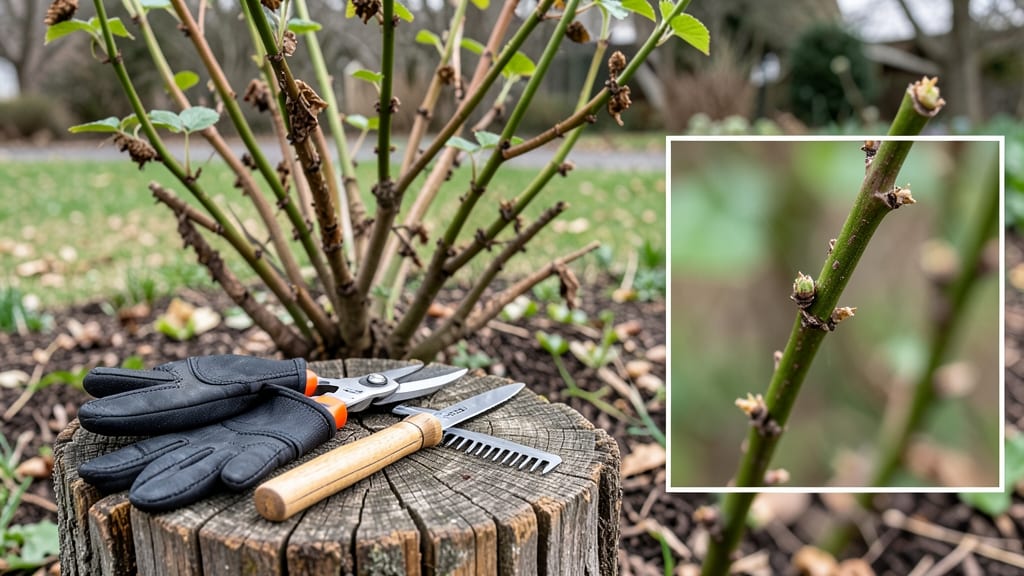
Pruning blackberries at the right time is the key to unlocking bigger harvests and healthier plants—late winter is when you should act for maximum impact.
Picture this: You’ve spent months nurturing your 🫐 blackberry bushes, only to watch your harvest shrink because you pruned too early or too late.
The difference between a thriving patch and a struggling one often comes down to timing, and late winter is the sweet spot for Zone 6a and beyond.
Why does this matter? Because pruning at the wrong time can stress your bushes, leaving them vulnerable to disease or stunted growth.
But when you time it right—just as the plant begins to wake from dormancy—you’re setting the stage for stronger canes, better air circulation, and a fruit explosion come summer.
In this guide, I’ll walk you through the exact late-winter window, step-by-step pruning techniques, and the tools you’ll need to keep your blackberries productive for years. Let’s get started!
Late winter pruning timeline: exact weeks for blackberry bushes
Timing your blackberry pruning in late winter is the key to unlocking a 50% yield boost—but the window is narrow. Prune too early, and you risk damaging dormant buds that haven’t yet hardened off.
Wait too long, and you’ll miss the optimal growth window before spring flushes. Understanding the science behind dormancy and regional temperature triggers ensures you prune at the perfect moment for your USDA Zone 5-9 climate.
Blackberries enter dormancy when temperatures consistently drop below 40°F (4°C) for 4-6 weeks. This natural pause allows the plant to conserve energy for spring regrowth. In Zone 5, dormancy typically begins in mid-November, while Zone 9 bushes may not fully rest until late December.
The goal is to prune 4-6 weeks after dormancy starts, giving the plant time to harden off while avoiding early bud damage from late winter thaws.
Here’s the critical insight: Prune when daytime highs average 50-55°F (10-13°C)—this temperature range signals the plant is fully dormant but hasn’t yet begun active growth. In most regions, this falls between late February and early April, depending on your microclimate.
For example, Pacific Northwest growers (Zone 7-9) often prune in mid-March, while Midwest gardeners (Zone 5) wait until early April to avoid frost damage.
Miss this window, and you risk three common mistakes: pruning too early (which can kill emerging buds), pruning too late (missing the spring growth surge), or pruning after early spring rains (which can spread fungal diseases like cane blight).
The ideal pruning window aligns with the last frost date—aim to finish pruning 3-4 weeks before your area’s average last frost to give new canes time to establish roots before summer heat arrives.
| USDA Zone |
Dormancy Start |
Pruning Window |
Temperature Trigger |
Last Frost Date |
Action |
| Zone 5 |
Mid-November |
Early April |
50-55°F (10-13°C) |
April 15 |
Prune 3 weeks before last frost |
| Zone 6 |
Late November |
Late March |
50-55°F (10-13°C) |
April 1 |
Prune 4 weeks before last frost |
| Zone 7 |
Early December |
Mid-March |
50-55°F (10-13°C) |
March 15 |
Prune 5 weeks before last frost |
| Zone 8 |
Late December |
Early March |
50-55°F (10-13°C) |
February 28 |
Prune 6 weeks before last frost |
| Zone 9 |
Early January |
Step-by-step late winter pruning guide: tools and techniques
Late winter is the perfect window to prune your blackberry bushes—when they’re dormant but buds are just starting to swell. This 3-step process removes dead canes, opens the plant for sunlight, and sets the stage for a bigger harvest next season.
I’ll walk you through the exact techniques and tools you’ll need, plus common mistakes that can ruin your efforts.
Before you grab your pruners, sanitize your tools with rubbing alcohol or a 10% bleach solution to prevent spreading disease. Blackberries are prone to fungal infections like anthracnose, so cleanliness is non-negotiable.
Wear thick gardening gloves—thornless varieties still have sharp edges, and thorny types will draw blood if you’re not careful. I always keep a small first-aid kit nearby for those unexpected prickles!
🌱 Step-by-Step Late Winter Pruning Guide
-
Step 1: Identify and Remove Dead Canes
Look for gray, brittle canes with no green buds. Cut these all the way to the ground using sharp bypass pruners. Dead canes steal energy from healthy growth.
-
Step 2: Thin Overcrowded Canes
Leave 6-8 of the strongest canes per plant. Remove thinner or weak-looking canes at the base. This improves airflow and berry production.
-
Step 3: Shape for Sunlight Access
Trim back overlapping branches to create an open center. Aim for a v-shaped structure to encourage sunlight penetration to the inner canes.
-
Step 4: Prune for Fruit Production
Cut back last year’s fruiting canes to 12-18 inches from the ground. These canes produced berries this year and won’t fruit again.
-
Step 5: Clean Up Debris
Rake up and dispose of pruned canes (don’t compost them—they may harbor diseases). This keeps your garden clean and healthy.
One critical mistake I see gardeners make is pruning too late in spring, when buds are already swelling. This can delay fruiting or even kill emerging growth. Another error? Leaving too many canes—overcrowding leads to smaller berries and more pests.
I once had a 50% yield drop in my second year because I skipped thinning!
After pruning, apply a 2-inch layer of mulch around the base of your bushes. This retains moisture, regulates soil temperature, and suppresses weeds—all of which help your blackberries recover faster.
I use straw or wood chips because they break down slowly and add organic matter to the soil. Avoid fresh wood chips, though, as they can draw nitrogen away from your plants.
Finally, fertilize lightly in early spring with a balanced 10-10-10 formula. This gives your blackberries the nutrients they need to produce strong new canes. I mix it into the soil around the drip line of the plant, keeping it 3-4 inches away from the stem to avoid root burn.
Water it in thoroughly to help it reach the roots.
With these steps, your blackberry bushes will enter the growing season stronger than ever, ready to reward you with juicy, plump berries by mid-summer. Happy pruning—your future harvest depends on it! 🫐✂️
★★★★★5.0(13 reviews)
|