
Pruning
Pruning apricot trees at the right time boosts fruit production and tree health, and late winter is the best time to do it 🍑 — before buds swell but after the worst cold snaps.
If you’ve ever watched your apricot tree struggle with weak branches or poor fruit sets, you’re not alone. The key lies in understanding why late winter pruning works: it aligns with the tree’s dormancy period, reduces disease risk, and sets up stronger growth for spring.
Timing matters more than you might think—pruning too early or too late can stress the tree, inviting pests and diseases. In Zone 6a, aim for late February to early March, when the ground is thawed but buds haven’t broken yet.
Below, I’ll walk you through the exact steps, tools, and common mistakes to avoid—so you can prune like a pro and enjoy a bountiful harvest come late spring.
Why late winter pruning maximizes apricot tree fruit production
Apricot trees thrive when pruned during their dormant season, which typically runs from late winter to early spring. This precise timing isn't just a gardening tradition—it's a biological necessity.
When you prune during dormancy, you're aligning with the tree's natural resting phase, reducing stress and allowing it to heal efficiently before the growing season begins. This careful coordination directly impacts fruit yield, tree health, and even the sweetness of your apricots.
During dormancy, apricot trees allocate energy toward root development and bud formation rather than leaf production. Pruning at this stage removes weak or diseased branches without disrupting the tree's energy reserves. The result?
A stronger framework that supports heavier fruit loads and resists pests. Skipping this step can lead to overcrowded branches, reduced airflow, and even fungal infections—all of which sabotage your harvest.
Here’s the science: Pruning in late winter triggers the tree to produce new growth hormones just as buds begin to swell. This hormonal shift ensures that energy flows to fruit-bearing branches rather than excessive foliage.
Without this timing, your apricot tree might produce more leaves than fruit, leaving you with a lush canopy but a sparse harvest. The key is to prune 2-4 weeks before bud break, when the tree is still dormant but ready to wake up.
| Pruning Phase | Biological Benefit | Impact on Fruit | Best Time |
|---|---|---|---|
| Dormancy (Late Winter) | Tree heals quickly; minimal stress | Maximizes fruit bud formation | 2-4 weeks before bud break |
| Early Spring (Bud Swell) | Encourages strong branch growth | Supports heavier fruit loads | Just as buds begin to swell |
| Post-Harvest (Summer) | Removes damaged or spent branches | Prevents disease spread | After fruit harvest, before fall |
Apricot trees follow a three-phase growth cycle, and late winter pruning aligns perfectly with the first phase: dormancy. During this time, the tree’s cambium layer (the growth-producing tissue) is less active, meaning cuts heal faster and with fewer complications.
This phase also minimizes the risk of bacterial canker, a common disease that thrives in open wounds during wet conditions. By pruning in late winter, you’re essentially giving your tree a clean slate to start the season strong.
Phase two begins when buds swell in early spring, signaling the tree to shift energy toward new shoot growth. If you prune too late, you risk stimulating excessive foliage at the expense of fruit production.
The goal is to prune early enough to shape the tree but not so late that you disrupt the flowering process, which directly impacts fruit set. Think of it like trimming your hair before a big event—you want to look polished, not like you just woke up.
Phase three occurs after harvest, when the tree enters a recovery phase. This is the time to remove any dead or diseased wood left behind by the season’s fruit production. However, this phase is less critical for fruit yield than late winter pruning.
The real magic happens when you prune during dormancy, setting the stage for a high-yielding summer. Without this foundational step, your apricot tree may struggle to support the weight of its own fruit, leading to broken branches and reduced sweetness.
Regional climate plays a role in timing. In warmer zones (USDA 8-10), late winter might mean February, while in colder zones (USDA 5-7), you may need to wait until March. Always prune after the last frost date but before buds swell.
Use your local microclimate as a guide—if your apricot tree is in a sheltered spot, it may wake up earlier than one exposed to cold winds.
Late winter pruning also improves air circulation within the canopy, which is critical for apricot trees. Poor airflow creates humid microclimates that encourage fungal spores to thrive.
By opening up the tree’s structure, you reduce the risk of powdery mildew and brown rot, two diseases that can devastate fruit production. A well-pruned apricot tree not only produces more fruit but also healthier, sweeter apricots with fewer blemishes.
Finally, consider the structural integrity of your tree. Over time, apricot trees develop weak crotches where branches meet the trunk. Late winter pruning allows you to reinforce the tree’s skeleton by removing crossing branches and water sprouts.
This proactive approach prevents wind damage and ensures your tree can support a heavy fruit load without collapsing. It’s like giving your tree a spa day—it emerges refreshed, stronger, and ready to bear fruit.
So, if you’ve been wondering why your apricot tree isn’t producing as much as it should, the answer might be as simple as timing your pruning. Late winter is the perfect window to maximize fruit production, improve tree health, and set the stage for a bountiful harvest.
Don’t wait—grab your pruners and give your apricot tree the care it deserves this season! 🍑✂️🌳
Step-by-Step late winter pruning guide for apricot trees
Late winter is the golden window for pruning apricot trees—when the tree is dormant but buds begin swelling. This timing ensures faster healing and maximized fruit production next season.
Avoid pruning too early (risking frost damage) or too late (delaying growth). Let’s break down the process to transform your apricot tree into a high-yielding powerhouse.
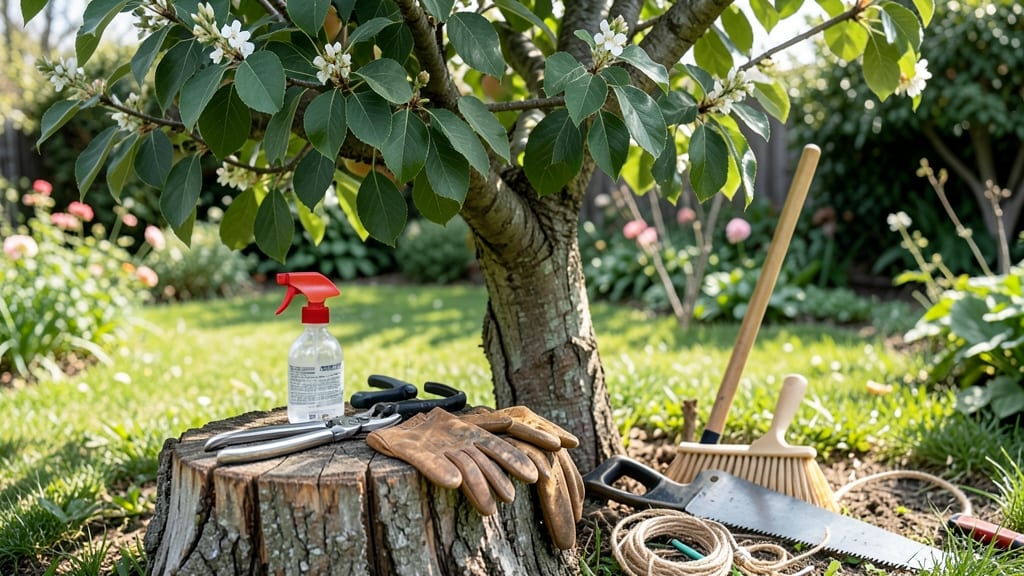
Before you start, gather your tools: sharp pruning shears, loppers, a pruning saw for thicker branches, and rubbing alcohol to sterilize tools between cuts.
Apricot trees are susceptible to bacterial canker, so cleanliness is critical. Now, let’s dive into the step-by-step process to prune like a pro.
🌱 Step-by-Step Late Winter Pruning Guide
- 📅 Step 1: Choose the Right Time
Prune when buds begin swelling (typically late February to early March in USDA Zone 6a). Check for plump, green buds—this signals the tree is ready for pruning. - 🪴 Step 2: Remove Dead or Diseased Wood
Cut out dead branches (no green bark or buds) and diseased wood (blackened, oozing, or cracked). Use sterilized tools to prevent spreading infections. - ✂️ Step 3: Thin the Canopy
Remove 1/3 of the oldest branches to improve airflow. Focus on crossing branches and suckers (shoots growing from the base). - 🌿 Step 4: Shape for Light Penetration
Open the center of the tree by cutting back branches that block sunlight. Aim for an open vase shape to encourage even fruit ripening. - 🔄 Step 5: Make Clean Cuts
Cut just outside the branch collar (the swollen area where the branch meets the trunk). Avoid leaving stubs—they invite disease and rot. - 💧 Step 6: Apply Wound Dressing (Optional)
For larger cuts (>1 inch thick), use pruning sealant to protect against pests and disease. Smaller cuts don’t need sealing—they heal faster with fresh air. - 🌡️ Step 7: Monitor for Signs of Stress
After pruning, watch for yellowing leaves or oozing sap, which may indicate over-pruning or disease. Adjust care as needed.
Identifying dead wood vs. live branches is key. Scrape the bark with your fingernail—live wood has a greenish layer underneath, while dead wood is brown and dry.
If a branch snaps easily or has no buds, it’s time to remove it. Live branches will have swollen buds or green shoots.
One common mistake is over-pruning, which stresses the tree and reduces next year’s fruit. Limit yourself to removing no more than 25% of the canopy in a single session. Another pitfall is improper cuts, like leaving stubs or cutting too close to the trunk.
Always cut at a 45-degree angle just outside the branch collar for the best results.
After pruning, give your apricot tree a deep watering to help it recover. Avoid fertilizing immediately—wait until spring growth resumes (typically 4-6 weeks later). With the right timing and technique, your tree will thrive and reward you with abundant, sweet apricots next season.