
Pruning
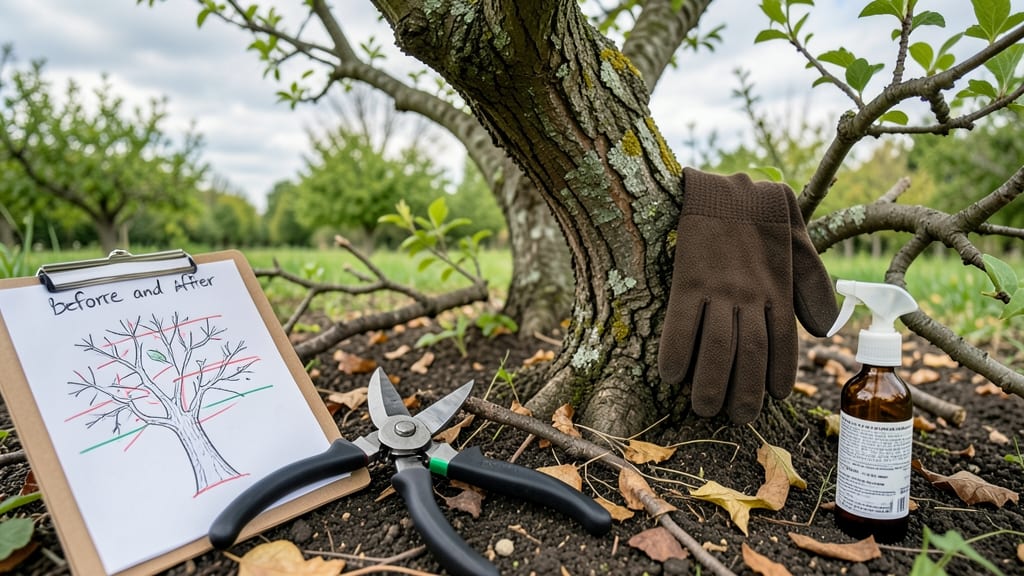
Your badly pruned peach tree’s sad, bare branches aren’t a lost cause—dormant season is the perfect time to revive it. ✂️ I’ve nursed back trees that looked like overgrown sticks, and with the right cuts, yours can bounce back stronger than ever, producing better fruit next year.
The damage is usually obvious: dead wood, stubby cuts, or a tangled mess of small branches. These mistakes weaken the tree and invite pests. But pruning in late winter—before buds swell—lets you shape the tree properly, removing up to one-third of last year’s growth without stressing it.
What you’ll end up with is a sturdy framework of 3-5 main branches, each with room to grow. The fruit that follows will be larger, sweeter, and easier to reach. Plus, you’ll cut down on cleanup during harvest season.
This works for backyard peach trees in zones 5-9. Let’s get those canes back in shape before spring arrives!
The Hidden Triggers Behind Poor Pruning
When a peach tree ends up looking more like a tangled mess than a thriving fruit-bearing beauty, the blame often lies in pruning mistakes made during its dormant season. But why does this happen? Understanding the root causes—literally and figuratively—helps gardeners avoid these pitfalls and nurture a healthier tree.
Here’s a breakdown of the most common culprits behind badly pruned peach trees, backed by science and practical insights.
Peach trees, like all fruit-bearing plants, rely on a delicate balance of leaf surface area and root system to produce energy through photosynthesis.
When gardeners remove too much foliage or structure in one go—often exceeding 20-30% of the tree’s canopy—they starve the tree of the resources it needs to recover.
- Why it happens:
- Fear of overgrowth leads to aggressive cuts, thinking "more pruning = better shape."
- Misunderstanding that peach trees need leaves to fuel next year’s fruit production and root regrowth.
- Attempting to "fix" the tree all at once, rather than spacing cuts over 2-3 dormant seasons.
- Science behind it:
Peach trees produce auxin, a plant hormone that regulates growth. Over-pruning disrupts auxin flow, causing:
- Weakened apical dominance (the tree’s natural growth priority), leading to multiple weak shoots instead of strong canes.
- Reduced carbohydrate reserves in roots, which are critical for spring blooms and fruit set.
- Increased susceptibility to cold damage because the tree’s energy is diverted to healing wounds instead of hardening off for winter.
- Actionable fix:
Follow the "30% rule": Never remove more than 20-30% of the tree’s canopy in a single dormant season. For young trees, limit cuts to 10-15% to avoid shock.
Pruning isn’t just about how much you cut—it’s also about how you cut. Improper techniques can leave peach trees vulnerable to bacterial canker, silver leaf disease, and poor structural integrity. Even well-intentioned cuts can backfire if done incorrectly.
- Why it happens:
- Using dull or contaminated tools, which tear bark and introduce pathogens.
- Making flush cuts (cutting too close to the trunk or branch collar), which fail to seal wounds properly.
- Leaving stubs or long tears in the bark, creating entry points for fungi and bacteria.
- Pruning during wet or windy conditions, increasing the risk of spreading disease.
- Science behind it:
Peach trees have a phloem layer that transports nutrients. When cuts are made improperly:
- Bacteria like Pseudomonas syringae (cause of bacterial canker) thrive in open wounds, blocking nutrient flow and girdling the tree.
- Improper cuts disrupt the branch collar, the tree’s natural healing tissue, leading to compartmentalization failure (the tree’s ability to seal off damaged areas).
- Torn bark exposes xylem vessels, which can’t transport water efficiently, causing wilting or dieback.
- Actionable fix:
Master these 3 golden rules:
- ✂️ Use sharp, sterilized tools: Clean blades with rubbing alcohol or a 10% bleach solution between cuts.
- 🎯 Cut at a 45° angle, 1/4" above a bud or branch collar, leaving a smooth, sloping cut to shed water.
- 🌿 Avoid topping or heading cuts: Always cut back to a lateral bud or branch, never leaving a stub.
Peach trees are dormant-season pruners, meaning they rely on winter’s rest to heal and prepare for spring. Cutting at the wrong time—whether too early, too late, or even in active growth phases—can throw the tree’s biological clock into chaos.
- Why it happens:
- Pruning too early (late fall/winter) when temperatures fluctuate, causing delayed wound sealing.
- Pruning too late (early spring), right before buds swell, which stimulates new growth that can’t harden off before frost.
- Pruning during wet or rainy seasons, increasing disease risk.
- Science behind it:
Peach trees enter endodormancy (a deep rest phase) in late fall. Pruning disrupts this cycle by:
- Triggering cytokinin production (a growth hormone) too soon, leading to soft, frost-sensitive tissue.
- Delaying lignification (the hardening of new wood), making branches more prone to breakage in wind or snow.
- Exposing unprotected buds to late-season frost, which can kill emerging flowers or leaves.
- Actionable fix:
Prune peach trees during late winter to early spring (just as buds begin to swell but before green tip growth). Ideal timing:
- 📅 Zone 5-7: Mid-February to early March (after last frost risk).
- 📅 Zone 8-10: Late January to February (avoid rainy spells).
Pro tip: If you must prune in summer (for pest/disease control), do so after harvest and avoid heavy cuts—limit to 5-10% of the canopy.
Pruning a peach tree that’s already stressed, diseased, or nutrient-deficient is like putting a bandage on a bullet wound—it won’t fix the underlying issue. Without addressing the tree’s health first, pruning can accelerate decline instead of reviving it.
- Why it happens:
Revive Your Tree Step-by-Step
A badly pruned peach tree can feel like a lost cause—but with the right care, it can bounce back stronger than ever.
Whether your tree suffered from over-pruning, poor cuts, or wrong-season trimming, here’s how to nurse it back to health and set it up for a bountiful harvest.
If your tree lost too much foliage or structure, it’s likely stressed and vulnerable. The good news? Peach trees are resilient, and with proper care, they can recover.
What to do:
- 🔥 Assess the damage – Look for bare branches, weak canes, or excessive dieback. Focus on saving the sturdiest limbs.
- 🍳 Feed it right – Apply a balanced fertilizer (10-10-10 or similar) in early spring to replenish nutrients. Avoid heavy nitrogen—it can encourage leafy growth at the expense of fruit.
- 👨🍳 Water deeply but wisely – Keep the soil moist (not soggy) for the first few weeks to help roots re-establish. Mulch around the base to retain moisture.
- ⏰ Give it time – New growth may take 4–6 weeks. Avoid pruning again until you see fresh, green shoots.
💡 Pro Tip: If the tree looks severely stripped, consider delaying heavy pruning until next dormant season. Let it focus on recovery first.
Bad cuts—like tearing, stubs, or too-close trims—invite disease and weaken the tree. Here’s how to fix them:
What to do:
- 🔪 Clean up old wounds – Use sterilized pruners to remove any ragged edges or dead stubs. Make fresh cuts at a 45-degree angle, ¼-inch above a bud or branch collar.
- 🌡️ Disinfect tools – Wipe blades with rubbing alcohol between cuts to prevent bacterial spread (like silver leaf disease).
- 🎯 Thin out crowded branches – Remove crossing limbs, suckers, and water sprouts to improve airflow and sunlight penetration.
- 🌿 Prune for structure – Aim for an open-center shape (like a vase) to maximize sunlight and fruit production.
✨ Prevention Tip: Always prune during dormant season (late winter/early spring) when the tree is least stressed.
If your tree was pruned at the wrong time (like summer or fall), it may have missed its prime growth window. Here’s how to encourage fruiting:
What to do:
- 📊 Thin existing fruit – If the tree puts out too many peaches, remove 1 in 4 to prevent overburdening branches.
- 💪 Support weak canes – Use tree ties or stakes for new growth to prevent wind damage.
- 🍎 Apply bloom stimulants – A light spray of seaweed extract or bloom fertilizer in early spring can encourage flowering.
- 🚫 Avoid late pruning – Never prune after June—it removes next year’s fruit buds!
💡 Pro Tip: If your tree hasn’t fruited in years, it may need cross-pollination. Plant a second peach variety nearby for better yields.
Once your peach tree is back on track, keep these habits to prevent future issues:
- 🌱 Prune annually – Remove dead wood, suckers, and diseased branches every dormant season. - 💧 Water deeply but infrequently – Peach trees hate wet feet but love deep hydration.
Water at the base, not the leaves. - 🍄 Watch for pests/disease – Early signs of peach leaf curl or aphids?
Treat with neem oil or copper fungicide ASAP. - 🌞 Ensure full sun – Peach trees need 6+ hours of sunlight daily—don’t let nearby trees or structures shade them.
Final Thought: A badly pruned peach tree isn’t a write-off—it’s a chance to reset and rebuild for a stronger, more productive future. With patience and the right techniques, your tree can reward you with juicy peaches for years to come! 🍑✨
Frequently asked questions
How do I know if my peach tree is beyond saving after bad pruning?
Your tree may be beyond saving if you see large dead sections (no green bark or buds), oozing cankers (black, sunken areas), or no new growth after 6 weeks in spring. Even then, try one last recovery effort: apply a root stimulator and watch for any signs of life.
Can I prune my peach tree in summer to fix winter mistakes?
Summer pruning is not ideal for peach trees, but you can do light corrective cuts after harvest (July-August). Focus only on removing dead wood or diseased branches—never exceed 10% of the canopy. Avoid heavy pruning, as it removes next year's fruit buds!
What's the best way to sterilize pruning tools between cuts?
Use 70% rubbing alcohol or a 10% bleach solution (1 part bleach to 9 parts water) to disinfect blades between cuts. Wipe thoroughly and let air dry. For extra protection, carry a small spray bottle of alcohol in your pruning tool pouch. This prevents spreading bacterial canker and silver leaf disease.
How much should I thin my peach tree's fruit to help recovery?
Remove 1 in 4 peaches when they're golf-ball sized to reduce stress on the tree. This improves fruit quality and prevents branch breakage. Focus on keeping the largest, healthiest fruits spaced evenly. For severely pruned trees, you may need to thin even more aggressively.
Will my peach tree ever produce good fruit again after bad pruning?
Yes! With proper care, your tree can recover and produce excellent fruit in 2-3 years. The key is patience—focus on structural pruning, nutrient balance, and disease prevention during the recovery period. Many gardeners report larger, sweeter peaches after proper pruning practices!