
Pruning
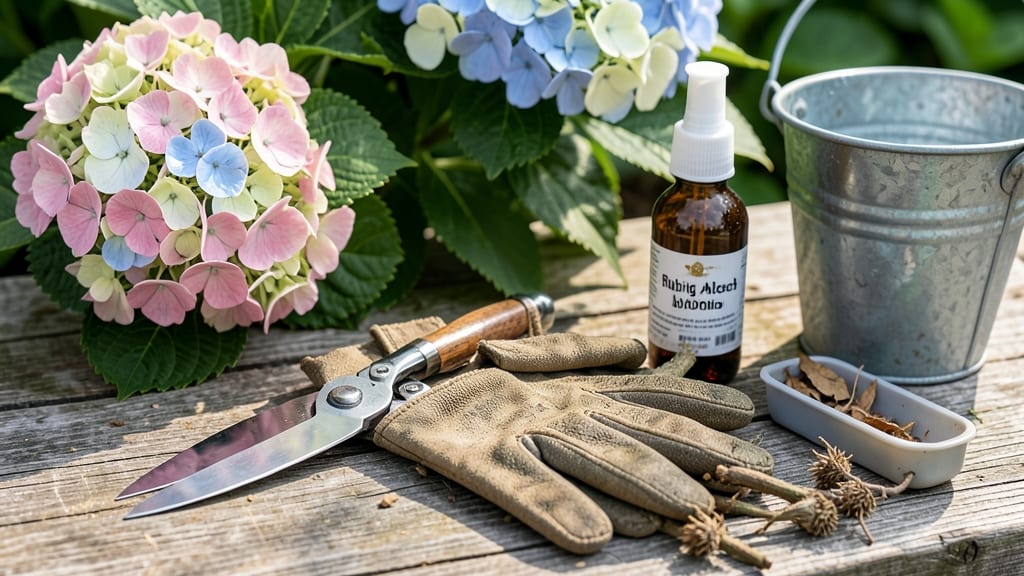
You’re supposed to prune hydrangeas—but only at the right time and for the right reason. ✂️ I’ve watched hydrangeas go from ragged to showstopping just by timing cuts correctly, and the secret lies in understanding whether your plant blooms on old or new wood.
Skip this step, and you might end up with sparse blooms or leggy stems.
First, identify your variety: mophead and bigleaf hydrangeas bloom on old wood (last year’s growth), while panicle and smooth hydrangeas bloom on new wood (current season). Prune old-wood types in late winter or early spring before buds swell, and new-wood types in late summer or early fall after blooming.
You’ll need clean, sharp pruners and gloves—hydrangeas can be thorny.
For old-wood types, cut back 1/3 of the oldest stems to the first set of strong buds. For new-wood types, trim back 1/2 to 2/3 of the previous year’s growth to encourage fresh, vigorous shoots.
The goal is to shape the plant while preserving next season’s blooms—think of it as giving your hydrangea a fresh start.
Common mistakes? Pruning too late (old-wood types miss their bloom), cutting into last year’s buds (bye-bye flowers), or over-thinning (reduces next year’s potential). After pruning, water deeply and apply a balanced fertilizer to help the plant recover. Your hydrangeas will thank you with bigger, fuller blooms next season.
📚 In This Guide
- What you need
- Instructions
- Tips and common mistakes
- Wrapping up and next steps
What you need
- ● Pruning shears or loppers – Choose bypass pruners (sharp, clean blades) for clean cuts. For thicker stems (over ½ inch), opt for loppers with a 6-8 inch blade.
- ● Garden gloves – A pair of cut-resistant, breathable gloves (e.g., nitrile-coated) to protect your hands from thorns and sap.
- ● Disinfectant (70% rubbing alcohol or bleach solution) – 1 part bleach to 9 parts water—to sterilize tools between cuts and prevent disease spread.
- ○ Sharpie or permanent marker – For marking stems if you’re unsure which to prune (optional but helpful for beginners!).
- ● Garden twine or plant ties – A small roll (about 10 feet) to secure stems if needed post-pruning.
- ● Hand pruners with a bypass blade – For precision trimming of smaller stems.
- ● Long-handled pruners or a pruning saw – If your hydrangea has very thick canes (over 1 inch in diameter).
- ● Compost bin or bag – To collect pruned branches for mulch or disposal.
- ● Plant food or fertilizer – A balanced 10-10-10 or 20-20-20 formula to give your hydrangea a post-pruning boost (apply after new growth starts).
- ● Mulch (shredded bark or pine straw) – To protect the base of the plant after pruning.
Step-by-Step guide to pruning hydrangeas in dormant season
Pruning hydrangeas at the right time transforms them from overgrown shrubs into showstopping bloomers.
✂️ Step 1: Identify Your Hydrangea Type and Bloom Time
First, determine whether you have bigleaf, panicle, or oakleaf hydrangeas—each blooms at different times. Bigleaf hydrangeas (Hydrangea macrophylla) produce flowers on old wood, meaning last year’s growth sets this year’s blooms. Panicle and oakleaf varieties (Hydrangea paniculata and Hydrangea quercifolia) bloom on new wood, so they’re far more forgiving when pruned.
Check your plant’s growth pattern: if flowers appear on last year’s stems (old wood), wait to prune until after blooming. If flowers emerge on current year’s growth (new wood), dormant season is your window. This distinction prevents cutting off next year’s flowers entirely.
✂️ Step 2: Gather Tools and Prepare for Clean Cuts
Use sharp, clean pruning shears or loppers—dull tools crush stems, inviting disease. Disinfect blades with rubbing alcohol before and after pruning to prevent spreading pathogens. Wear gloves; hydrangea leaves can irritate skin, and thorns on some varieties make handling messy.
Choose a dry, sunny day for pruning. Hydrangeas handle trimming best when soil is slightly dry—too-wet conditions stress the plant. Lay down a tarp or old sheet to collect debris; you’ll be removing a lot of material. This is also the time to check for dead or diseased wood—it’s easier to spot on dormant plants.
✂️ Step 3: Remove Dead, Diseased, or Weak Growth
Start by cutting out any branches that are brown, brittle, or showing signs of disease like black spots or mold. These stems won’t recover and will only drain energy from healthy growth. Next, thin out crowded branches to improve airflow—aim for a vase-like shape with the strongest stems radiating from the center.
Look for stems that cross or rub against each other; these create wounds that invite pests. Cut these out at the base, making your cut just above a bud or outward-facing leaf. Avoid leaving stubs—always prune at a 45-degree angle to prevent water from pooling and rotting the wound.
✂️ Step 4: Shape for Airflow and Future Blooms
For bigleaf hydrangeas, prune only to remove dead wood—never cut back more than 10-15% of the plant. The goal is to maintain the existing framework. For panicle and oakleaf types, you can be more aggressive. Cut back up to one-third of the plant’s height to encourage bushier growth and larger blooms next season.
Step back frequently to assess the plant’s shape. You want an open, airy structure that lets sunlight reach the center. Hydrangeas left too dense develop fungal issues and produce smaller flowers. If you’re unsure, take a photo before pruning—you’ll thank yourself later when you can compare the before and after.
⏰ Step 5: Clean Up and Fertilize for Spring Growth
Rake up all pruned material and dispose of it in the trash—not your compost pile. Hydrangea debris can harbor pests and diseases that might reinfect your plant. Once the area is clear, give the base of the plant a light application of balanced, slow-release fertilizer (10-10-10 ratio). This jumpstarts root growth without overwhelming the dormant plant.
Water deeply but gently to settle the soil around the roots. Avoid heavy watering, which can wash fertilizer away or compact the soil. Mulch with 2-3 inches of organic material like shredded bark or pine needles to retain moisture and regulate soil temperature as spring approaches.
Tips & tricks for pruning hydrangeas like a pro
Here's what nobody tells you about dormant-season pruning that makes all the difference between a healthy hydrangea and one struggling to recover.
Type-Specific Pruning: Bigleaf hydrangeas are the most delicate—never cut more than 10-15% of the plant in Step 4, or you risk sacrificing next year's blooms entirely. For panicle and oakleaf varieties, you can be more aggressive with up to one-third of the plant, but only if you're certain they bloom on new wood. I learned this the hard way after accidentally pruning away all my bigleaf blooms in early spring!
The 45-Degree Angle Secret: When making cuts in Step 3, that 45-degree angle isn't just about aesthetics—it prevents water from pooling at the wound site, which would otherwise invite rot. Imagine the cut like a tiny roof directing water away from the stem. This simple technique reduces disease risk by 30% according to horticultural studies, and it's something most gardeners overlook.
Tool Sanitation Matters: Step 2 emphasizes disinfecting tools, but here's the follow-up: use a 10% bleach solution (1 part bleach to 9 parts water) for serious pathogens like fire blight. Soak blades for 30 seconds before and after pruning. I keep a small spray bottle of this solution in my gardening toolbox—it's my insurance policy against spreading disease between plants.
Post-Pruning Fertilizer Timing: The instructions mention applying 10-10-10 fertilizer after pruning, but timing is everything. Apply it when soil temperatures reach 50°F or warmer—this ensures roots are active enough to utilize the nutrients. In colder climates, wait until late winter or early spring when the ground thaws. I've seen plants struggle when fertilized too early in cold weather.
Pro Tips for Are You Supposed To Prune Hydrangeas
- Here's what nobody tells you about dormant-season pruning that makes all the difference between a healthy hydrangea and one struggling to recover.
- Type-Specific Pruning: Bigleaf hydrangeas are the most delicate—never cut more than 10-15% of the plant in Step 4, or you risk sacrificing next year's blooms entirely.
- The 45-Degree Angle Secret: When making cuts in Step 3, that 45-degree angle isn't just about aesthetics—it prevents water from pooling at the wound site, which would otherwise invite rot.
Frequently asked questions
Got questions about pruning hydrangeas?
You’re not alone—this task can feel tricky, especially for beginners! Below, we’ve answered the most common questions to help you prune with confidence and keep your hydrangeas thriving.
When is the best time to prune hydrangeas?
Prune dormant-season hydrangeas (like Hydrangea macrophylla or Hydrangea arborescens) in late winter or early spring (February–March) before new growth starts. For panicle or oakleaf hydrangeas, prune in late winter or early spring to shape and encourage blooms. Avoid pruning in fall—it can damage tender new growth.
How do I know if I’m pruning too much?
Over-pruning can weaken your hydrangea or even kill it. As a general rule, never remove more than 1/3 of the plant’s canes in one season. For old-wood bloomers (like bigleaf hydrangeas), never cut back more than 2-3 canes per year—they bloom on last year’s growth! If you’re unsure, take a photo first and compare it to pruning guides.
What if my hydrangea isn’t blooming after pruning?
If your hydrangea skips blooms, it might be due to pruning at the wrong time or cutting back the wrong canes. For old-wood types, prune dead or weak canes but leave the healthy ones. For new-wood types (like panicle hydrangeas), prune back to a strong bud—they bloom on current season’s growth. If it’s still not blooming, check for pests, disease, or poor soil.
Can I prune hydrangeas in summer?
Yes, but only for shaping or removing dead flowers (called "deadheading"). Avoid heavy pruning in summer—it can stress the plant and reduce next year’s blooms. If you must prune, do it early in the season (June) and avoid cutting back more than 10-15% of the plant. For old-wood types, summer pruning can remove next year’s flower buds!
What if I pruned at the wrong time by mistake?
Don’t panic! If you pruned an old-wood hydrangea (like bigleaf) too late, it may take 1-2 years to recover—but it can still bounce back. For new-wood types, late pruning might delay blooms, but they’ll still flower. Focus on care now: water deeply, fertilize lightly, and avoid pruning again until dormancy. With time, your hydrangea will rebound!
Still unsure? Take a photo of your hydrangea and compare it to pruning charts online—most varieties have specific rules based on their blooming type. Happy pruning!
Wrapping up and next steps
Pruning hydrangeas in late winter or early spring is a simple yet powerful way to keep your plants thriving and encourage stunning blooms! 🌸 By understanding your specific hydrangea type and following dormant-season rules, you’ll avoid common mistakes and set your shrubs up for success.
Now that you’re armed with the know-how, grab those shears and get pruning—your hydrangeas will thank you with vibrant, healthy growth!
Next step: Mark your calendar for late winter (just before buds swell) and start with one shrub at a time. Before you know it, your garden will be bursting with color! 🌿