
Pruning
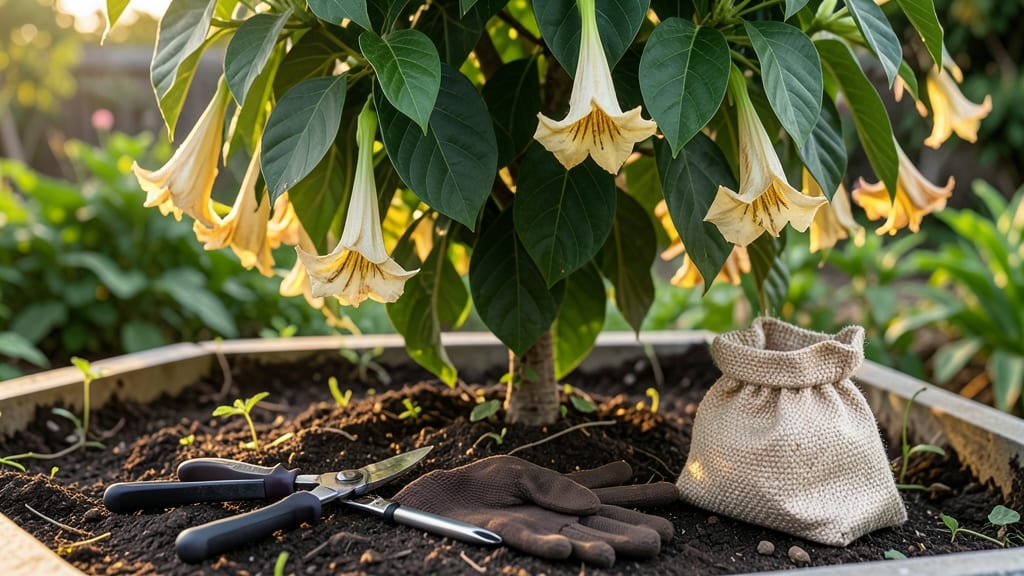
Pruning your angel trumpet (Brugmansia) isn’t just about shaping—it’s about unlocking safer fruit and healthier growth before the blooms arrive. 🌿 I’ve learned the hard way that skipping this step leads to leggy plants, fewer flowers, and those dreaded toxic sap drips that ruin your mood (and your hands).
The right cuts transform your plant from a wild, unruly mess into a structured, productive beauty that rewards you with dramatic blooms all season.
Timing is everything: late winter or early spring, just as new growth starts to push, is when you should grab your pruners. You’ll need sterilized tools, gloves (trust me, the sap burns), and a sharp pair of bypass pruners to make clean cuts.
The goal? Remove dead, diseased, or crossing branches first—these are the weak points that invite pests and rot. Then, thin out crowded stems to improve airflow, which keeps the plant’s energy focused on stronger canes and bigger blooms.
After you’ve made your cuts, don’t just toss those branches—compost them (far from your garden, since the sap is toxic). Water your angel trumpet deeply to help it recover, and keep an eye out for new shoots emerging within 2-4 weeks.
These fresh growths are your plant’s way of saying “thank you” for the pruning—each one is a potential future bloom. The result? A plant that’s more compact, easier to manage, and packed with flowers by summer.
Here’s the kicker: skip the pruning, and you’ll end up with a plant that’s all sprawl and no show. But do it right, and you’ll have a Brugmansia that’s safer for kids and pets (less sap oozing everywhere) and far more productive.
Plus, the process is oddly satisfying—like giving your plant a fresh start. Ready to grab those pruners?
📚 In This Guide
- What you need
- Instructions
- Tips and common mistakes
- Wrapping up and next steps
What you need
- ● Pruning shears or loppers – Choose bypass pruners (for clean cuts) or anvil pruners (for thicker canes). Ensure they’re sharp, sterilized (70% rubbing alcohol or bleach solution), and sized appropriately (4- to 6-inch blades for most jobs).
- ● Garden gloves – Opt for cut-resistant, chemical-free gloves (e.g., nitrile-coated or leather) to protect against thorns and sap.
- ● Disposable pruning saw – For thick, woody stems (1+ inch diameter). A folding pruning saw with fine teeth works best.
- ● Rubbing alcohol (70% or higher) or bleach solution – 1 part bleach to 9 parts water for sterilizing tools between cuts.
- ○ Pruning sealant (optional but recommended) – A tree wound sealant (e.g., Tanglefoot or Ortho brand) to prevent disease entry on larger cuts.
- ● Disposable bags or bucket – For collecting pruned debris (wear gloves—Brugmansia sap can irritate skin!).
- ● Ladder or sturdy step stool – If your plant exceeds 6 feet tall, use a lightweight aluminum ladder with non-slip feet.
- ● Timing: Prune after flowering (late winter/early spring) or immediately post-bloom to redirect energy to new growth. Avoid pruning during frost or extreme heat.
- ● Weather check: Choose a dry, overcast day to minimize stress on the plant and reduce sap oozing.
- ● Safety first: Wear long sleeves and pants—Brugmansia sap can cause skin irritation.
- ● Avoid pruning near pets or children; the plant’s sap is toxic if ingested.
- ● Hand lens (10x magnification) – For inspecting buds and canes for pests/disease before cutting.
- ● Plant food (balanced fertilizer, 10-10-10) – Apply 2-4 weeks post-pruning to support regrowth.
- ● Spray bottle with water – To rinse tools between cuts and keep sap from clogging blades.
Strategic pruning techniques for angel trumpet vines
Here’s how to shape your angel trumpet for better blooms and stronger growth—without sacrificing its dramatic beauty.
✂️ Step 1: Identify and Remove Dead or Diseased Wood
Start by inspecting the vine for any canes that are brown, mushy, or hollow—these are dead or infected. Use sharp pruning shears to cut these back to healthy green tissue, making the cut at a 45-degree angle just above a leaf node. This prevents water from pooling and encourages new growth from the right spot.
I always prune on a dry morning to reduce the risk of spreading fungal spores. If you see blackened areas or oozing sap, that’s a sign of disease—sterilize your shears with rubbing alcohol between cuts to avoid cross-contamination.
✂️ Step 2: Prune for Airflow and Light Penetration
Angel trumpets thrive when they get plenty of airflow and sunlight. Thin out crowded canes to create space between branches, aiming for 6-12 inches of separation. Remove any that cross or rub against each other—they’ll eventually scar and weaken the vine.
Focus on the center of the plant first. Older, woody canes in the middle often block light from reaching younger growth. Cut these back to the base if they’re no longer producing flowers or are overcrowding the center.
✂️ Step 3: Shape for Balanced Growth and Flower Production
After removing dead and crowded wood, step back and assess the vine’s shape. You want a balanced, open structure that lets sunlight reach all parts of the plant. Prune to encourage a pyramidal or vase-like form, cutting back overlong canes to a strong lateral branch or bud.
Here’s the thing—angel trumpets bloom on new wood, so avoid heavy pruning too late in the season. If you’re shaping for next year’s flowers, do it in late winter or early spring before new growth begins.
✂️ Step 4: Encourage New Growth with Strategic Cuts
To stimulate fresh, vigorous canes, make cuts just above a leaf node where a new bud is visible. Avoid cutting too close to the trunk or you’ll risk damaging the main stem. For semi-woody canes, leave 2-3 buds on each pruned branch to encourage branching.
Water the vine deeply after pruning to help it recover. The roots will need to support the new growth, so keep the soil consistently moist but not soggy for the first 2-3 weeks post-prune.
⏰ Step 5: Time Your Pruning for Seasonal Success
The best time to prune angel trumpets is in late winter or early spring, just as new growth begins. This gives the plant plenty of time to recover before summer heat sets in. Avoid heavy pruning in fall—you’ll cut off the energy reserves needed for winter survival.
If you must prune in summer, do it lightly to maintain shape, but avoid major cuts. The plant will focus on flower production rather than regrowing lost canes, which can stress it unnecessarily.
Tips & tricks for perfect angel trumpet pruning
These strategic insights will help you transform your angel trumpet vine into a thriving, flower-filled beauty—without the guesswork.
The Disease Prevention Edge: Sterilize your pruning shears between every cut with rubbing alcohol, especially when dealing with blackened or oozing canes. I learned this the hard way after losing an entire section of my vine to fungal spread. The alcohol kills spores on the blade, preventing cross-contamination between healthy and diseased areas. For stubborn sap or resin buildup, wipe blades with a paper towel dipped in denatured alcohol after each session.
Visual Pruning Cues: When shaping for airflow in Step 2, look for canes that cast shadows on other branches—these are blocking sunlight. Aim to create a "sunlight lattice" where every section of the vine receives at least 4-6 hours of direct light daily. The 6-12 inch separation rule is your guide, but trust your eye when assessing light penetration through the center.
Seasonal Timing Secret: The late winter/early spring window (Step 5) is critical because it aligns with the plant's natural dormancy break. Watch for the first signs of bud swell—this is your cue to prune. If you're in a warmer climate where growth starts earlier, adjust to prune 2-3 weeks before your last frost date. For container-grown angel trumpets, this timing is even more crucial since they have less root system to recover from stress.
Post-Prune Recovery Boost: After making your strategic cuts, create a "root wake-up call" by watering deeply at the base with a solution of 1 tablespoon of liquid seaweed fertilizer per gallon of water. This mimics natural spring rains and signals the roots to ramp up nutrient uptake. The 2-3 week moist-but-not-soggy period is your opportunity to monitor recovery—yellowing leaves at this stage are normal as the plant redirects energy.
Pro Tips for Angel Trumpet Pruning
- These strategic insights will help you transform your angel trumpet vine into a thriving, flower-filled beauty—without the guesswork.
- The Disease Prevention Edge: Sterilize your pruning shears between every cut with rubbing alcohol, especially when dealing with blackened or oozing canes.
- Visual Pruning Cues: When shaping for airflow in Step 2, look for canes that cast shadows on other branches—these are blocking sunlight.
Frequently asked questions
Got questions about pruning your angel trumpet (Brugmansia)? You’re not alone! Here are answers to the most common concerns—so you can prune with confidence and keep your plant thriving.
When is the best time to prune angel trumpet for fruit?
The ideal time is late winter or early spring, just before new growth begins. This ensures the plant has energy to regenerate. Avoid pruning in fall—it can leave canes vulnerable to cold damage. For tropical climates, prune after flowering to encourage bushier growth.
How much can I cut back without harming the plant?
You can safely remove up to 1/3 of the plant’s height in one session. Focus on dead, diseased, or crossing branches first. For mature plants, gradual pruning (over 2–3 years) prevents shock. Never cut more than half the foliage at once—angel trumpets are sensitive to drastic reductions!
What’s the difference between pruning for fruit vs. shaping?
For fruit production, prioritize open-center pruning—remove crowded canes to improve airflow and sunlight. For shaping, trim evenly to maintain symmetry, but avoid heavy cuts that reduce flowering. Balance both goals: thin out 1–2 old canes yearly to rejuvenate growth.
Why does my angel trumpet bleed sap after pruning?
Sap bleeding is normal! It’s the plant’s way of sealing wounds. To minimize mess, prune on a dry day and use sterilized tools. Apply a thin layer of pruning sealant (optional) to large cuts. Avoid over-pruning—stressed plants bleed more. Most sap stops within a few days.
Are there alternatives if I don’t want to prune?
Yes! If pruning feels overwhelming, try selective trimming—just remove dead growth or overcrowded branches. For non-fruiting plants, focus on air circulation to prevent disease. You can also divide the plant every 3–4 years to refresh growth without heavy cuts.
Wrapping up and next steps
Pruning your angel trumpet (Brugmansia) isn’t just about shaping its lush, dreamy blooms—it’s a safety first strategy to prevent toxic seed pods and foster stronger growth.
By mastering the right cuts, timing, and tools, you’ll reward yourself with safer fruit, healthier canes, and a thriving plant that’s as stunning as it is manageable. 🌿✨
Ready to take the next step? Grab your pruners and schedule your first pruning session—your angel trumpet (and your peace of mind) will thank you! For extra confidence, revisit our FAQs or experiment with a small branch first. Happy pruning!