
Pruning
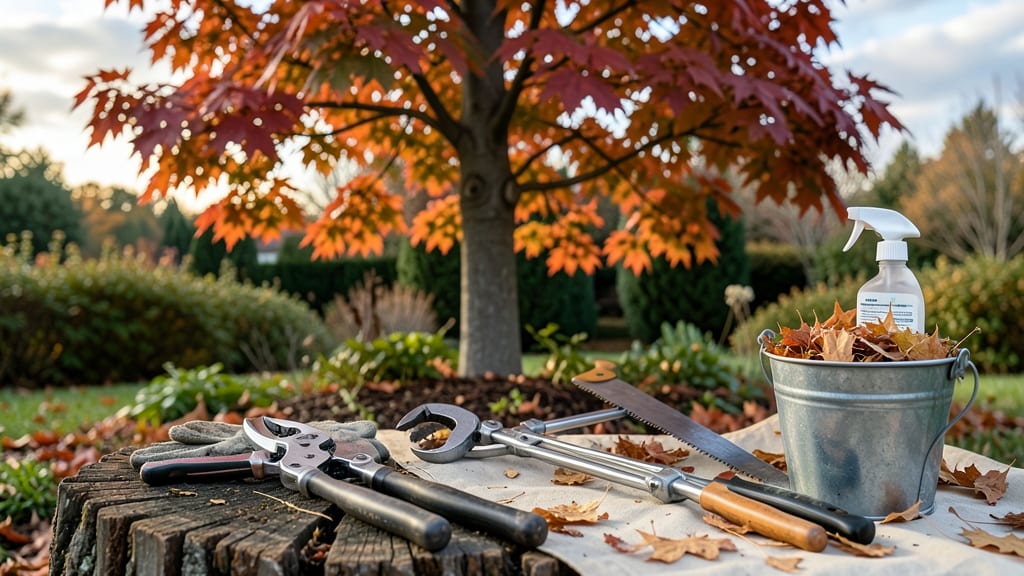
Pruning acer trees in late winter reveals their hidden structure like never before—those dormant branches hold all the secrets to next year’s vibrant foliage. ✂️ I’ve pruned everything from towering Norway maples to delicate Japanese maples, and the dormant season is when you get the cleanest results with minimal stress on the tree.
The key? Timing, technique, and knowing which cuts encourage strong new growth while preserving the tree’s natural shape.
You’ll need sharp bypass pruners, loppers for thicker branches, and a sturdy ladder—safety first, especially with larger trees. For Norway maples, focus on removing deadwood, crossing branches, and thinning the canopy to improve airflow, while Japanese maples benefit from lighter shaping to maintain their graceful form.
Pro tip: Sterilize your tools between cuts to prevent spreading disease, and always make cuts just outside the branch collar for faster healing.
The payoff comes in spring when you see fresh green leaves pushing from pruned branches and a canopy that’s stronger than before. A well-pruned acer tree resists pests better, produces more vibrant fall color, and even blooms more abundantly if it’s a flowering variety.
The best part? You’ll spend less time cleaning up broken branches later—stronger structure means fewer headaches down the road.
This method works for mature trees and young saplings alike, though older trees may need gradual pruning over a few seasons. Whether you’re tackling a single branch or a full canopy, the same principles apply—just adjust the scale.
Ready to transform your acer into a showstopper? Let’s get started with the right cuts.
📚 In This Guide
- What you need
- Instructions
- Tips and common mistakes
- Wrapping up and next steps
What you need
- ● Pruning shears (bypass pruners): Sharp, high-quality shears with a 4- to 6-inch blade for cutting small branches (up to ½ inch thick). Example: Felco F-2 or Corona bypass pruners.
- ● Lopping shears: For thicker branches (½ to 1½ inches thick). Look for long-handled models (20+ inches) for leverage.
- ● Pruning saw: A curved-tooth saw for branches larger than 1½ inches. A bow saw or pruning saw with a 12- to 14-inch blade works best.
- ○ Extension pole (optional but helpful): A 6- to 12-foot pole with a saw or shears attachment for hard-to-reach branches.
- ● Disposable gloves: Wear gardening gloves to protect your hands from thorns, sap, or splinters.
- ● Rubbing alcohol (70% or higher): A small bottle to sterilize tools between cuts and prevent disease spread.
- ● Sealing wax or pruning paint: A tree wound sealant (like Tanglefoot Tree Wound Pruning Sealer) for cuts larger than ½ inch.
- ● Ladder or sturdy step stool: Ensure it’s stable and rated for your weight—never risk wobbly perches!
- ● Heavy-duty trash bags: For collecting pruned branches and debris.
- ● Hand saw: For stubborn, thick branches that won’t yield to a pruning saw.
- ● Pole saw: A long-handled saw for high branches without a ladder.
- ● Work gloves with grip: For extra protection if your tree has aggressive thorns.
- ● Pruning rope or zip ties: To temporarily secure branches during heavy pruning.
- ● Camera or phone: Snap photos of your tree’s structure before pruning—reference pics help!
Step-by-step instructions for pruning acer trees in dormancy
Here's the method I swear by for winter pruning—it keeps your acers healthy, blooming, and structurally sound for years.
✂️ Step 1: Gather the Right Tools and Safety Gear
Start by assembling your tools: a pair of sharp bypass pruners for cuts up to ½ inch thick, and loppers for branches between ½ to 2 inches in diameter. For anything larger, you’ll need a pruning saw. I always wear thick gloves and safety glasses—acer bark has thorns, and branches can snap unpredictably.
Clean your tools with rubbing alcohol before you begin. This prevents spreading disease between cuts. A small bucket of soapy water for wiping blades keeps them sharp and bacteria-free. I also bring a ladder if your tree is over 8 feet tall—never risk climbing or standing on shaky branches.
🌿 Step 2: Assess the Tree for Dead, Diseased, or Weak Branches
Begin by examining the tree from all sides. Look for dead branches—they’ll be brittle, snap easily when bent, and have no green tissue under the bark. Remove these first, as they drain energy from healthy growth. Next, identify crossing branches that rub together, which creates wounds and invites rot.
Check for water sprouts—those fast-growing, vertical shoots that appear after pruning. These are energy vampires, so mark them for removal. Finally, scan for diseased wood (discolored, oozing, or fungal growth) and weak crotches where branches meet the trunk at sharp angles. These need special attention.
✂️ Step 3: Make Clean Cuts at the Right Angles and Locations
For dead or diseased branches, cut back to the collateral bud—the one directly across from the branch you’re removing. Make your cut at a 45-degree angle, sloping away from the bud. This ensures water runs off and the wound heals faster. If the branch is thick, cut in three stages: first undercut, then top-cut, and finally remove the stub.
For thinning branches, remove entire limbs back to their origin at the trunk or a larger branch. Avoid "heading back" (cutting back to a lateral bud) unless you’re shaping a hedge—acer trees bloom on old wood, and aggressive pruning can reduce next year’s flowers. Always cut just outside the branch collar (the swollen area where the branch meets the trunk).
☀️ Step 4: Shape for Airflow and Light Penetration
Step back and visualize the tree’s scaffold branches—the main limbs that form its structure. Aim for an open center with branches spaced 6-12 inches apart along the trunk. This improves airflow and sunlight, reducing disease risk. Remove branches that grow inward or downward, as they’ll crowd the center.
For maple trees with samaras (the helicopter seeds), prune to reduce seed production if you’re bothered by them. Focus on the outer third of the canopy first, then work inward. Avoid over-pruning—never remove more than 25% of the canopy in one season. Your goal is to open up the tree, not strip it bare.
⏰ Step 5: Clean Up and Monitor for Recovery
After pruning, rake up and dispose of all debris—especially diseased branches. Never leave them on the ground, as they can harbor pests or fungi. Seal larger wounds (over ½ inch) with pruning sealant only if the cut is on a thick trunk or the tree is stressed. For most acers, no sealant is needed—the tree’s natural defenses handle small wounds better.
Water the base of the tree deeply after pruning, especially if winter has been dry. This helps the tree recover from stress. Mark your calendar for early spring (just as buds swell) to check for any dieback or signs of stress. Healthy acers will show new growth by late spring, with vibrant leaves and strong canes.
Tips & tricks for perfect acer tree pruning
Winter pruning transforms your acer into a stronger, more vibrant tree—here’s how to avoid common pitfalls and elevate your technique.
Tool Sharpness Matters: Dull pruners tear bark instead of making clean cuts, which stresses the tree. Test your bypass pruners by making a clean cut through a small branch—if it crushes instead of slices, sharpen them first. I keep a small file in my toolkit for quick touch-ups between pruning sessions. A sharp tool also reduces the risk of jagged edges that invite disease.
The 25% Rule for Canopy Health: Never remove more than 25% of the canopy in one season, as instructed. This preserves the tree’s energy balance, but here’s the trick: spread removals across multiple branches rather than taking large chunks from one area. For example, instead of cutting back a single scaffold branch by half, thin several smaller branches throughout the canopy. This maintains structural integrity while still improving airflow.
Branch Collar Preservation: When removing thinning branches in Step 3, resist the urge to cut flush with the trunk. Always leave the branch collar intact—this swollen area contains healing tissues that protect against decay. I mark the collar with a piece of tape before cutting to ensure I don’t accidentally sever it. Preserving the collar is especially critical for acers, which rely on these natural defenses to recover from winter stress.
Seasonal Timing Insight: While dormant season pruning (late winter/early spring) is ideal, you can also prune in late summer if needed. However, avoid pruning during heavy sap flow (early spring for some acers) as it can stress the tree. If you must prune outside the dormant window, do so immediately after leaf drop in fall—just don’t cut into fresh wounds that won’t heal before winter sets in.
Pro Tips for Acer Tree Pruning
- Winter pruning transforms your acer into a stronger, more vibrant tree—here’s how to avoid common pitfalls and elevate your technique.
- Tool Sharpness Matters: Dull pruners tear bark instead of making clean cuts, which stresses the tree.
- The 25% Rule for Canopy Health: Never remove more than 25% of the canopy in one season, as instructed.
Frequently asked questions
Got questions about pruning your acer tree? You’re not alone! Here are some of the most common concerns—and straightforward answers—to help you prune with confidence.
When is the best time to prune an acer tree?
The ideal window is late winter to early spring (dormant season), just before buds swell. This minimizes stress and disease risk. Avoid pruning in fall—it can encourage late-season growth vulnerable to frost damage. Pro tip: If you must prune in summer, do it only to remove dead branches or thin for airflow.
How much can I trim back my acer tree?
For most acers, remove no more than 25% of the canopy in a single session to avoid shocking the tree. Focus on:
- Dead, diseased, or crossing branches
- Water sprouts (fast-growing, weak shoots)
- Suckers at the base
Why is my acer tree bleeding sap after pruning?
Sap oozing from cuts is normal in maple trees (acer)—it’s their way of sealing wounds. To minimize mess:
- Prune on dry days (rain dilutes the sealant)
- Use clean, sharp tools to make smooth cuts (no jagged edges)
- Avoid pruning in late winter if temps fluctuate (can worsen bleeding)
Can I prune an acer tree in summer?
Summer pruning is possible but risky. Only do it for:
- Removing dead/diseased branches (anytime is fine)
- Thinning for light penetration (avoid heavy cuts)
- Shaping ornamental acers (like Japanese maples)
What’s the difference between pruning a sugar maple vs. a Japanese maple?
Both are acers, but their needs vary:
Sugar Maple (acer saccharum)
Japanese Maple (acer palmatum)
Prune for structural strength—focus on removing weak crotches or dense growth.
Prioritize aesthetics—preserve delicate branches and avoid heavy cuts.
Can tolerate harder pruning (e.g., removing large limbs).
Thin gently—over-pruning can kill it. Use sterilized tools to prevent disease.
Wrapping up and next steps
Pruning your acer tree during the dormant season isn’t just about shaping—it’s about setting the stage for vibrant blooms and resilient growth. By following the right techniques, timing, and tools, you’ll encourage stronger canes, better airflow, and a healthier tree for years to come. 🌿✨
Now that you’re armed with the knowledge, grab those pruners and get hands-on! Start small if you’re new, and remember: patience and consistency are your best friends. Happy pruning—and may your acer tree thrive!