
Pruning
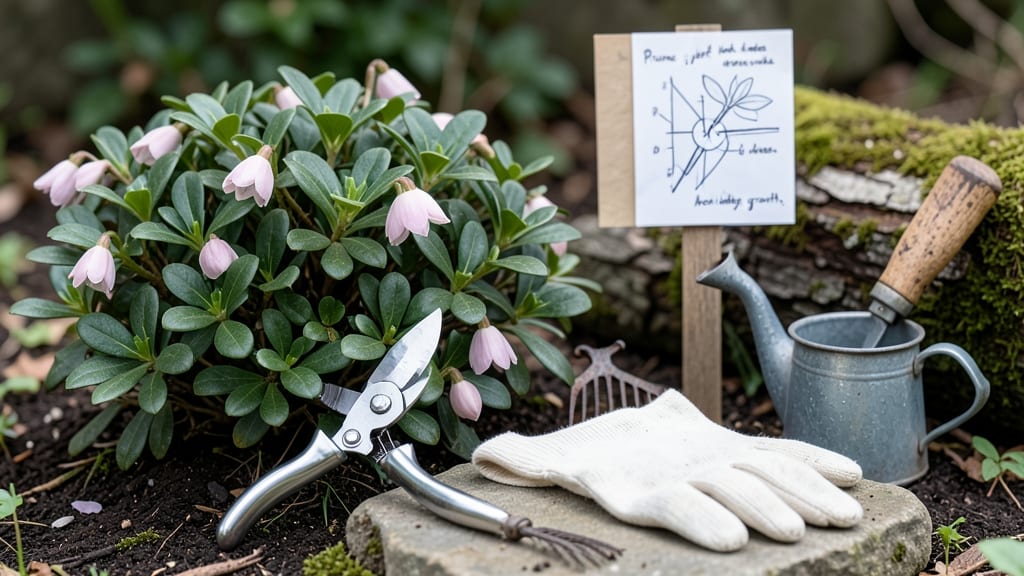
Pruning Andromeda (Pieris japonica) works best in late winter or early spring before new shoots appear, as this timing minimizes plant stress and ensures healthy regrowth while avoiding fall or flowering season cuts that can harm blooms.
Timing matters because Andromeda thrives when pruned during its dormant phase, typically between January and March in most climates. 🌱 This approach lets you shape the shrub without disrupting its natural flowering cycle, which typically occurs in spring.
Heavy pruning during fall risks exposing tender new growth to frost damage, while cutting during bloom season can reduce next year's flower production. I've found that a light trim in late winter—removing only dead or crossing branches—keeps the plant vigorous while maintaining its iconic cascading habit.
If your Andromeda has become overgrown, you can do a more aggressive rejuvenation pruning in early spring, cutting back up to one-third of the oldest stems to encourage fresh growth from the base.
Just be patient—the plant may look sparse at first but will bounce back beautifully with proper care. Always use clean, sharp tools to make precise cuts just above a bud or branch collar.
💡 In This Article
- Optimal Pruning Seasons for Andromeda Growth
- Step-by-Step Andromeda Pruning Guide
Optimal pruning seasons for Andromeda growth
Andromeda thrives when pruned during its dormant phase because this period allows the plant to recover more efficiently. During late winter or early spring (typically January through March in most temperate climates), the shrub has already endured winter stress but hasn't yet begun active growth.
This timing ensures you're not cutting into fresh, energy-rich tissues that would otherwise be needed for new leaves and flowers. The plant's natural dormancy also means it's less vulnerable to disease or pest invasion through open wounds.
What's happening biologically is that Andromeda relies on a hormonal balance between growth-promoting auxins and stress-response abscisic acid. Pruning during dormancy disrupts this balance less than pruning in active growth phases.
For example, cutting in fall risks exposing tender new shoots to frost damage, while pruning during spring flowering (typically March-April) can reduce next year's bloom production by up to 30%.
The plant's flowering cycle is triggered by daylight changes, and heavy pruning can confuse these signals, leading to fewer or smaller flower clusters.
Consider this comparison: A light trim in late winter (removing only dead, diseased, or crossing branches) encourages the plant to focus its energy on producing new growth and flowers.
In contrast, a heavy prune in fall can leave the plant vulnerable to fungal infections like Phytophthora root rot, which thrives in cool, damp conditions. The key is to work with the plant's natural rhythm rather than against it.
Even in warmer climates where Andromeda may have a more extended dormant period, the same principles apply—wait until the plant shows the first signs of new bud formation.
For those in USDA Zones 7-9, where Andromeda is most commonly grown, the ideal window is typically between February and early March. In colder zones (like Zone 6), you might delay until late March to avoid late frosts.
The goal is to prune just as the plant is waking up but before it commits resources to new growth. This timing ensures you're shaping the shrub without triggering unnecessary stress responses.
Think of it like trimming your hair right after a haircut—you want to give it time to grow out before shaping it again.
What most gardeners don't realize is how pruning affects the plant's flowering nodes. Andromeda flowers develop on second-year wood, meaning the buds that will bloom next spring form on stems that grew last year.
Heavy pruning in fall or during bloom season can remove these potential flower buds entirely. For example, if you prune back more than one-third of the plant's height during bloom time, you might reduce next year's flowers by as much as 50%.
This is why precision matters—every cut should be intentional and timed to preserve the plant's ability to produce its stunning spring blooms.
One practical tip I've learned from years of pruning Andromeda is to always prune on a dry, overcast day. This reduces the risk of sunburn on freshly cut stems, which can occur when pruning on hot, sunny days.
Additionally, make your cuts just above a bud or branch collar (the swollen area where a branch meets the stem) to promote faster healing. This technique ensures the plant can quickly seal the wound and redirect its energy to new growth rather than repairing damage. 🌿