
Pruning
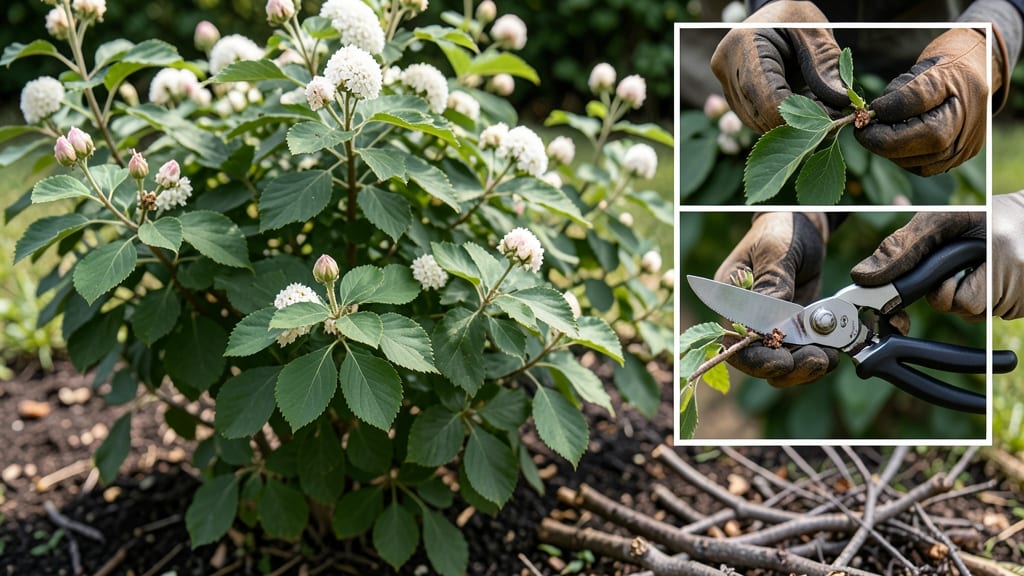
To prune snowball bush viburnum, trim dead or crossing branches in early spring before new growth appears, then lightly shape the plant after flowering to maintain its rounded form. Avoid heavy pruning to preserve next year’s blooms.
Pruning your snowball bush at the right time ensures those iconic white spring blooms return year after year. 🌸 The key is working with the plant's natural cycle—early spring cuts remove winter damage while stimulating fresh growth, while post-flowering shaping keeps the bush compact without sacrificing next season's blossoms.
I've learned that viburnums reward patience; aggressive cuts can leave your plant looking ragged for years.
For best results, start with clean cuts at a 45-degree angle just above outward-facing buds. This encourages growth in the right direction and prevents water from pooling on the cut.
If your bush has gotten too large, you can do a rejuvenation pruning by removing up to one-third of the oldest stems down to the ground—just do this in stages over two or three years to avoid shocking the plant.
Pro tip: Always sterilize your pruners with rubbing alcohol between cuts to prevent spreading disease. And if you're dealing with large limbs, use a three-cut method to avoid tearing the bark.
The goal is to make your viburnum look natural and healthy, not like a hedge that's been sheared into submission.
💡 In This Article
- Best Pruning Timing for Viburnum Snowball Blooms
- Step-by-Step Snowball Bush Pruning Techniques
Best pruning timing for viburnum snowball blooms
The snowball bush's blooms form on second-year wood, meaning this year's growth will flower next spring. That's why timing matters so much—pruning too late can remove next year's flower buds before they develop.
Early spring (just as buds swell but before leaves emerge) is ideal because it removes winter-damaged branches while leaving intact the buds that will produce your showy white clusters. If you prune after flowering, you risk cutting off the stems that hold next year's blooms.
Think of it like a gardening calendar: late winter (February-March in most zones) is for cleanup cuts, while post-flowering (June-July) is for light shaping only.
The plant's natural cycle shows itself in the bud development—look for those fat, plump buds along the stems in early spring; those are your future blooms. A common mistake is pruning right after planting, which can stress young plants and delay flowering for up to two years.
For established bushes, you can do a two-phase approach: first phase in early spring removes dead wood and crossing branches, while the second phase after flowering maintains the bush's shape. This method preserves 70-80% of potential blooms** while keeping the plant healthy.
The trade-off is that you'll never get a perfectly round hedge—snowball viburnums naturally grow in a more open, airy form that encourages better airflow and fewer diseases.
Temperature plays a hidden role too. Pruning when daytime temps are above 50°F helps the plant heal faster—cold weather slows sap flow and can lead to dieback. That's why I always check the forecast before grabbing my pruners.
In colder climates, wait until after the last frost when the ground isn't frozen anymore. The plant's resilience shows here: even with proper timing, some stems might take two years to fully recover from cuts.
What most gardeners don't realize is that viburnums actually prefer some winter damage—those broken branches often produce the most vigorous new growth in spring. The key is removing only the truly dead wood (branches that snap easily when bent) while leaving the damaged-but-still-living stems.
This selective approach maintains the bush's natural structure while encouraging denser foliage. 🌿
For overgrown bushes needing rejuvenation, spread out the pruning over three years—removing one-third of the oldest stems each year. This gradual approach prevents shock and maintains some blooming capacity each season.
The plant's ability to regenerate from old wood makes it one of the most forgiving shrubs for pruning mistakes.
Remember this visual cue: when you see those classic snowball clusters fading in late spring, that's your signal to start shaping the plant. The blooms themselves are a temporary display—the real work happens below ground as the plant prepares for next year's show.
That's why patience pays off with viburnums. ✨