
Pruning
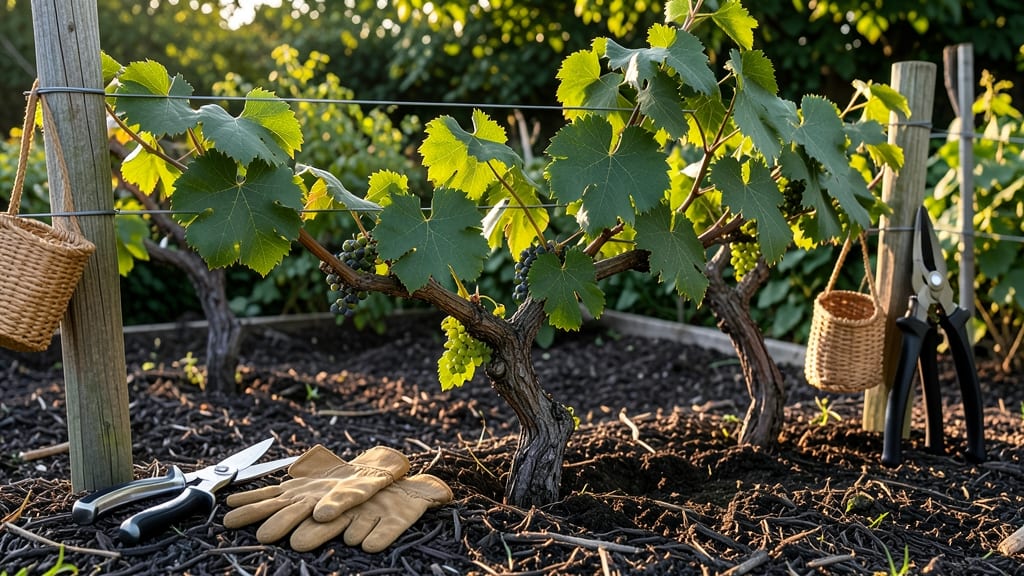
Pruning overgrown grapes isn't just about taming vines—it's about unlocking next year's harvest. 🌿 I've watched neglected grapevines go from tangled messes to productive powerhouses after just one strategic pruning session, and the difference in fruit quality is night and day.
The key is timing and technique: winter pruning shapes the structure, while summer pruning keeps growth in check. You'll focus on removing dead wood, thinning crowded canes, and selecting the strongest shoots—each cut directly impacts next season's yield.
Most gardeners over-prune or cut at the wrong angle, but these simple rules prevent common mistakes. By the end, you'll have a vine that produces more concentrated, sweeter grapes while resisting diseases better. The first harvest after proper pruning always tastes like victory. Let's get those canes in shape!
You'll need just a few basic tools: sharp felco pruners, loppers for thicker stems, and a disinfectant to prevent spreading disease between cuts. Grab a permanent marker to label canes if your varieties get confusing—trust me, you'll thank yourself next spring when you're identifying last year's best producers.
Start by removing any dead, diseased, or crossing branches first—they're stealing energy from your fruit. Then look for pencil-thick canes (about ½ inch diameter) that grew last year; these will bear fruit this season.
Keep 4-6 of the strongest canes per vine, cutting back others to a bud or joint for clean regrowth.
Summer pruning in June or July keeps vines manageable and improves air circulation. Thin out excess shoots to prevent shading, and pinch back new growth after the 6th leaf to encourage bushier, more productive vines.
The goal is to direct the plant's energy where you want it—into larger, higher-quality fruit rather than wild, unproductive growth. This method works for both table grapes and wine grapes, though wine varieties need slightly more aggressive pruning.
The first year might feel drastic, but your vines will thank you with healthier wood and better fruit set every season after.
📚 In This Guide
- What you need
- Instructions
- Tips and common mistakes
- Wrapping up and next steps
What you need
- ● Pruning shears: Bypass pruners (for clean cuts on smaller canes) – 1 pair, with sharp, stainless-steel blades (e.g., Felco or Corona).
- ● Loppers: Long-handled bypass loppers (for thicker canes, 1.5–2 inches in diameter) – 1 pair, with a 20–24-inch reach.
- ● Pruning saw: Curved-tooth pruning saw (for canes thicker than 2 inches) – 1 saw, with a 10–12-inch blade.
- ● Rubbing alcohol (70% isopropyl): Small bottle (for sterilizing tools between cuts to prevent disease spread).
- ● Garden gloves: Heavy-duty, cut-resistant (to protect hands from thorns and sap) – 1 pair.
- ○ Disposable pruning bags: Optional but helpful (for collecting pruned canes) – 1–2 bags, 10–15 gallons.
- ● Safety glasses: Protective eyewear (to shield from debris) – 1 pair.
- ● Long sleeves/pants: Lightweight, breathable fabric (to guard against thorns and sun exposure).
- ● Trash bags: Heavy-duty, compostable (for disposing of diseased or thick canes) – 2–3 bags.
- ○ Pruning sealant: Optional (e.g., tree wound dressing) – Small tube (for sealing large cuts if needed).
- ● Best time to prune: Dormant season (late winter or early spring, before buds swell). Avoid pruning during wet or freezing conditions.
- ● Weather check: Clear, dry day (reduces sap bleeding and disease risk).
- ● Grapevine health: Inspect vines for diseases (e.g., powdery mildew) or pests before pruning. Treat if necessary.
Step-by-step guide to pruning overgrown grapevines
Here's the method I rely on every year—it transforms tangled messes into productive vines within hours.
✂️ Step 1: Assess the Vines for Structure and Health
Start by examining each cane carefully. Look for last year's fruiting canes—these are the thick, brown stems that produced fruit last season. These are your priority for pruning. Identify new growth (green, flexible shoots) and dead or diseased wood (blackened, hollow, or brittle stems).
Remove any dead or diseased canes first—they drain energy from healthy growth. I always use sterilized pruners (dipped in rubbing alcohol) when cutting diseased wood to prevent spreading pathogens. Healthy canes should have a smooth, firm texture with visible buds along their length.
✂️ Step 2: Remove Excess Growth and Thin Out Canes
Your goal is to keep 4-6 strong canes per vine (adjust based on vine age and vigor). Cut back any weak, thin, or crossing canes at the base—these compete for nutrients and reduce fruit quality. I like to space remaining canes evenly around the trellis for balanced sunlight exposure.
For each cane, make your cuts just outside a bud facing outward on the trellis. This encourages growth toward sunlight and improves air circulation. If a cane has more than 20 buds, shorten it to 18-20 buds max—longer canes produce smaller fruit and are harder to manage.
✂️ Step 3: Prune for Fruit Production and Vine Health
Now focus on the fruiting canes from last season. Cut them back to 4-6 buds per cane, leaving the topmost buds. These buds will become this year's fruiting canes. I always make cuts at a 45-degree angle, about 1/8 inch above a bud, to prevent water from pooling and rotting the wound.
Remove any suckers growing from the base (these are vigorous but fruitless shoots). Also, trim back any water sprouts (vertical shoots growing from the main trunk). These compete with fruit production and weaken the vine. After pruning, your vine should look like an open, airy structure with evenly spaced canes.
⏰ Step 4: Clean Up and Monitor for New Growth
Rake up and dispose of all pruned debris—this reduces disease risk and keeps the area tidy. I like to mulch the base with 2-3 inches of organic mulch to retain moisture and suppress weeds. Water the vine deeply after pruning to help it recover and encourage new growth.
Watch for new shoots emerging from the buds within 2-3 weeks. These will become this year's fruiting canes. If you see any unusual growth patterns (like excessive suckers), adjust your pruning approach for next year. A well-pruned vine will reward you with larger fruit and fewer pests.
Tips & tricks for pruning overgrown grapes
These strategic cuts will transform your tangled grapevines into productive powerhouses—here's how to avoid common pitfalls and maximize your harvest.
Timing Secret: Prune during late winter or early spring while vines are still dormant, ideally between bud break and the start of new growth. This timing minimizes stress on the plant and prevents disease spread during wet conditions. I always aim for 2-3 weeks before bud break—this gives the vine time to heal before the growing season begins.
The Technique That Changed Everything: When making cuts in Step 3, use sharp, sterilized pruners to create clean wounds. The 45-degree angle mentioned in the instructions isn't just for aesthetics—it prevents water from pooling at the cut site, which reduces the risk of fungal infections. I also make sure to cut just above a bud facing outward to encourage upward growth toward sunlight.
Equipment Upgrade: Invest in a pair of quality bypass pruners with a 4-6 inch blade for clean cuts through thick canes. For larger branches, a loppers tool with a 6-8 inch reach makes the job easier. Always sterilize your tools with rubbing alcohol between cuts on diseased wood to prevent pathogen spread. This simple step has saved my vines from multiple infections over the years.
Seasonal Wisdom: In warmer climates, you can prune grapevines in summer after harvest, but this requires more frequent monitoring for new growth. The winter/early spring approach described in the instructions remains ideal for most growers because it aligns with the vine's natural dormancy period. After pruning, I always mark the remaining canes with colored tape to track their growth patterns throughout the season.
Pro Tips for Prune Overgrown Grapes
- These strategic cuts will transform your tangled grapevines into productive powerhouses—here's how to avoid common pi...
- Timing Secret: Prune during late winter or early spring while vines are still dormant, ideally between bud break and ...
- The Technique That Changed Everything: When making cuts in Step 3, use sharp, sterilized pruners to create clean woun...
Frequently asked questions
Got questions about pruning overgrown grapes? You’re not alone—this task can feel overwhelming at first! Below, we’ve tackled the most common concerns to help you prune with confidence and clarity.
When is the best time to prune grapevines?
The ideal window is late winter or early spring, before buds break but after the worst frost has passed. For most grape varieties, this means pruning in February or March. If you’re in a warmer climate, aim for dormant season (Dec–Jan). Never prune in fall—it invites disease and weakens the vine.
How much should I cut back my grapevine?
Prune to shape, not just size! Retain 4–6 mature canes (last year’s growth) per vine, cutting back to 12–18 buds per cane. Remove any weak, diseased, or crossing canes entirely. Pro tip: Younger vines (under 3 years) need lighter pruning—focus on training rather than heavy cuts.
Will pruning reduce my grape harvest?
Not if done correctly! Pruning actually boosts fruit quality and yield by directing energy to fewer, healthier canes. Overgrown vines produce small, tart grapes and are prone to disease. Think of it like trimming a hedge: strategic cuts lead to bigger, better blooms—or in this case, sweeter grapes!
How do I prevent disease after pruning?
Clean cuts heal faster when tools are sharp and sterilized (use rubbing alcohol or a 10% bleach solution). Remove all pruned debris from the area and avoid wounding canes unnecessarily. Dormant spraying with copper fungicide (before buds swell) adds an extra layer of protection against fungal issues like black rot.
What if I missed the winter pruning window?
Don’t panic! You can prune in early summer (June–July) to control growth, but focus on removing only suckers (shoots growing from the base or trunk) and thinning leaves for airflow. Avoid heavy cuts—this stresses the vine. For next year, mark your calendar for late winter!
Can I use hedge trimmers instead of pruning shears?
Not ideal! Hedge trimmers cause jagged cuts and damage bark, inviting disease. For grapevines, hand pruners or loppers give you precision. If you have a massive vineyard, consider a pruning saw for thicker canes—but always make cuts at a 45-degree angle just above a bud.
Wrapping up and next steps
Pruning overgrown grapes might feel daunting, but with the right strategy, you’ll transform chaos into a thriving vineyard! Remember, timing, technique, and tool care are your best friends—focus on healthy canes, balanced cuts, and seasonal prep to boost fruit production and vine health.
Your patience will pay off in sweeter harvests and easier maintenance down the road.
Ready to take the next step? Mark your calendar for next year’s pruning season and keep a journal to track your vine’s progress. And if you’re feeling inspired, explore grafting techniques or organic pest control to supercharge your grape-growing journey! 🍇✨