
How To
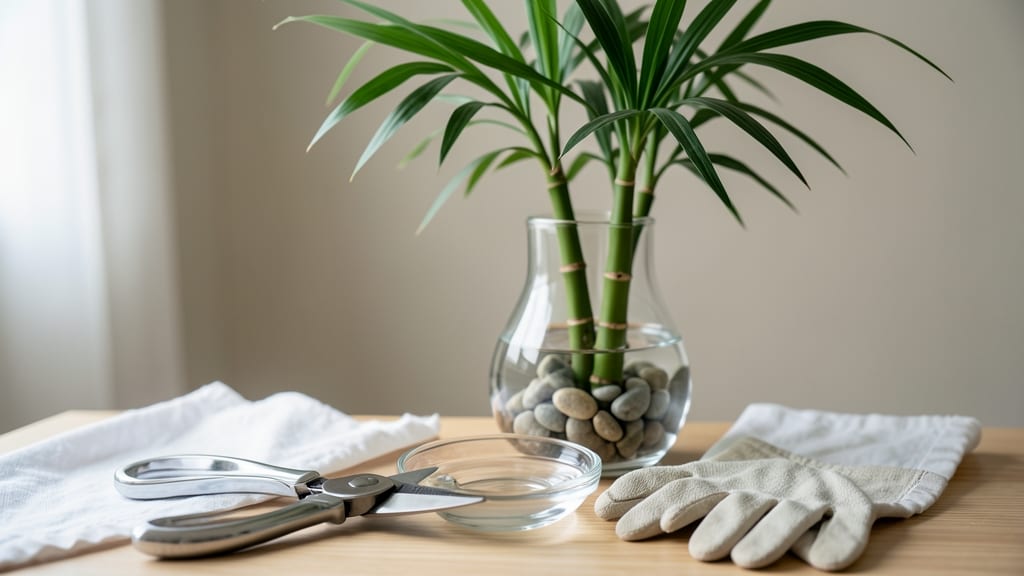
Pruning lucky bamboo isn’t just about keeping it neat—it’s how you get that thick, bushy look that makes it a statement plant. 🌿 I’ve turned my sparse stalks into a full, vibrant display by mastering just three simple cuts, and the results are worth every snip.
The key is timing: do it right, and your plant will branch out like crazy in just a few weeks.
Start with sharp scissors (clean cuts prevent rot) and focus on the topmost leaves—where you trim determines how your plant grows. Cut just above a node (those little bumps on the stem) to encourage new shoots, and avoid over-trimming more than one-third of the plant at once.
After pruning, give it bright, indirect light and keep the water fresh (but not soggy), and you’ll see fresh growth within 2-3 weeks.
📚 In This Guide
- What you need
- Instructions
- Tips and common mistakes
- Wrapping up and next steps
What you need
- ● Sharp pruning shears or scissors: Choose a pair with clean, sterilized blades (avoid dull tools—they crush stems instead of cutting cleanly). Recommended: Small, handheld pruners designed for houseplants.
- ● Rubbing alcohol (70% or higher): For sterilizing tools before and after pruning to prevent bacterial spread. Quantity: A small bottle (4 oz) is sufficient.
- ● Lucky bamboo plant: Healthy stalks with visible nodes (the segmented sections where roots or branches grow). Tip: Prune during active growth (spring or early summer) for best results!
- ● Water (distilled or filtered): Lucky bamboo thrives in clean water. Quantity: Enough to submerge cuttings or refill the plant’s container.
- ● Container or vase: For holding cuttings or the pruned plant. Note: Ensure it’s large enough for the plant’s size (e.g., 6–12 inches in diameter for mature stalks).
- ● Rooting hormone: Speeds up root growth for cuttings (gel or powder form). Bonus: Great for propagating lucky bamboo quickly!
- ● Peat moss or sphagnum moss: For planting cuttings in soil if you prefer a terrestrial setup (instead of water).
- ● Decorative stones or pebbles: Adds aesthetic appeal to the water container and keeps stems upright.
- ● Plant food (lucky bamboo-specific): A liquid fertilizer to nourish the plant post-pruning. Frequency: Use every 4–6 weeks.
Step-by-Step guide for pruning lucky bamboo
Lucky bamboo thrives with just a little trimming—here’s how to keep it full and healthy.
✂️ Step 1: Gather Your Tools and Assess the Plant
You only need sharp scissors or pruning shears—no fancy tools required. Before cutting, examine your plant for yellowing leaves, overly long stems, or crowded growth. These are your cues for where to trim. I like to work near a bright window or under natural light so I can see the stems clearly.
Run your fingers along the stems to feel for nodes—those little bumps where leaves or roots grow. These are your pruning landmarks. If a stem feels hollow or mushy, it’s dead and should be removed entirely. Healthy stems have firm, green nodes spaced about 2-4 inches apart.
✂️ Step 2: Trim Overgrown or Yellowed Stems
Start by cutting back any stems that have turned yellow or brown. Use your scissors to make a clean cut just above a node, angling slightly downward to prevent water from pooling. This encourages new growth from that node. I always trim these first because dead stems can spread rot to healthy parts of the plant.
For stems that are simply too long, cut them back to about 6-8 inches above the soil line or the base of the plant. This keeps the plant compact and encourages bushier growth. If you’re pruning a braided variety, focus on trimming the longest strands first to maintain balance.
🌱 Step 3: Encourage Bushier Growth by Pinching or Cutting
To make your lucky bamboo fuller, look for stems that are growing too tall or leggy. Cut these back to a node about 2-3 inches from the base. This signals the plant to send out new shoots from that node, creating a denser, bushier look. I like to do this every 4-6 weeks during the growing season to keep the plant lush.
If your plant has long, bare stems with no leaves, you can also trim them back to a lower node. Even if it looks drastic, the plant will regrow from that point. Just avoid cutting into the water—keep your cuts at least 1 inch above the waterline to prevent rot.
💧 Step 4: Refresh the Water and Monitor Recovery
After pruning, dump out the old water and rinse the container thoroughly. Lucky bamboo is sensitive to stagnant water, which can lead to rot or bacterial growth. Fill it with fresh, room-temperature water—never cold water, as it can shock the plant. I use filtered or distilled water to avoid chlorine buildup, which can harm the roots over time.
Place your pruned plant back in its bright, indirect light spot and wait 1-2 weeks to see new growth. You’ll notice tiny green buds forming at the nodes where you cut. If you don’t see any new growth after 3-4 weeks, check the water level—it should always cover the roots but never exceed 1 inch above the base.
⏰ Step 5: Maintain Pruning for Long-Term Health
Lucky bamboo grows year-round, so you can prune it anytime, but I find spring and early summer are the best times for encouraging full, vigorous growth. Trim lightly every 2-3 months to keep the plant shaped and prevent it from becoming too leggy or sparse.
Real talk: Over-pruning can stress the plant, so never cut more than one-third of the plant at a time. If you accidentally trim too much, don’t panic—the plant will recover as long as you keep the water fresh and the light conditions ideal. With consistent care, your lucky bamboo will stay lush and full for years.
Tips & tricks for pruning lucky bamboo
A few simple techniques will help you keep your lucky bamboo thriving and looking its best with minimal effort.
Node Awareness: In Step 1, when you're feeling for nodes, press gently—healthy nodes should feel firm and slightly raised. If you accidentally cut through a node, don't stress. Lucky bamboo is resilient and will grow from the next available node below your cut. This is why it's okay to trim back aggressively if needed, as long as you leave at least one node above the waterline.
Pruning Technique: During Step 2, when trimming yellowed stems, make your cut at a 45-degree angle just above the node. This angled cut prevents water from pooling at the cut site, which could lead to rot. I've found that using clean, sharp scissors is crucial—dull blades can crush stems and create jagged cuts that heal poorly.
Recovery Timing: After refreshing the water in Step 4, place your plant in a spot with bright, indirect light. Within 1-2 weeks, you should see tiny green buds emerging from the nodes where you cut. If your home has low light conditions, supplement with a simple grow light for 6-8 hours a day to encourage faster recovery. The plant's natural growth cycle means it will adapt to your environment over time.
Maintenance Schedule: For long-term health, I've found that spring and early summer are ideal for pruning because these are the plant's peak growing seasons. However, if you notice leggy growth during winter, a light trim every 2-3 months will help maintain shape without over-stressing the plant. The key is consistency—small, regular prunings work better than one aggressive session.
Pro Tips for Prune Lucky Bamboo
- A few simple techniques will help you keep your lucky bamboo thriving and looking its best with minimal effort.
- Node Awareness: In Step 1, when you're feeling for nodes, press gently—healthy nodes should feel firm and slightly raised.
- Pruning Technique: During Step 2, when trimming yellowed stems, make your cut at a 45-degree angle just above the node.
Frequently asked questions
Got questions about pruning lucky bamboo? You’re not alone! Here are some of the most common concerns—and their simple solutions—to keep your plant thriving.
How often should I prune lucky bamboo?
Prune your lucky bamboo only when needed, typically every 3–6 months. Trim leggy stems or yellowing leaves to encourage bushier growth. Over-pruning stresses the plant, so focus on removing no more than 1/3 of the plant at a time. Think of it like a haircut—keep it balanced, not drastic!
Is there a best time of year to prune lucky bamboo?
Lucky bamboo is low-maintenance, so prune anytime! However, spring or early summer (when growth is active) is ideal. Avoid heavy pruning in winter, as the plant grows slower. If you spot brown, mushy stems, prune those immediately—they’re a sign of rot or stress.
Can I propagate lucky bamboo from my prunings?
Every cut stem can root in water, making propagation free and easy. Just place the 2–4 inch cuttings in fresh water (no soil needed) and wait 2–4 weeks for roots to sprout. Pro tip: Use a clear vase to track root growth—it’s oddly satisfying!
What if my lucky bamboo turns yellow after pruning?
Yellowing leaves or stems usually mean too much sunlight, poor water quality, or root stress. Move your plant to bright, indirect light and refresh the water (use filtered or distilled water if possible). If the yellowing persists, trim the affected areas—your bamboo will bounce back in 2–3 weeks!
Do I need special tools to prune lucky bamboo?
Nope! A sharp pair of scissors or pruning shears works perfectly. Just sterilize them with rubbing alcohol between cuts to prevent disease. Avoid dull tools—they crush stems instead of cleanly cutting, which can invite infections. Bonus: Wipe down the tools after use to keep them ready for your next pruning session!
Wrapping up and next steps
Pruning your lucky bamboo isn’t just about keeping it tidy—it’s the secret to encouraging vibrant, healthy growth and shaping it into a stunning centerpiece! 🌿 With the right tools, timing, and techniques, you’ll transform your plant into a lush, thriving masterpiece.
Whether you’re trimming for size, fixing brown tips, or propagating new plants, every snip is a step toward a happier, fuller lucky bamboo.
Ready to see your plant flourish? Grab those clean scissors and give it a little TLC today! For even more tips, check out our guide on lucky bamboo care to keep your green friend happy year-round.