
Pruning
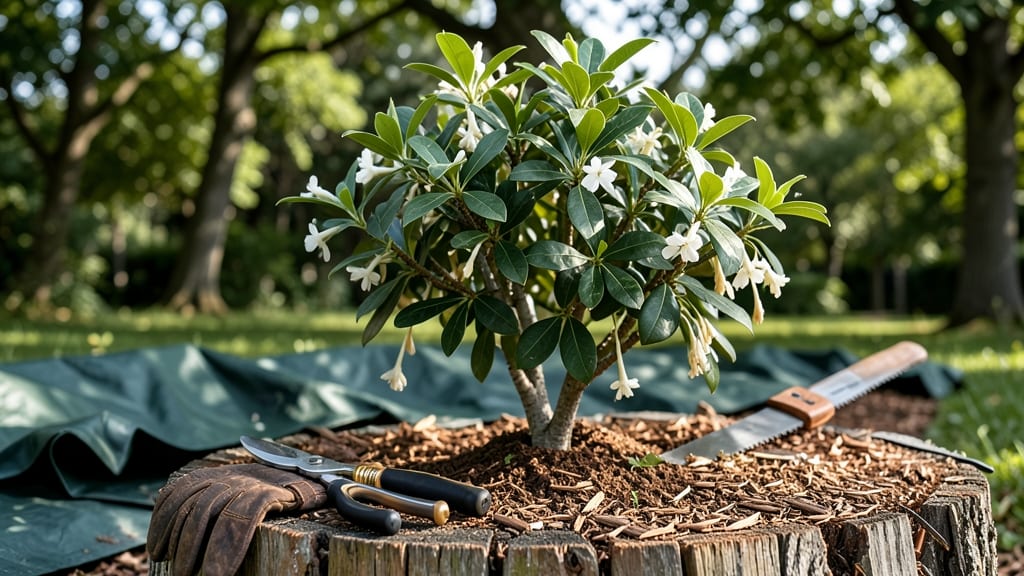
Mock orange shrubs smell like heaven after a hard prune in late winter. ✨ The key is cutting back one-third of the oldest stems to the ground, which forces fresh, fragrant growth that blooms harder than ever.
I’ve revived multiple leggy mock oranges this way—even ones that looked like they’d given up completely.
You’ll need clean, sharp pruners, gloves (mock orange thorns are no joke), and a bucket for clippings. Work on a dry day when temps are above freezing—February or early March is ideal before new growth starts.
The goal is to shape a rounded canopy while keeping some older stems for structure.
Start by removing dead, diseased, or crossing branches first. Then cut back 30% of the oldest stems to the ground, making cuts just above a bud or lateral branch.
For the remaining stems, trim back by half to encourage bushier growth. Water deeply after pruning to help the plant recover.
Within 4-6 weeks, you’ll see bright green shoots pushing from the base. Avoid fertilizing right away—wait until new growth is 4-6 inches tall. The payoff? A dense, fragrant canopy by early summer that smells like orange blossoms and attracts pollinators. Here’s how to keep it thriving!
📚 In This Guide
- What you need
- Instructions
- Tips and common mistakes
- Wrapping up and next steps
What you need
- ● Pruning shears or loppers: Bypass pruners (for small branches, ¼"–¾" diameter)
- ● Loppers (for thicker branches, ¾"–2" diameter)
- ● Hand saw: Pruning saw with a fine-tooth blade (for branches over 2" diameter).
- ● Rubbing alcohol (70% isopropyl) or bleach solution: 1 part bleach to 9 parts water (for sterilizing tools).
- ○ Garden gloves: Heavy-duty, cut-resistant gloves (optional but recommended for thorny varieties like Philadelphus coronarius).
- ● Disposable pruning bags or bucket: For collecting and disposing of pruned branches.
- ● Sharpie or permanent marker: To label branches if needed (e.g., for future reference).
- ● Hose with nozzle or bucket of water: To clean tools mid-pruning.
- ● Pruning sealant: (e.g., tree wound dressing) for large cuts (controversial—skip if unsure!).
- ● Ladder or step stool: If your mock orange is over 6 feet tall.
- ● Notebook or sketch pad: To jot down pruning notes or map out the plant’s new shape.
- ● Compost bin or chipper: For repurposing pruned branches into mulch.
Step-by-step instructions for hard pruning mock orange shrubs
This is the moment that transforms your mock orange from a tangled mess into a lush, fragrant canopy—just follow my proven late-winter technique.
✂️ Step 1: Time Your Prune for Maximum Recovery
Schedule your pruning during late winter—specifically 2-4 weeks before your last frost date—when the plant is fully dormant. This timing ensures you remove dead growth while allowing new shoots to establish before spring flushes. I always prune on a dry, calm day to prevent stress from wind or rain immediately after cutting.
Look for brown, woody stems that haven’t produced leaves in years—these are your targets. Mock orange responds best when you remove up to one-third of the plant’s oldest wood in a single session. If you’re unsure, snap a few stems: if they’re brittle and hollow inside, they’re ready to go.
✂️ Step 2: Remove Dead and Crossing Branches First
Start by eliminating dead, diseased, or damaged branches—these are the easiest cuts and won’t stress the plant. Use clean, sharp pruners (sterilized with rubbing alcohol) to make 45-degree cuts just above a bud or lateral branch. Avoid leaving stubs, as they invite rot and pests.
Next, tackle crossing or rubbing branches—these create wounds where bark tears and infections take hold. Remove the smaller of the two branches at its base. I always step back after each cut to visualize the plant’s new shape. Mock orange has a natural vase-like form, so aim to open the center for better airflow and light penetration.
✂️ Step 3: Thin Out Overcrowded Growth for Airflow
Now focus on thinning—selectively removing branches to improve light and air circulation. Target overcrowded areas where branches grow too close together. Cut back to a strong lateral branch or outward-facing bud to encourage outward growth. You’ll see the plant’s skeleton become more visible as you work.
Resist the urge to shear mock orange—this plant thrives on structured pruning, not blanket cuts. Instead, think of it like sculpting: each cut should serve a purpose. If a branch is growing straight up (called a "water spout"), remove it entirely to redirect energy into horizontal growth, which produces more blooms.
✂️ Step 4: Shape the Canopy for Optimal Blooms
Step back and assess the plant’s overall form. Mock orange blooms best when it has a balanced, open canopy. Prune to create a rounded, slightly tiered shape, with the lowest branches removed to allow sunlight to reach the ground. This also makes future pruning easier and reduces the risk of fungal diseases.
Focus cuts on the outer third of the plant to encourage new growth inward. Avoid cutting into old wood—mock orange struggles to regenerate from severe cuts. If you’re unsure about a branch’s age, look for lenticels (tiny raised dots) on the stem: fewer lenticels mean older wood. Leave these branches alone unless they’re dead or diseased.
🌱 Step 5: Clean Up and Prepare for New Growth
After pruning, remove all debris from the base of the plant and surrounding area to prevent fungal spores from taking hold. Sterilize your pruners again with rubbing alcohol to avoid spreading pathogens. Apply a balanced, slow-release fertilizer (10-10-10) around the root zone to support the plant’s recovery.
Water deeply but avoid overwatering—mock orange prefers moderate moisture and can rot if kept too wet. Mulch the base with 2-3 inches of organic mulch (like shredded bark) to retain moisture and suppress weeds. Within 4-6 weeks, you’ll see new shoots emerging from the cuts—this is your signal that the pruning was successful.
Tips & tricks for perfect late-winter mock orange pruning
Transforming your mock orange into a fragrant, well-shaped shrub starts with these essential pruning insights.
Timing is Everything: The 2-4 week window before your last frost is non-negotiable for mock orange revival. This dormant period lets the plant heal cleanly without spring growth stress. I've seen pruning too early (when buds swell) result in weak regrowth, while late pruning (after buds break) can damage emerging flowers. Check your local frost dates and mark your calendar—this is your golden window.
The One-Third Rule: Never remove more than one-third of the plant's oldest wood in a single session, as instructed. This preserves the plant's energy reserves while stimulating new growth. I learned this the hard way after over-pruning and watching my mock orange struggle to recover. For mature shrubs, spread heavy pruning over two years if needed. Look for the oldest, thickest stems—they're often the most brittle and easiest to identify.
Visualizing the Vase Shape: Mock orange naturally grows in a vase-like form, so step back frequently during pruning to maintain this silhouette. Focus cuts on the outer third of the plant to encourage inward growth, which creates that classic layered look. I always imagine removing a "cone" from the top—this opens up the center while maintaining the plant's natural structure. Think of it as sculpting with living wood rather than random hacking.
Post-Prune Care Essentials: After your 2-3 inch organic mulch application, here's what I do next: I always water deeply but avoid creating soggy soil—mock orange hates wet feet. The 4-6 week window for new shoots is your success indicator, so monitor closely. If you notice yellowing leaves after pruning, it's usually a sign of overwatering or nutrient shock—adjust your care routine accordingly.
Pro Tips for Hard Prune Mock Orange
- Transforming your mock orange into a fragrant, well-shaped shrub starts with these essential pruning insights.
- Timing is Everything: The 2-4 week window before your last frost is non-negotiable for mock orange revival. This dorm...
- The One-Third Rule: Never remove more than one-third of the plant's oldest wood in a single session, as instructed. T...
Frequently asked questions
Got questions about hard pruning your mock orange (Philadelphus)? You’re not alone! Here are some of the most common concerns—and expert answers—to help you tackle late-winter revival with confidence.
When is the exact best time to hard prune mock orange?
Prune after the last hard frost but before new growth starts—typically late February to early March in most climates. This timing ensures you’re cutting back dormant wood while avoiding early spring buds. Pro tip: If your region has unpredictable frosts, wait until you’ve seen at least 3 consecutive days above freezing!
How much can I cut back? Will I kill my shrub?
Mock orange is tough—you can safely remove up to ⅓ of the plant’s total volume (or even more if it’s overgrown). Cut back to healthy, outward-facing buds or just above a leaf node. Avoid shearing; instead, make clean cuts at a 45-degree angle to prevent water pooling. No worries! These shrubs bounce back like champions.
What if my mock orange doesn’t bloom after pruning?
Blooms appear on new wood, so a hard prune might delay flowers by 1–2 years—but it’s worth it for long-term health! Focus on rejuvenating the canopy and providing well-draining soil + consistent water. If it still skips blooms after 2 years, check for over-fertilization (too much nitrogen = leafy growth, no flowers). Patience pays off!
Can I hard prune a young mock orange (under 3 years old)?
Young shrubs shouldn’t be hard-pruned—stick to light shaping or removing dead wood. Wait until they’re 3–5 years old to do a full revival prune. This gives their root system time to establish. Exception: If a young plant is severely damaged (e.g., storm breakage), prune only the affected branches and avoid heavy cuts.
Are there alternatives to hard pruning for overgrown mock orange?
Yes! If hard pruning feels drastic, try gradual renewal pruning: Remove ⅓ of the oldest stems each year for 3 years. You can also thin out crowded branches to improve airflow (reducing disease risk). For extreme overgrowth, consider layering or dividing the shrub—but mock orange isn’t as forgiving as some plants, so hard pruning is often the fastest fix.
Wrapping up and next steps
Hard pruning your mock orange in late winter isn’t just about shaping—it’s about unlocking its full potential for bursting blooms and lush, fragrant growth. By following the right steps, you’ll encourage a healthier, more vibrant plant that rewards you with months of sweet-scented flowers. 🌸
Ready to transform your mock orange into a showstopper? Grab your tools, mark your calendar, and take action—your garden’s fragrant future starts now! For extra confidence, watch a quick pruning demo or join a local gardening group to share your progress. Happy pruning!