
Trees
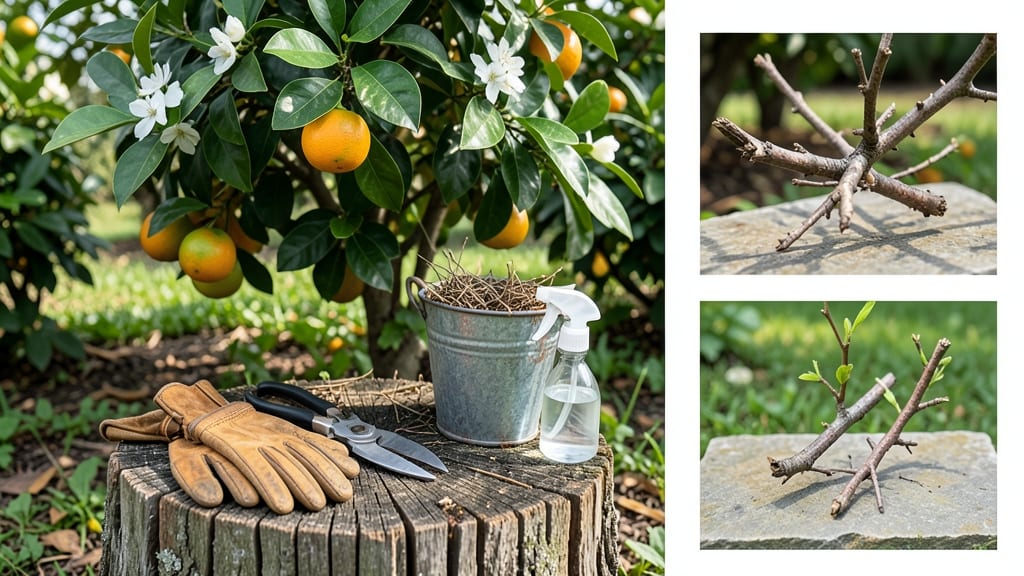
Pruning orange trees in California at the right time—late winter—boosts fruit production and keeps your 🍊 thriving in the Mediterranean climate.
Got it wrong, and you risk stunted growth or even fewer oranges next season. The key is cutting before new growth starts, but not so late that frost catches your tree off guard—especially in inland areas where temps can still dip.
This guide breaks down the exact months to prune (spoiler: January–February is ideal), how to shape your tree for maximum sunlight, and regional tweaks for coastal vs. valley zones.
By the end, you’ll know not just when to prune, but how—so your orange tree rewards you with sweeter, heavier harvests all year.
Best late winter pruning window for California orange trees (with exact months)
California’s Mediterranean climate gives orange trees a unique advantage—mild winters and long growing seasons. But this also means pruning timing must be precise to avoid frost damage or missed bloom cycles.
The ideal pruning window for California orange trees falls in late winter, specifically January through February, when the tree is still dormant but frost risks are lowest.
This timing aligns with the tree’s natural cycle: after harvest (fall/winter) and before spring flush (March). Pruning now removes dead or weak branches, improves air circulation, and encourages healthier fruit production for the next season.
However, inland areas like the Central Valley face colder nights than coastal regions, requiring adjustments to avoid frost damage.
Temperature thresholds are critical: prune when daytime highs reach 60°F+ and nighttime lows stay above 35°F. Coastal areas (e.g., Santa Barbara) can prune as early as mid-January, while inland valleys (e.g., Fresno) should wait until late February to minimize frost risk. Moon phases also play a role—pruning during the waxing moon (increasing light) promotes faster healing.
Here’s a quick-reference guide to California’s late winter pruning window, including regional adjustments and key considerations:
Why does late winter work best? Pruning now removes last year’s growth while leaving dormant buds intact for spring’s new flush. This timing also avoids summer stress when trees focus energy on fruit production.
For young orange trees (under 3 years), limit pruning to 10–15% of the canopy to avoid stunting growth.
Watch for frost warnings in inland areas—even a light freeze (32°F) can damage new cuts. If frost is forecasted, delay pruning until temperatures stabilize. Coastal gardeners can prune earlier, but avoid windy days, which dry out fresh cuts faster. Always use sterilized pruners to prevent disease spread.
Pro tip: Prune on a cloudy day to reduce stress on the tree. If you must prune in full sun, do it early morning or late afternoon to minimize water loss. After pruning, apply a light layer of mulch around the base to retain moisture and regulate soil temperature.
Timing isn’t just about the calendar—it’s about reading your tree. Look for dormant buds along branches; these indicate the tree is ready for pruning. Avoid cutting into flowering wood (visible in late winter), as this reduces next year’s fruit yield.
With the right timing, your orange tree will reward you with bigger harvests and healthier growth for years to come.
Remember: Patience pays off. Rushing pruning can lead to reduced blooms or pest vulnerabilities, while waiting too long may encourage overgrowth or disease. Stick to the late winter window, and your orange tree will thrive in California’s unique climate.
How to prune orange trees for maximum fruit production (step-by-step with common mistakes)
Pruning your orange tree correctly is the key to bigger harvests and healthier growth. Focus on removing deadwood, crossing branches, and water sprouts—these steps open the canopy for sunlight exposure and reduce disease risks.
Start with clean, sharp tools to avoid damaging the tree’s bark or spreading infections.
Use bypass pruners for small branches and a pruning saw for thicker limbs. Always disinfect tools with rubbing alcohol between cuts to prevent bacterial spread. Target branches that are thinner than a pencil for hand pruning, while larger limbs require a saw for clean cuts.
Identify three critical mistakes that slash fruit production: pruning at the wrong time, cutting too much at once, or leaving stubs. Each error weakens the tree or invites pests. Instead, follow a structured approach to shape your tree for optimal fruit-bearing zones.
Critical Pruning Timing Error in California
Pruning after February disrupts spring flowering—California’s orange trees bloom in late winter, and cuts made too late remove potential fruit-bearing wood. Coastal areas like Santa Barbara can prune slightly later (March), but inland valleys (e.g., Central Valley) must finish by late January to avoid frost damage.
Begin by removing dead or diseased branches first—they drain energy from healthy growth. Next, trim crossing branches that rub together, creating wounds where pests enter.
For water sprouts (vertical shoots growing from the trunk or limbs), cut them back to a bud or lateral branch to redirect energy to fruit production.
Shape your tree into an open vase form to maximize sunlight penetration. Aim for a central leader (main trunk) with scaffold branches spaced 12–18 inches apart. This structure ensures even fruit distribution and reduces shade-related diseases. Avoid topping the tree, as this encourages suckering and weak growth.
After pruning, apply wound dressing only to cuts larger than ½ inch to prevent moisture loss. For smaller cuts, let the tree seal naturally. Follow up with a balanced citrus fertilizer (6-6-6 NPK) to support new growth.
Monitor the tree for 3 weeks post-pruning—any signs of stress (yellowing leaves, wilting) signal over-pruning.
Regular pruning turns your orange tree into a fruit-producing powerhouse. With the right cuts and timing, you’ll enjoy bountiful harvests for years to come. 🍊✂️🌿