
Pruning
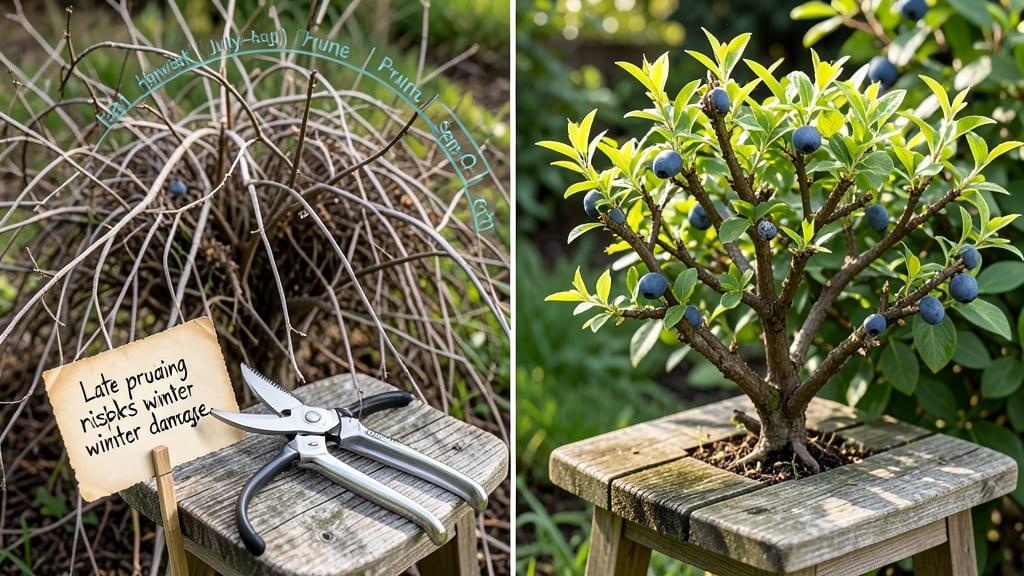
You’ve missed the window to prune blueberry bushes once flower buds appear in late winter or early spring, since cutting then severs next year’s harvest. Only prune dormant bushes in late fall or winter, avoiding frost-prone times.
Blueberry bushes begin forming flower buds in late winter, typically between January and March, depending on your climate zone. 🌸 Once these buds appear, pruning disrupts the plant’s fruiting cycle by removing potential fruit-bearing branches.
The key is to time pruning during the plant’s dormant phase—after leaves fall but before buds swell—when the bush isn’t actively growing. This ensures you’re only trimming last year’s growth without harming next season’s crop.
If you’ve already pruned too late, focus on selective trimming to remove only dead or diseased branches while leaving healthy buds intact. In colder regions, wait until after the last frost to prune, as early spring cuts can expose the plant to cold damage.
For warmer climates, late winter pruning is safer, but always check for bud formation first.
💡 In This Article
- Blueberry Bloom Cycle: Why Pruning Timing Matters
- Late-Season Pruning Fixes for Blueberry Bushes
Blueberry bloom cycle: why pruning timing matters
Blueberry bushes follow a precise biological rhythm where flower buds begin forming in late winter—typically between January and March—as the plant prepares for spring growth. These buds develop from the previous year's wood, meaning any pruning after they appear directly removes potential fruit-bearing branches.
The buds themselves are tiny, often no larger than a pinhead, but their presence signals the plant's shift from dormancy to active growth. 🌱
During dormancy (late fall to early winter), blueberry bushes conserve energy by slowing metabolic processes. Pruning during this period stimulates new growth from the plant's stored energy reserves, while avoiding damage to next year's buds.
The critical window closes once buds swell and turn pink or red, indicating they're preparing to bloom. This transition is driven by hormonal changes—specifically, an increase in gibberellins and cytokinins—that signal the plant to shift from vegetative to reproductive growth.
Temperature plays a crucial role in this cycle. Blueberries require a period of cold dormancy (typically 100-200 hours below 45°F) to break bud dormancy successfully. Pruning too early in winter can expose the plant to frost damage, while pruning too late risks cutting off buds that haven't yet formed.
The ideal pruning time is after leaf drop but before buds appear, usually between November and February, depending on your hardiness zone.
What makes this timing so critical is the plant's growth hormone distribution. When you prune after buds form, you're not just removing branches—you're interrupting the plant's hormonal signaling system. The buds contain auxin, a growth hormone that regulates fruit development, and removing them disrupts the entire fruiting cycle.
This is why late-pruned bushes often produce fewer berries the following season, sometimes up to 50% less yield in severe cases.
Consider this real-world example: In Zone 7 climates, blueberry bushes in the wild often bloom by early March. If you prune in February, you risk cutting off buds that would have produced fruit by July.
The plant's energy, which was allocated to bud development, is now wasted, and the bush must redirect resources to heal the pruning wounds instead of preparing for next year's harvest. 💫
The consequences extend beyond yield. Late pruning can also make bushes more susceptible to pests and diseases because the plant's energy is diverted to wound healing rather than maintaining a strong immune response.
For instance, blueberry bushes pruned after bud formation show higher rates of mummy berry infection—a fungal disease that thrives on stressed plants—compared to those pruned during dormancy.