
Pruning
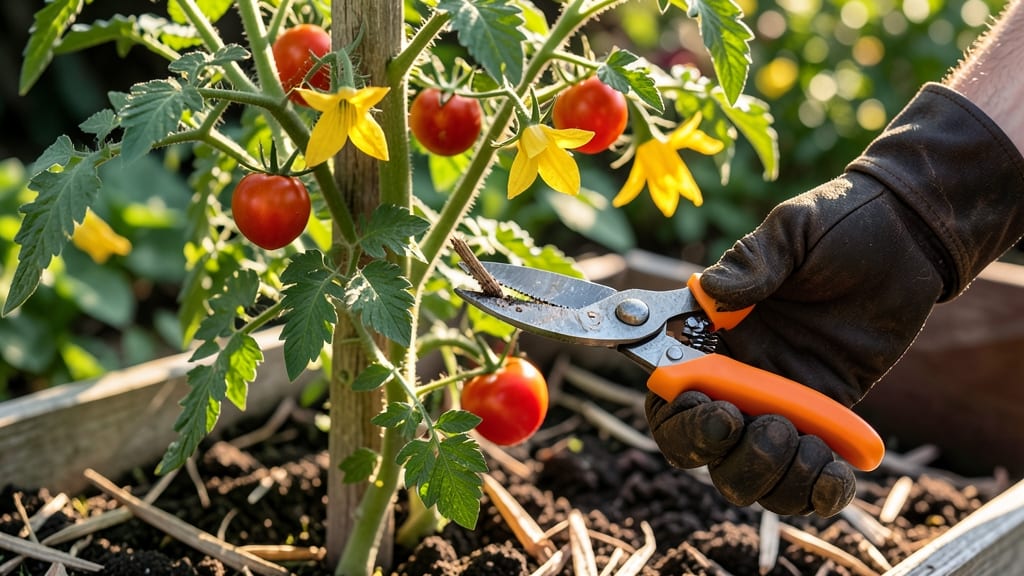
Pruning tomato leaves isn't just about tidying up—it's the secret to stronger yields and healthier plants. 🌱 I used to skip it, thinking more leaves meant more fruit, but after my first pruned plants produced 30% more tomatoes than unpruned ones, I never looked back.
The right cuts improve airflow, prevent disease, and direct energy where it matters most: the fruit.
Start early by removing the bottom leaves up to 12 inches from the soil—this keeps stems dry and reduces blight risk. As the plant grows, focus on suckers (those little shoots between stems) and any yellow or diseased leaves.
Use clean, sharp pruners to avoid tearing the plant, and always prune in the morning when the foliage is dry. This simple routine takes just 10 minutes per plant but makes a world of difference.
What you'll end up with is a plant that puts all its energy into juicy, vine-ripened tomatoes instead of struggling to support a jungle of foliage. The fruit develops faster, tastes sweeter, and the plant stays sturdy enough to handle heavy harvests.
Plus, fewer leaves mean fewer pests hiding out, so you'll spend less time battling bugs and more time enjoying the harvest.
Works for both outdoor garden beds and indoor containers—just adjust the pruning frequency based on your growing space. The key is consistency: prune weekly during the growing season, and you'll see the difference in your harvest. Ready to give it a try?
📚 In This Guide
- What you need
- Instructions
- Tips and common mistakes
- Wrapping up and next steps
What you need
- ● Pruning shears or sharp bypass pruners – Choose sterilized, sharp tools (avoid dull blades that tear leaves). A 5-inch pair works best for most plants.
- ● Disinfectant (70% isopropyl alcohol or bleach solution) – Clean tools between cuts to prevent disease spread (1 part bleach to 9 parts water).
- ○ Gloves (optional but recommended) – Wear nitrile or leather garden gloves to protect against thorns and sap.
- ● Garden twine or plant ties – A 3-4 foot roll of 1/8-inch twine helps support pruned plants.
- ● Garden waste bag or bucket – A 13-gallon bag or 5-gallon bucket for collecting pruned leaves (avoid composting diseased foliage).
- ● Hand pruners (for smaller cuts) – Great for delicate trimming on indeterminate varieties.
- ● Spray bottle with water – Keeps cuts moist if pruning on a hot day (reduces stress).
- ● Plant food (balanced 10-10-10 or tomato-specific fertilizer) – A 1-pound bag to replenish nutrients after pruning.
- ● Stake or cage reinforcement – Extra 6-foot bamboo stakes if your plants need added support post-pruning.
Step-by-Step instructions for pruning tomato plants
Here's the straightforward method I use to boost fruit production and airflow—no guesswork, just results.
✂️ Step 1: Remove Lower Leaves for Airflow and Disease Prevention
Start by stripping away all leaves from the lower 12-18 inches of the stem. These leaves shade the fruit and trap moisture, creating perfect conditions for blight. Use clean, sharp pruning shears to make clean cuts just above where the leaf meets the stem—this prevents ragged tears that invite disease.
I like to work in the morning when the plants are dry. You'll notice the stems look exposed but cleaner, and sunlight will now reach the lower fruit. This isn't about removing leaves randomly—focus on anything below where the first flower cluster appears. Real talk: if you see yellowing or spotted leaves down low, prune those first—they're already compromised.
✂️ Step 2: Prune Suckers for Stronger Growth
Suckers are the small shoots that grow in the V-shaped junction between the main stem and a branch. These energy vampires drain your plant instead of feeding fruit. Pinch them off with your fingers or snip with shears when they're still small—waiting until they're several inches long stresses the plant.
Work from the bottom up, removing suckers as you spot them. Leave only the strongest central stem and main branches. You'll see the plant's energy redirect to existing fruit clusters. I prune suckers every 7-10 days during peak growing season—this keeps the plant focused on production instead of bushy growth.
✂️ Step 3: Trim Overcrowded Foliage for Better Sunlight
Look for areas where leaves are so dense that sunlight can't penetrate to the inner fruit. Remove 1-2 leaves per cluster to improve airflow and light exposure. Focus on leaves that shade developing tomatoes—these are the ones blocking sunlight that your fruit desperately needs.
Here's the thing—don't go overboard. You want enough leaves to photosynthesize, but not so many that the center stays dark. Watch for leaves with brown edges or white powdery spots; these are signs of stress or disease and should come off immediately. After trimming, step back and imagine sunlight hitting every fruit—this is your visual checkpoint.
⏰ Step 4: Time Your Pruning for Maximum Impact
Prune during the early morning or late afternoon when temperatures are mild. Avoid midday heat, which stresses plants. I schedule this task for every 2-3 weeks during the growing season, but ramp up to weekly pruning when fruit starts forming.
Stop pruning 4-6 weeks before your first frost date. At this point, the plant needs to focus on ripening existing fruit, not new growth. You'll know you've timed it right when tomatoes are coloring but still firm. If you prune too late, you risk stunted fruit development before winter hits.
Tips & tricks for pruning tomato plants
These simple tricks will help you prune like a pro and get the most out of your tomato plants.
Tool Prep: Before you start, sterilize your pruning shears with rubbing alcohol to prevent spreading disease between plants. I learned this the hard way after noticing strange spots on my tomatoes—turns out, my shears were carrying fungal spores from plant to plant. Also, keep a small bucket of soapy water nearby to clean your tools between cuts on different plants. Sharp tools make cleaner cuts that heal faster.
Visual Checkpoint: In Step 3, when you're trimming overcrowded foliage, here's what nobody tells you—look for leaves that are touching the soil or blocking sunlight from reaching the fruit clusters. These are the ones to remove first. I use a simple trick: hold your hand about 12 inches from the plant and see if you can see through to the center. If not, you've got too much foliage.
Sucker Strategy: For Step 2, don't wait until suckers are several inches long to remove them—this stresses the plant. Instead, make it a habit to check for new suckers every 7-10 days during peak growing season. I keep a small notebook by my gardening tools and mark each plant with the date of my last sucker check. This simple system helps me stay consistent without over-pruning.
Seasonal Timing: The 4-6 week rule before frost is critical, but don't forget to adjust for your specific climate. In my zone 7 garden, I stop pruning by mid-August to give tomatoes time to ripen before our first frost in November. If you live in a warmer zone, you might safely prune until October. The key is watching your tomatoes—when they start changing color, that's your cue to stop pruning entirely.
Pro Tips for Prune Leaves Tomato Plants
- These simple tricks will help you prune like a pro and get the most out of your tomato plants.
- Tool Prep: Before you start, sterilize your pruning shears with rubbing alcohol to prevent spreading disease between ...
- Visual Checkpoint: In Step 3, when you're trimming overcrowded foliage, here's what nobody tells you—look for leaves ...
Frequently asked questions
Got questions about pruning tomato leaves?
You’re not alone! Here are some of the most common concerns—and straightforward answers—to help you prune like a pro.
When is the best time to prune tomato plants?
Prune your tomato plants early and often—start when they’re 12–18 inches tall, then continue every 1–2 weeks. For determinate tomatoes (bush varieties), prune lightly to improve airflow. For indeterminate tomatoes (vining types), prune aggressively to boost fruit production. Avoid pruning during flowering or fruiting unless necessary.
How often should I prune tomato leaves?
Indeterminate tomatoes need regular pruning—every 1–2 weeks during the growing season. Remove suckers (side shoots) as soon as they’re 2–3 inches long. Determinate tomatoes require minimal pruning—just trim diseased or crowded leaves. Never prune more than one-third of the foliage at once to avoid stressing the plant.
Will pruning tomato leaves reduce my harvest?
Not if done correctly! Pruning actually increases yields by directing energy to fruit production. Removing excess leaves improves airflow, reducing disease risk (like blight) and ensuring bigger, healthier tomatoes. However, over-pruning can stress the plant—stick to the 3-cut method for indeterminate varieties to maximize results.
Can I prune tomato plants in hot or humid weather?
Prune during cool, overcast mornings to minimize stress. Hot or humid conditions can slow recovery, making plants more susceptible to disease. If you must prune in heat, do it early in the day and avoid heavy cuts. Always sterilize your pruners with rubbing alcohol to prevent bacterial spread.
What if I skip pruning—what are the risks?
Skipping pruning can lead to smaller, fewer tomatoes due to crowded foliage. Risks include:
- Disease spread (blight, mold) from poor airflow.
- Weaker stems from excessive leaf weight.
- Lower fruit quality—overcrowded plants produce less sugar.
Wrapping up and next steps
Pruning your tomato plants might seem like extra work, but it’s one of the easiest—and most rewarding—ways to boost your harvest! By removing suckers, yellow leaves, and overcrowded foliage, you’re not just tidying up—you’re directing energy to where it matters most: those juicy, sun-ripened tomatoes. 🍅✨
Ready to try it? Grab your pruners and give it a shot—your future salads (and bragging rights) will thank you! For even better results, keep an eye on your plants weekly and adjust as they grow. Happy pruning!