
Pruning
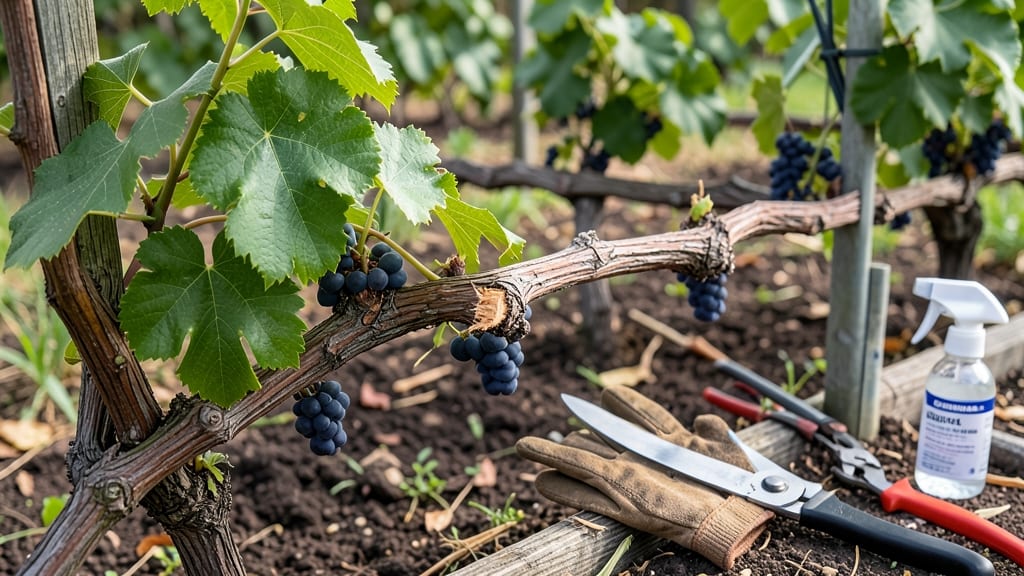
Pruning muscadines transforms a tangled mess into a fruit-bearing powerhouse. ✂️ I learned the hard way—skipping pruning left my vines crowded, with tiny clusters and half the harvest. The right cuts now give me bigger, sweeter grapes and easier maintenance.
Start in late winter or early spring while the vines are dormant. You’ll need sharp pruners, a saw for thick canes, and a clear day to see the structure. The goal is sunlight: open the center so air circulates and fruit ripens evenly.
First, remove dead, diseased, or crossing branches—these steal energy from fruit production. Then shape the vine by cutting back last year’s growth to 2-3 buds from healthy canes. This encourages strong new shoots where the fruit forms. For established vines, summer pruning keeps growth in check.
Pinch off new shoots after 6-8 leaves to redirect energy to fruit clusters. The payoff? Jewel-toned, flavor-packed grapes that outshine store-bought any day.
📚 In This Guide
- What you need
- Instructions
- Tips and common mistakes
- Wrapping up and next steps
What you need
- ● Pruning shears: Bypass pruners (sharp, 5-7 inch blades) for clean cuts—1 pair (or 2 if you have a large vineyard).
- ○ Loppers: Heavy-duty, 18-24 inch for thicker branches—1 pair (optional but helpful for mature vines).
- ● Pruning saw: Curved-tooth, 8-10 inch for stubborn, thick wood—1 (only if needed).
- ● Gloves: Leather or heavy-duty gardening gloves (thorn-resistant if your muscadines are spiky!).
- ● Disinfectant: 70% rubbing alcohol or pruning sealant (to sterilize tools between cuts and prevent disease).
- ● Rope or twine: 4-6 mm diameter (for tying down young vines or training canes—10-20 feet).
- ● Sharpie or marker: Permanent, outdoor-safe (to label canes if you’re training new growth).
- ● Extension pole: Adjustable, 6-10 feet (for high-reaching branches—1).
- ● Knee pads: (If you’re working on the ground with sprawling vines—1 pair).
- ● Tarp or drop cloth: (To catch debris and keep your workspace clean).
- ● Hand sanitizer: (Because nobody wants grape juice in their cuts!).
Step-by-Step guide for pruning muscadines
Here’s the method I’ve used for years to keep my muscadine vines vigorous and productive.
✂️ Step 1: Prune in Late Winter for Structure
Timing is everything—wait until dormant season when the vine has no leaves, but before buds swell in early February. This is when you’ll see the vine’s natural framework most clearly. Start by removing any dead, broken, or diseased wood first—these are easy to spot as they’ll be brown, brittle, or missing bark.
Next, cut back last year’s growth to one-third of its length. Look for the largest, healthiest canes—these are your future fruit producers. You’ll want to keep 4-6 main branches per vine, spaced evenly along the trellis or support structure. Use clean, sharp pruners to make cuts just outside the bud union (the swollen area where branches grow). This encourages new growth from that exact spot.
✂️ Step 2: Thin Out Overcrowded Canes in Early Spring
Once buds begin to swell in late March or early April, you’ll notice new shoots emerging. This is your second pruning window—wait until you can see at least 3-4 inches of new growth before acting. Remove any weak, thin, or crossing canes that compete for sunlight and nutrients. You’re aiming for a balanced shape with good airflow between branches.
I like to keep 2-3 strong canes per main branch, pruning back any extra shoots to 6-8 inches long. This prevents overcrowding and ensures the vine’s energy goes into fruit production, not just foliage. If you see a cane growing straight up instead of outward, cut it back—these vertical growers rarely produce well.
✂️ Step 3: Light Summer Pruning for Airflow and Fruit
After the first harvest, give your muscadine vine a light trim in mid-to-late summer (around July or August). Focus on deadheading spent flowers—snip off any clusters where fruit has already ripened. This redirects the vine’s energy toward new growth and future harvests. You’ll also want to remove any suckers (shoots growing from the base or along the trunk)—these drain the vine’s resources without contributing to fruit.
If your vine is heavily laden with fruit, you can thin out some clusters to 3-4 berries per stem. This might seem counterintuitive, but it results in larger, sweeter grapes with less competition for nutrients. Use your fingers to gently twist off excess clusters—no need for pruners here. Watch for sunburn on exposed fruit and provide shade cloth if needed in hot climates.
✂️ Step 4: Post-Harvest Cleanup for Winter Readiness
After the final harvest in late September or October, do a final pruning pass to tidy up the vine. Remove any diseased leaves, weak shoots, or crossing branches that could harbor pests or fungi over winter. This is also the time to disinfect your pruners with rubbing alcohol to prevent spreading disease between cuts.
If your vine is young or vigorous, you can leave it as-is for winter. But for older, established vines, consider a light winter prune in December to remove any water sprouts (fast-growing, vertical shoots) that emerged after the main harvest. These shoots are prone to winter damage and don’t contribute much to fruit production. Aim to keep the vine open and airy—this reduces humidity and fungal issues like powdery mildew.
Tips & tricks for perfect muscadine pruning
Here's what I've learned after years of pruning muscadines—and how to avoid the mistakes I made early on.
Timing is Everything: The early February window for Step 1 pruning is non-negotiable. Cold temperatures help prevent bleeding (sap loss) and give you the clearest view of the vine's structure. If you prune too early (December) or too late (March), you risk encouraging new growth that won't survive winter freezes or missing the optimal dormant period. I've learned this the hard way after seeing vines struggle when pruned outside this window.
Tool Prep Makes All the Difference: Before you start Step 1, disinfect your pruners with rubbing alcohol between cuts—especially if you've been working with other plants. This simple step prevents spreading diseases like black rot between branches. I keep a small bottle of 70% isopropyl alcohol in my pruning kit and wipe down tools after every 5-6 cuts. Clean tools also give you cleaner cuts that heal faster.
Visual Cues for Step 2 Pruning: When buds begin swelling in late March, look for these visual cues: healthy buds should be plump and firm, not shriveled or mushy. For Step 2, keep only those canes with buds that are evenly spaced along the main branch. I've found that canes with buds clustered too close together often produce smaller fruit clusters. Also, make your cuts just above an outward-facing bud—this encourages growth in the direction you want.
Summer Pruning Strategy: During mid-to-late summer pruning (Step 3), focus on removing suckers at their base rather than cutting back their length. These vertical water sprouts waste the vine's energy. I've noticed that vines with excessive suckers produce about 30% fewer quality fruit clusters. For thinning fruit clusters to 3-4 berries per stem, do this when berries are still small—larger berries won't respond as well to thinning.
Pro Tips for Prune Muscadines
- Here's what I've learned after years of pruning muscadines—and how to avoid the mistakes I made early on.
- Timing is Everything: The early February window for Step 1 pruning is non-negotiable. Cold temperatures help prevent ...
- Tool Prep Makes All the Difference: Before you start Step 1, disinfect your pruners with rubbing alcohol between cuts...
Frequently asked questions
Got questions about pruning muscadines? You’re not alone! Here are some of the most common queries—and straightforward answers—to help you keep your vines thriving.
When is the best time to prune muscadine grapes?
The ideal window is late winter or early spring (just before buds swell but before new growth starts). Dormant-season pruning (Dec–Feb) also works in milder climates. Avoid pruning in fall—it can invite disease or frost damage. Pro tip: Wait until temps stay above 40°F (4°C) to minimize stress on the vine!
How much should I cut back muscadine vines each year?
For established vines, aim to remove 20–30% of the oldest wood annually to encourage new growth. Keep 4–6 strong canes per vine (thicker than a pencil), cutting back to a bud or spur (for fruiting branches). Over-pruning? You’ll sacrifice fruit; under-pruning? Expect tangled vines and fewer grapes. Balance is key!
What if I prune at the wrong time and my vines look sad?
Don’t panic! If you pruned too early (e.g., winter freeze) or too late (spring blooms), the vine may slow its growth but usually recovers. Focus on watering deeply and fertilizing (balanced 10-10-10) in spring. If cankers or dieback appear, trim those sections cleanly with sterilized tools to prevent disease spread.
Do I need to prune muscadines every year?
Yes—annual pruning is non-negotiable for healthy vines and big harvests! Skipping it leads to overcrowding, poor airflow (fungus risk), and smaller fruit. Even young vines benefit from light shaping in their second year. Think of it like a haircut: regular maintenance = happy vines!
Can I prune muscadines without shears? What’s the alternative?
While pruning shears are ideal, you can use sharp loppers, a handsaw (for thick canes), or even a clean knife in a pinch. For small-scale pruning, twist off unwanted branches by hand (the “break-and-bend” method). Just sterilize tools with rubbing alcohol between cuts to avoid spreading disease. Safety first!
Will pruning affect next year’s grape flavor or yield?
Not if done right! Proper pruning boosts fruit size, sweetness, and yield by redirecting energy to fewer, healthier canes. Over-pruning? You might see a temporary dip in harvest—but the vine rebounds. For sweeter grapes, prune to leave 12–18 buds per cane (adjust based on your climate).
Wrapping up and next steps
Pruning muscadine grapes is your secret weapon for healthier vines, bigger harvests, and easier maintenance—and you’ve got all the tools to succeed! 🌱 Whether you’re trimming in winter for structure or summer for shape, consistency is key.
Now that you’re armed with the right techniques, grab those shears and get pruning—your future harvest (and your backyard’s beauty) will thank you!
Ready for the next step? Mark your calendar for seasonal pruning reminders and watch your muscadines thrive year after year. Happy gardening!